

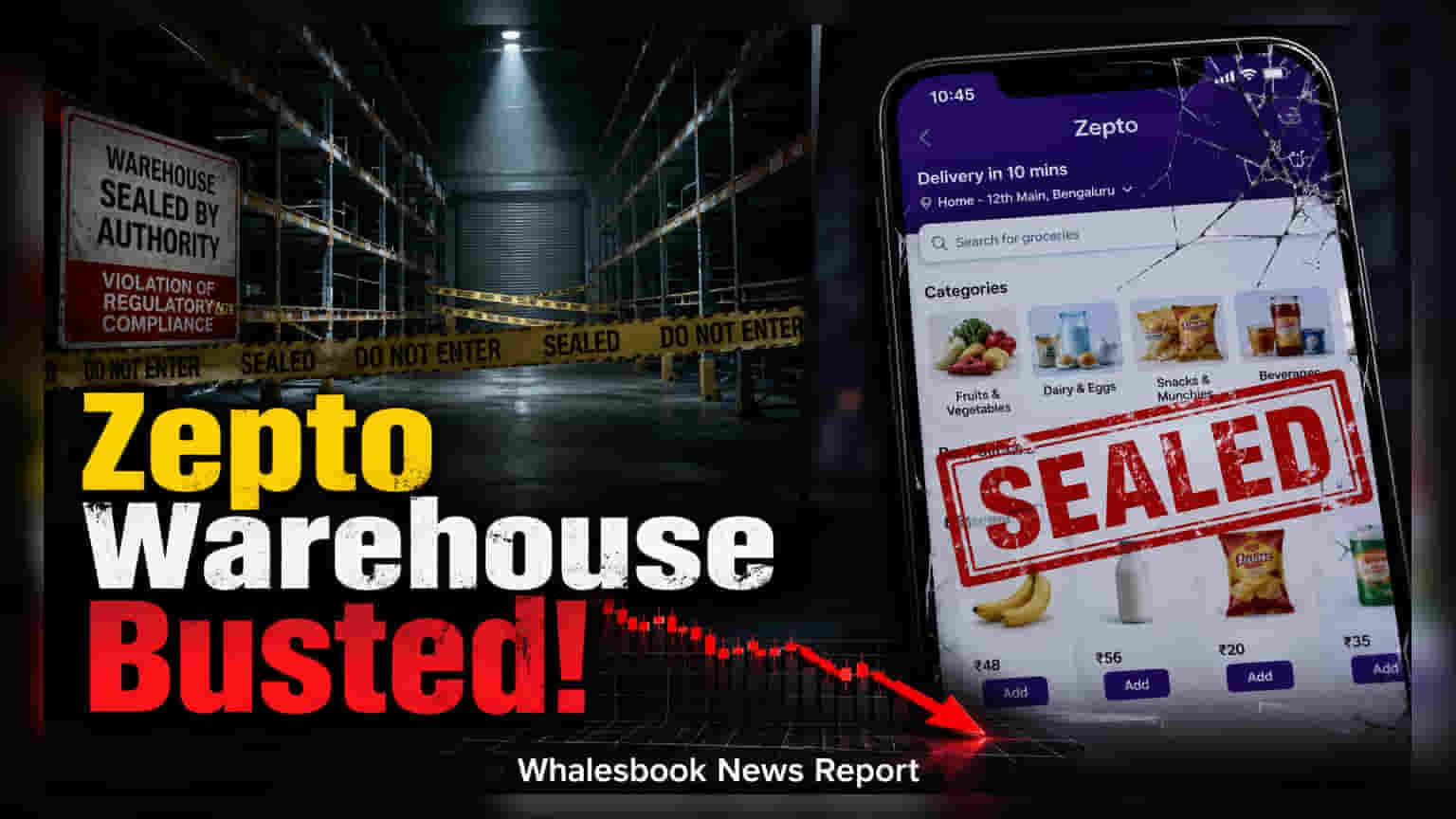
Karnataka authorities have sealed a Zepto warehouse in Bengaluru after finding hygiene and labeling violations. A separate city outlet was also fined ₹25,000. As the quick-commerce firm navigates regulatory scrutiny and funding plans, these operational gaps highlight the growing compliance challenges facing the rapid delivery sector.
Bengaluru’s food safety authorities sealed a warehouse used by the quick-commerce firm Zepto in the Hoskote area on Tuesday, August 11, 2026. The action was taken by the Food Safety and Drug Administration Department following an inspection that revealed multiple violations, including unhygienic food handling and storage practices, as well as non-compliant product labeling and branding.
In addition to the warehouse closure, the authorities imposed a fine of ₹25,000 on a separate Zepto outlet located in Thanisandra for failing to meet cleanliness standards. These enforcement actions are part of a broader, intensified campaign across Bengaluru, where officials are responding to a rising number of public complaints regarding food quality and safety in delivery and storage facilities.
Because Zepto is a private, unlisted company, it does not have a share price that fluctuates on the stock exchange. However, for investors and stakeholders, this event highlights operational risks. As the company works toward its next phase of funding, maintaining strict regulatory compliance is critical. Any repeated lapses in hygiene or labeling can lead to disruptions in the delivery network, potential legal costs, and damage to the brand’s reputation.
The quick-commerce sector in India has been facing increasing oversight. Regulators are paying closer attention to storage facilities, cloud kitchens, and dark stores to ensure they comply with the Food Safety and Standards Act. This follows similar enforcement actions in other parts of the country, where authorities have suspended the licenses of facilities operated by other delivery platforms due to similar hygiene concerns.
The company will likely need to address these compliance gaps to resume operations at the affected location. Moving forward, observers will track whether the firm can strengthen its internal audits and supply chain practices to avoid further regulatory intervention. Ensuring that all storage sites meet safety standards will be a key factor in how smoothly the company can scale its operations in the future.