 Whalesbook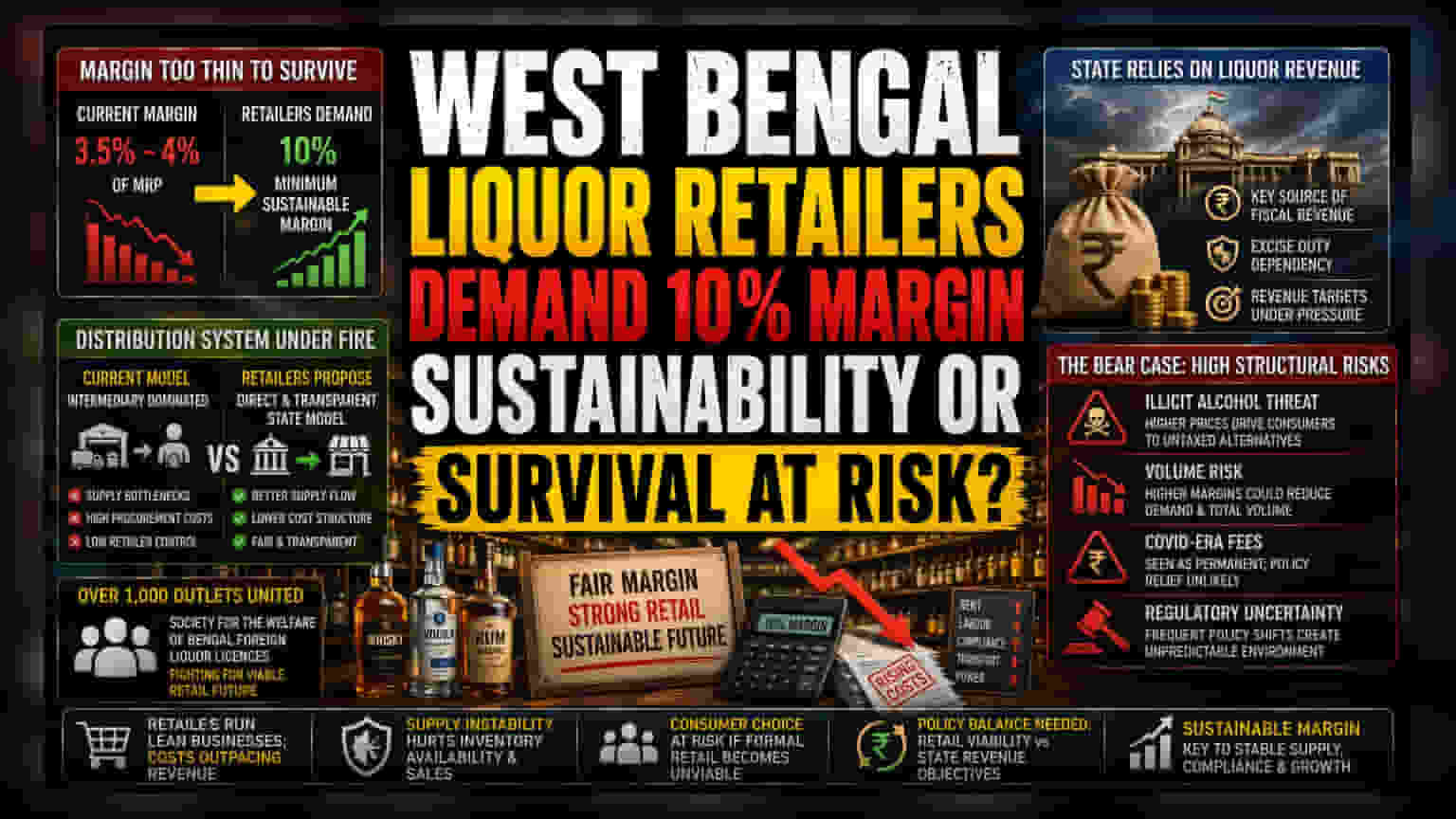


The Economic Squeeze on Retail
The current operational framework for West Bengal’s foreign liquor retailers has reached a breaking point. With trade margins compressed to a razor-thin 3.5% to 4% of the Maximum Retail Price, shop owners contend that the costs of compliance, labor, and localized overhead have outpaced top-line growth. The Society for the Welfare of Bengal Foreign Liquor Licences, representing a broad coalition of over 1,000 outlets, is now positioning a 10% margin as the minimum threshold for sustainable enterprise. This request arrives at a time when the state excise department remains heavily reliant on liquor sales for fiscal health, creating a delicate standoff between administrative revenue targets and the survival of the retail tier.
Structural Friction in Distribution
The conflict extends beyond mere percentage points. At the heart of the retailers' grievance is the state’s current distribution architecture. By advocating for a direct-to-retailer or more transparent state-managed model, the association is challenging the dominance of existing intermediaries who control supply chains. Industry veterans point out that when states prioritize centralized distribution, it often leads to supply bottlenecks and increased procurement costs for retailers, who lack the bargaining power to negotiate with larger regional distributors. Historical data from similar state interventions across India suggests that whenever distribution is heavily controlled by a single state-backed entity, supply chain efficiency often drops, leaving retail inventories vulnerable to fluctuations that hurt monthly revenue.
The Forensic Bear Case
Investors should approach the retail alcohol sector in West Bengal with extreme caution. The sector faces significant structural risks, most notably the persistent threat of illicit, untaxed alcohol gaining market share as formal retail prices rise. Should the state concede to the demand for a 10% margin, the increased cost to consumers could drive demand toward lower-quality alternatives, effectively depressing total volume and neutralizing the revenue gains the government hopes to capture. Furthermore, the reliance on COVID-era special fees suggests that the state excise department views these levies as permanent fiscal pillars rather than temporary measures. Any attempt to dismantle these fees would require a major budgetary adjustment from the state, making a near-term policy reversal highly improbable. Management of these retail entities also remains vulnerable to frequent shifts in regulatory enforcement, which creates an unpredictable environment for long-term capital allocation.