

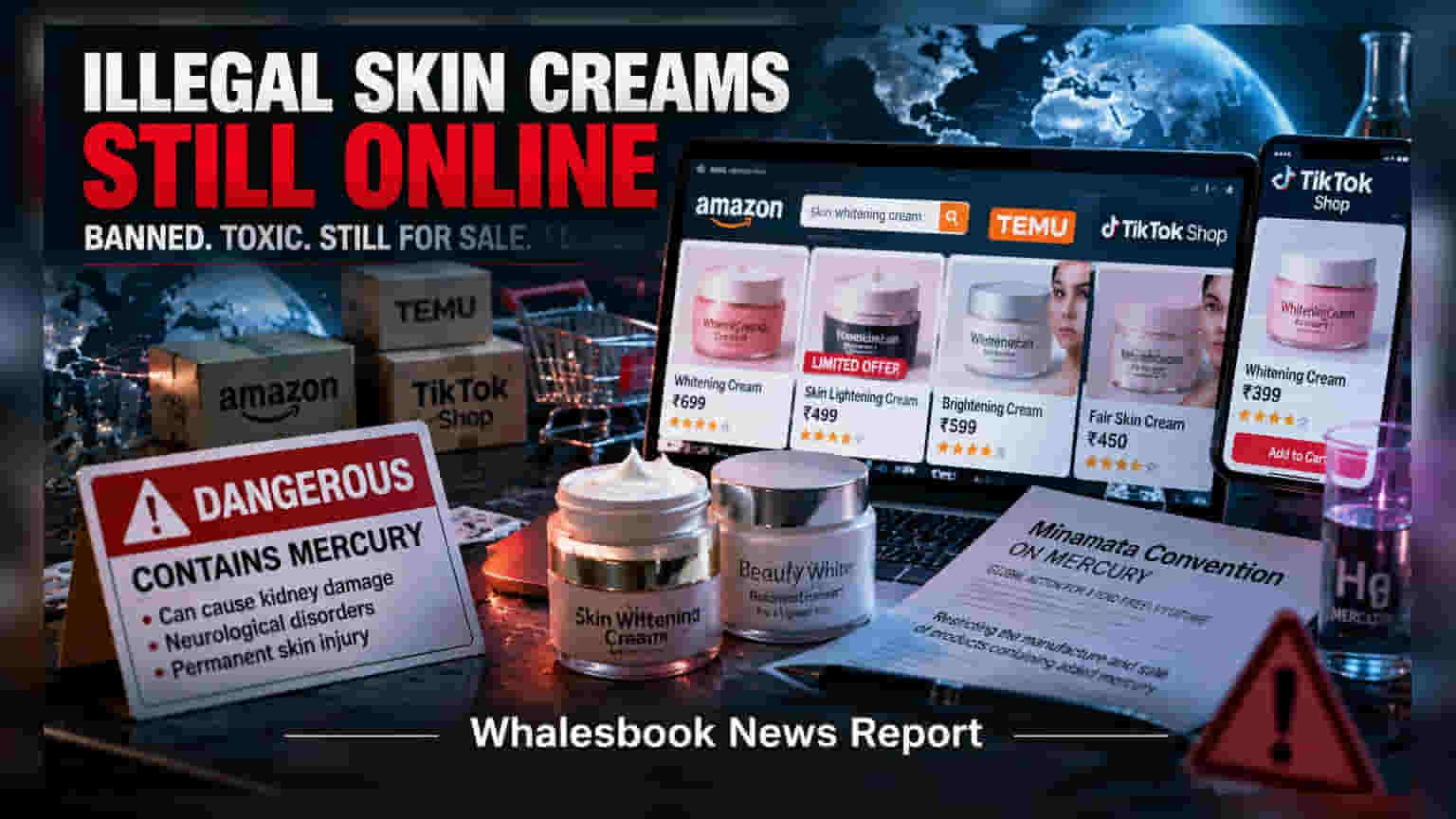
Dangerous skin-lightening creams containing high levels of mercury are still being sold on major global marketplaces, exposing platforms to regulatory scrutiny and legal liability. This persistent issue highlights the ongoing struggle for e-commerce companies to police third-party sellers and avoid potential fines or reputational damage.
Dangerous skin-lightening products containing toxic levels of mercury continue to appear on major global e-commerce websites. Despite international bans and strict safety guidelines, consumers can still find items on platforms like Amazon, Temu, and TikTok Shop that violate the legal limits for mercury content.
The Compliance Challenge for E-commerce Platforms
For investors, this issue represents a significant compliance and operational risk for e-commerce giants. While these platforms have internal policies against selling hazardous goods, the nature of their business model—which relies heavily on millions of third-party sellers—makes enforcement difficult. Sellers frequently evade automated detection systems by altering product names, using vague descriptions, or changing packaging images to mask that the product contains mercury.
This creates a recurring legal liability. Major retailers have previously faced litigation regarding the sale of hazardous products on their platforms. For instance, Walmart once reached a legal settlement that required the removal of mercury-laced creams and mandated proactive testing for third-party inventory. More recently, in August 2026, the Mercury Policy Project filed a lawsuit against Poshmark Inc., alleging a failure to provide necessary safety warnings for such items. As regulators increase their focus on online safety, platforms may face pressure to increase their spending on compliance, verification technology, and legal defense, which can ultimately impact operating margins.
Regulatory and Health Context
Mercury is a toxic substance that can cause severe health complications, including kidney damage, neurological disorders, and permanent skin injury. Under international agreements like the 2013 Minamata Convention, countries have committed to restricting the manufacture and sale of products containing added mercury. In many jurisdictions, including the United States, the legal limit for mercury in such cosmetics is set at 1 part per million (ppm). However, investigations have found that some of these illicit creams contain mercury levels exceeding 30,000 ppm.
What Investors Should Monitor
Regulatory bodies are increasingly viewing e-commerce platforms as responsible for the goods sold through their digital storefronts. Investors may track whether platforms announce new, stricter seller-verification protocols or increased investment in AI-driven compliance tools to detect these products more effectively.
Additionally, the risk of further lawsuits or regulatory fines remains a key monitorable. Any move by governments to pass stricter laws holding platforms directly liable for hazardous third-party goods could force a shift in business models, potentially leading to higher costs associated with verifying the safety of every product listed on these marketplaces.