

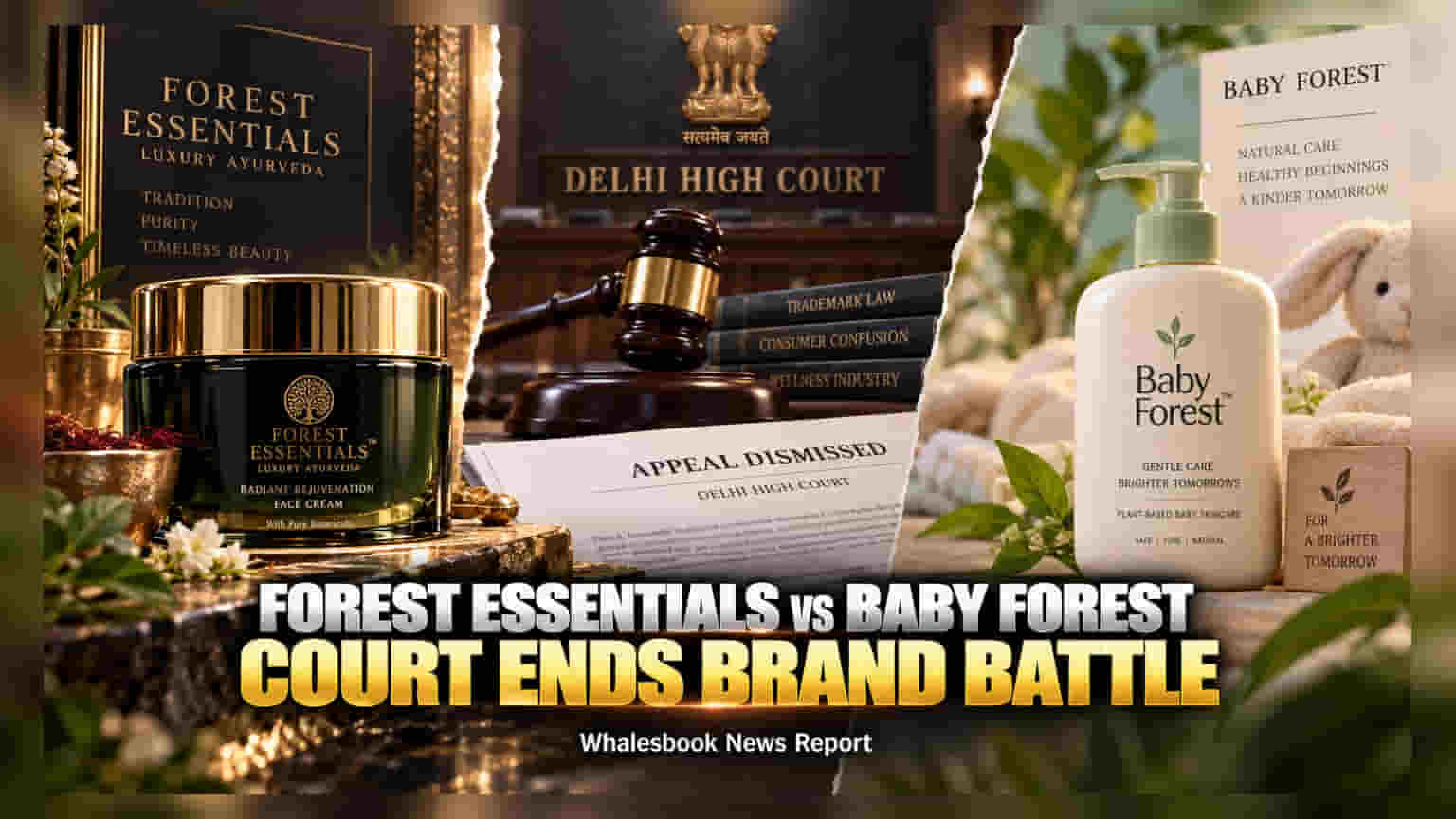
The Delhi High Court has dismissed an appeal from luxury brand Forest Essentials seeking an injunction against Baby Forest over trademark infringement. The court ruled that the word 'Forest' is a descriptive term, allowing the younger company to continue using its brand identity. This decision provides clarity for emerging businesses in the competitive baby care market, which is expected to see significant growth by 2034.
The legal dispute between the established luxury Ayurveda brand Forest Essentials and the insurgent brand Baby Forest concluded in February 2026, with the Delhi High Court dismissing an appeal filed by Forest Essentials. The luxury retailer had sought to prevent Baby Forest from using the word 'Forest' in its brand name, alleging trademark infringement and potential consumer confusion. The court’s decision affirms that the term 'Forest' is descriptive and commonly used within the wellness industry, making it difficult for one entity to claim exclusive rights to the word in isolation.
Forest Essentials, which has received capital backing from The Estée Lauder Companies and maintains an established presence with over 150 stores, reported operating revenue of approximately ₹572 crore for the 2025 financial year. The company had argued that its reputation for purity and luxury was being encroached upon by the naming convention of the newer entrant. In contrast, Baby Forest, founded by Gagan Agarwal in 2022, utilized a different market strategy by focusing on direct engagement with maternity centers and hospitals rather than high-frequency digital advertising.
For investors and industry observers, the resolution of this conflict is a critical point regarding how brand identity is protected in the Indian consumer goods sector. The legal defense argued that trademarks should be viewed in their entirety, a stance supported by the court's finding that the names do not create a deceptively similar impression for the average customer. For Baby Forest, the ruling removes the operational risk of a forced rebranding. While the company is significantly smaller than its competitor, with revenue reaching approximately ₹26.61 crore by FY26, it has achieved profitability, according to company reports.
The broader context of this case reflects the ongoing competition in India’s baby care market, a sector currently valued at $7.7 billion and projected to grow to $11.2 billion by 2034. As the market expands, companies are increasingly focusing on building distinct brand perceptions to capture consumer loyalty. With the legal uncertainty resolved, the monitorable for investors now shifts toward the long-term scalability of the Baby Forest business model and its ability to compete against both traditional players and other emerging brands in the premium baby care segment.