

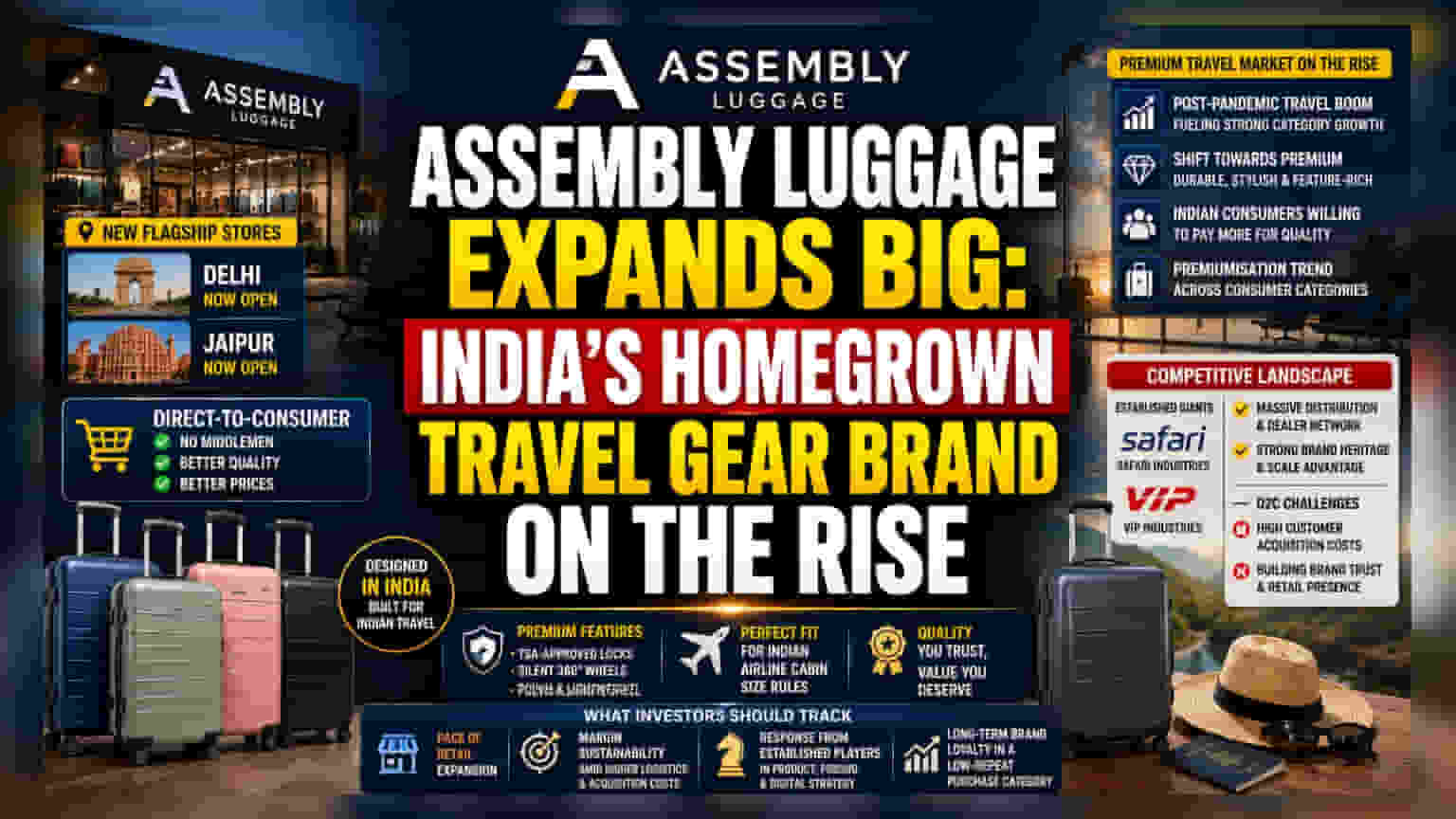
D2C luggage brand Assembly is expanding its physical store footprint and focus on premium, locally designed travel gear. For investors, this highlights the growing shift toward premiumisation in India’s travel sector, where consumers increasingly prefer value-oriented but high-quality alternatives to traditional imports.
What Happened
Assembly Luggage, a direct-to-consumer (D2C) brand, is accelerating its growth in the Indian market with new retail store openings and a focus on premium travel products. The company is positioning itself as a homegrown alternative to expensive imported travel gear, designing its products specifically for Indian travel conditions, such as airline cabin size restrictions. With flagship stores recently launched in cities like Delhi and Jaipur, the brand is moving beyond its online-first approach to establish a physical presence, targeting the modern Indian traveler who looks for a blend of quality, design, and value.
The Direct-to-Consumer Strategy
Assembly’s business model focuses on removing middlemen by selling directly to customers through its own digital platform and physical stores. By designing products in India and manufacturing them to meet global standards, the company aims to avoid the heavy import duties and retail markups that often make international luggage brands expensive for Indian consumers. This strategy allows the brand to offer hard-shell, polycarbonate travel gear at competitive price points, which is a key part of its appeal to value-conscious shoppers who do not want to sacrifice features like TSA-approved locks or silent wheels.
Sector Context: The Rise of Premium Luggage
The Indian travel gear market is experiencing a notable shift driven by a surge in post-pandemic tourism and a growing preference for premium products. Travelers are increasingly moving away from basic, unbranded luggage toward durable, stylish, and feature-rich options. This trend towards "premiumisation" is not unique to travel gear but is visible across many consumer categories in India, where middle-to-upper income buyers are willing to pay more for products that offer better durability and modern aesthetics.
Competitive Landscape and Challenges
While Assembly is a private player, its growth and strategy offer insights into the competitive dynamics of the sector. The Indian luggage industry has long been dominated by established, listed entities such as Safari Industries and VIP Industries, which have massive distribution networks, widespread dealer relationships, and decades of brand heritage.
For a new-age D2C brand like Assembly, competing against these giants involves significant challenges. Established brands benefit from economies of scale and deep-rooted retail presence across tier-1, tier-2, and tier-3 cities. D2C brands, while agile, often face high customer acquisition costs (CAC) as they spend on digital marketing to build brand recall and trust. Sustaining growth requires a delicate balance between maintaining profit margins and investing in the physical retail network necessary to reach a wider customer base.
What Investors Should Track
Investors tracking the travel and consumer goods sector should monitor how the market adapts to the entry of new-age brands. Key monitorables include the pace of retail expansion, the ability of D2C brands to maintain profit margins despite higher logistics and acquisition costs, and whether established, large-cap luggage makers respond by adjusting their own product lines or digital strategies. The long-term success of brands like Assembly will depend on their ability to build brand loyalty in a sector where repeat purchases can be infrequent and competition from legacy players remains intense.