

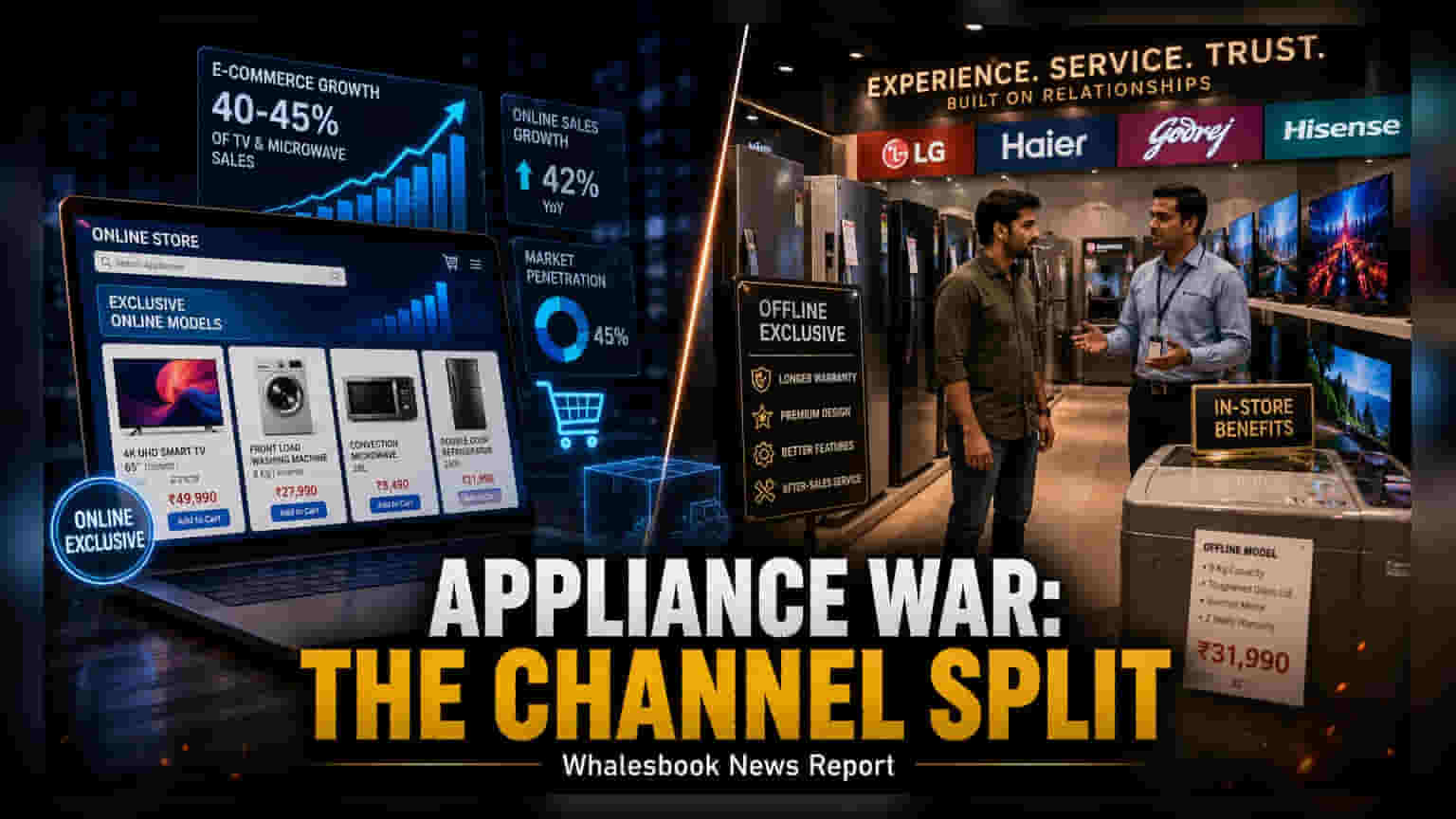
Top appliance manufacturers are launching channel-specific product versions to resolve long-standing friction with physical retailers. By varying features and warranties between online and offline models, companies aim to protect dealer networks while tapping into rising e-commerce demand. This shift addresses the pricing conflict that has challenged major consumer electronics brands for years.
Leading consumer electronics and appliance brands in India are adopting a new strategy to manage channel conflict, a persistent issue caused by the rapid growth of e-commerce. Manufacturers such as LG Electronics India, Haier India, and Godrej Appliances are now creating distinct product versions for online and physical retail channels. This approach, which involves varying specifications, warranty periods, and design features, is designed to reduce the direct price comparisons that have often led to complaints from local store owners.
For investors and market observers, this move highlights the balancing act appliance makers face. While online sales have gained significant traction—now accounting for roughly 40-45% of television and microwave oven sales—physical dealer networks remain crucial for service, customer experience, and distribution. Manufacturers are trying to avoid a scenario where aggressive online discounts alienate their offline partners, who are essential for selling higher-margin, premium products.
Companies are implementing various tactics to differentiate their offerings. LG Electronics India has introduced longer warranties for televisions sold in physical stores compared to online versions. Haier India creates distinct model variations, such as different door designs or water dispensers, to separate its online and offline inventory. Similarly, Godrej Appliances and Hisense India are using factors like capacity, energy ratings, and specific hardware components—such as lid materials or filtration systems—to ensure that the product sold on a website is not identical to the one on a showroom floor.
From a financial and operational perspective, this strategy brings both benefits and challenges. The primary benefit is the preservation of a stable offline dealer network, which provides more consistent revenue and brand support. However, it also introduces operational complexities. Producing separate stock-keeping units for different channels can lead to higher research and development costs and supply chain inefficiencies. Investors should track whether companies can manage these increased manufacturing and logistics expenses without facing pressure on their profit margins.
Additionally, the effectiveness of this strategy will depend on how successfully it reduces the friction with retailers. As online penetration continues to rise, especially for large appliances like air conditioners and washing machines, the ability to maintain a harmonious dual-channel presence will be critical. The market will be watching to see if these product adjustments effectively stop the aggressive discount wars that often erode brand equity and profitability in the long run.