

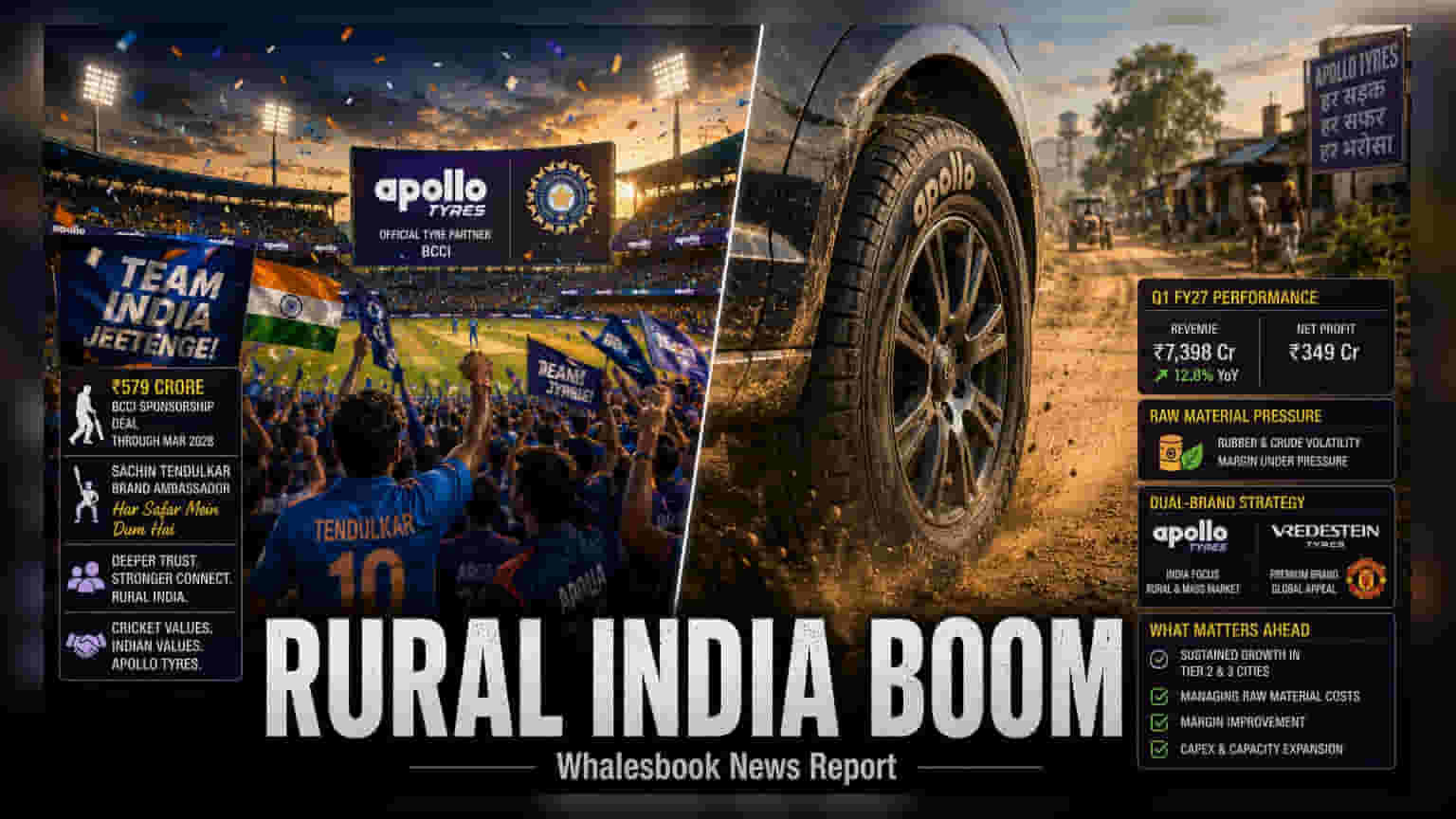
Apollo Tyres is betting on cricket to drive rural expansion, backed by a ₹579 crore BCCI sponsorship. The company reported a 12.8% revenue increase to ₹7,398 crore in Q1 FY27 as it balances brand spending with competitive market pressure.
Apollo Tyres is intensifying its push into India’s rural markets by leveraging the country's massive passion for cricket. The company has committed to a ₹579 crore sponsorship deal with the Board of Control for Cricket in India (BCCI), a partnership that runs through March 2028. By aligning with cricket, Apollo Tyres aims to build deeper trust and brand recall in regions beyond major cities, where tire replacement demand is increasingly crucial for growth.
This marketing strategy is centered on creating high emotional resonance. Brand ambassador Sachin Tendulkar continues to play a central role, most recently through the 'Har Safar Mein Dum Hai' campaign, which was active during the 2026 T20 World Cup. The company believes that associating with the values of cricket—resilience, teamwork, and determination—helps strengthen its position in the competitive tire market.
Financially, the company is navigating a complex landscape. In the first quarter of fiscal year 2027, Apollo Tyres reported a revenue of ₹7,398 crore, a 12.8% increase compared to the previous year. Net profit stood at ₹349 crore. While these figures indicate volume and revenue growth, the company continues to manage pressure on its operating margins. A significant factor here is the volatility in raw material costs, such as rubber and crude derivatives, which forces the company to balance heavy marketing spending with the need for operational efficiency.
The company maintains a dual-brand strategy to manage its diverse market presence. The Apollo brand is largely focused on India and is heavily supported by cricket and local partnerships to reach a broad consumer base. In contrast, the Vredestein brand is positioned as a premium offering with international appeal, supported by a partnership with Manchester United. This bifurcation allows the company to cater to different segments—mass-market rural demand in India and the high-end premium market globally.
Looking ahead, the company faces the constant challenge of intense competition and the need for significant capital expenditure to upgrade and expand its manufacturing capacity. Maintaining profitability while keeping up with these investments will be the primary challenge for management. Investors may watch how the company manages raw material cost fluctuations in upcoming quarters and whether the rural marketing push translates into sustained margin improvements. The success of this strategy will likely depend on the company's ability to turn brand awareness into consistent sales in tier 2 and tier 3 cities, where competition from both domestic and international players remains aggressive.