 Whalesbook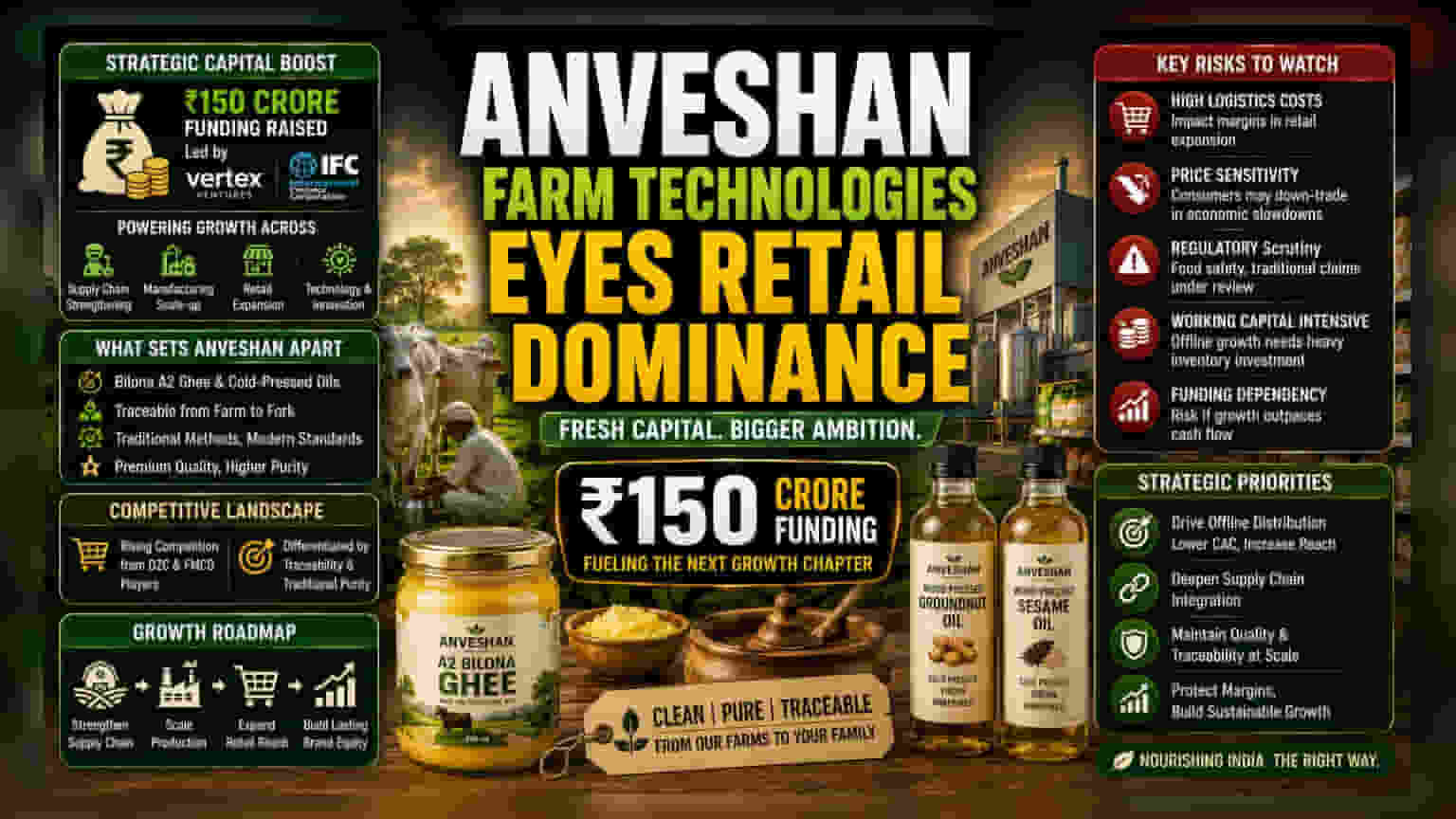


The Capital Injection and Operational Reality
The infusion of ₹150 crore into Anveshan Farm Technologies marks a significant transition from a niche, tech-enabled food producer to a player with ambitions for broader retail dominance. While the participation of institutional heavyweights like Vertex Ventures and IFC provides a stamp of legitimacy, the real test lies in the company’s ability to transition from a digital-first model to a hybrid omnichannel presence without diluting its premium value proposition. Investors are betting on the scalability of the bilona-produced A2 ghee and cold-pressed oil segments, which command higher price points than mass-market staples. However, the operational complexity of maintaining supply chain traceability while expanding production capacity remains a primary hurdle.
Competitive Benchmarking and Market Positioning
The Indian clean-label and traditional food sector has seen a flurry of activity, with competitors like Country Delight and various regional D2C players vying for the same health-conscious urban demographic. Anveshan’s focus on the 'traceable' aspect of its supply chain serves as its primary differentiator, yet it must contend with the reality that premium food startups often struggle with high logistics costs and the difficulty of recurring revenue in the grocery category. Unlike mass-market FMCG incumbents that rely on economies of scale, Anveshan faces the challenge of protecting its gross margins while competing for visibility on crowded e-commerce platforms and modern retail shelves.
The Forensic Bear Case: Scaling Risks
Expansion into offline retail introduces significant structural risks for a company that built its brand on the digital-first, farm-to-consumer narrative. Rapid physical growth typically requires heavy investment in working capital and inventory management, which could pressure the company’s cash flow position faster than anticipated. Furthermore, the Indian consumer market for premium superfoods is notoriously price-sensitive, and any economic downturn could lead to consumer down-trading toward cheaper alternatives. Potential regulatory scrutiny regarding food safety standards and the rigorous verification required for 'traditional' and 'wild forest' claims could also impact operational timelines as the business scales across diverse geographies. The reliance on external funding to bridge the gap between product premiumization and mass adoption remains a classic vulnerability in the current venture funding climate.
Strategic Trajectory
Looking ahead, the success of this capital deployment will likely be measured by the company's efficiency in lowering customer acquisition costs through its new offline initiatives. Industry analysts expect the firm to prioritize supply chain integration over aggressive marketing in the near term to protect margins. Whether the company can effectively scale its manufacturing without compromising the artisanal quality that initially attracted its investor base will define its path toward potential future liquidity events or further funding rounds.