

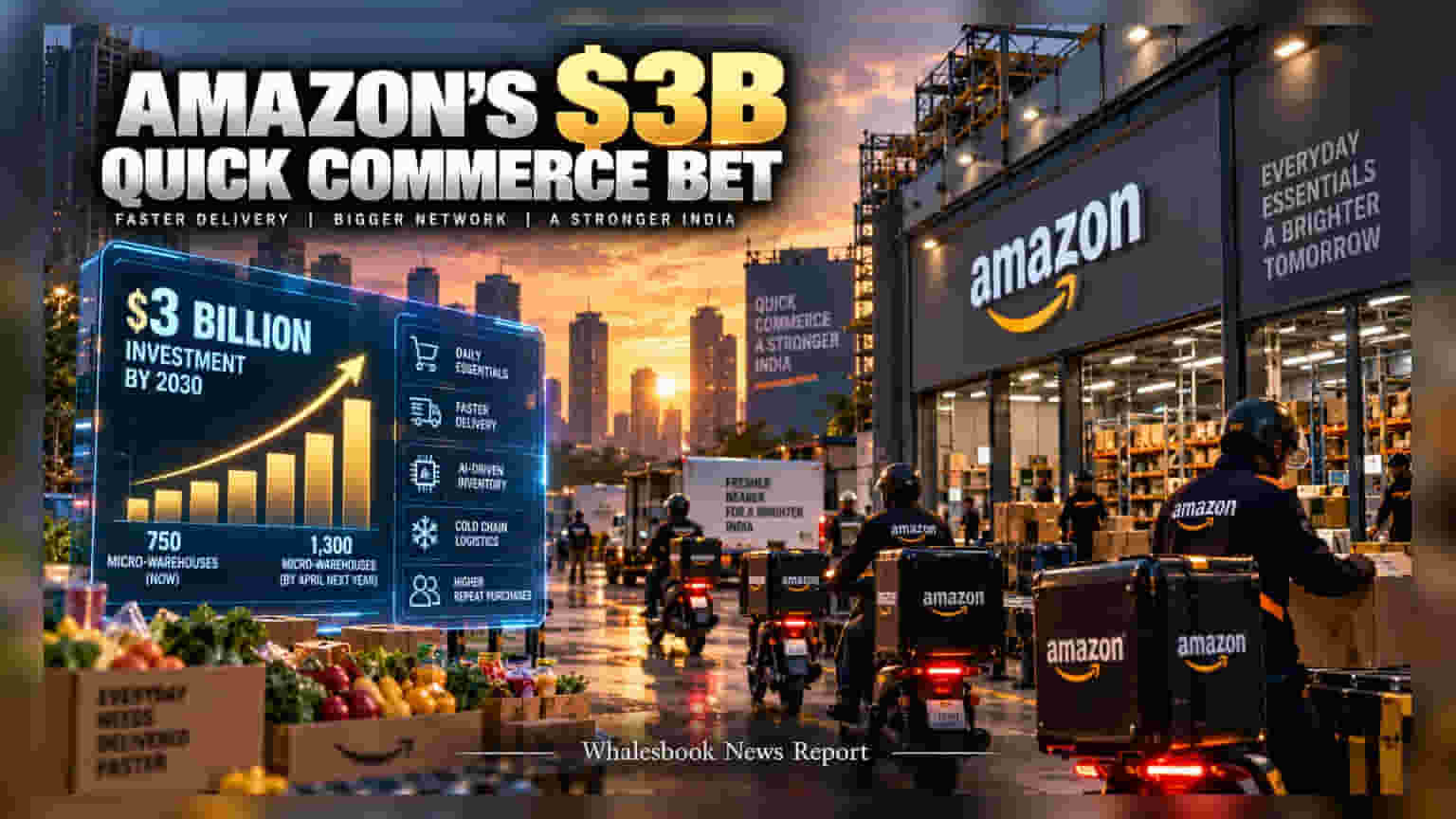
Amazon has announced a $3 billion investment plan to expand its quick commerce business in India by 2030, aiming to challenge rivals like Blinkit, Swiggy, and Zepto. The capital will fund a massive increase in warehouse infrastructure, focusing on daily essentials to drive growth in the $41 billion sector.
Amazon is planning a significant financial commitment of $3 billion to grow its quick commerce presence in India by 2030. The company has structured this investment in two phases, starting with $1 billion to be deployed through 2027, followed by a $2 billion phase to boost infrastructure and logistics capabilities. A key element of this expansion is the rapid scaling of micro-warehouses, with the company aiming to increase its network from approximately 750 to 1,300 units by April next year.
Strategic Focus on Daily Essentials
Unlike its broader e-commerce platform that handles a wide range of electronics and home goods, the company’s quick commerce strategy is centered on daily essentials. The goal is to drive high repeat-purchase activity, which helps stabilize profit margins. To support this, Amazon is deploying AI tools to improve demand prediction and inventory management, ensuring that its cold chain logistics remain efficient. This shift represents a deliberate choice to focus on high-frequency consumption rather than high-value, discretionary items.
Competitive Landscape and Challenges
The quick commerce sector in India is highly competitive, with established domestic players commanding a significant market position. Currently, Zomato-owned Blinkit, Swiggy, and Zepto hold a combined market share of approximately 77%, while Flipkart holds 11%. Amazon currently sits at 6.2%. Despite the gap, the company has managed to generate over $1 billion in annualized gross sales in the most recent quarter, leveraging its existing customer base to pull users toward its rapid delivery service.
Investors should note that the sector faces ongoing pressure from complex regulations, particularly regarding foreign direct investment (FDI) in multi-brand retail and increasing scrutiny over gig worker and rider safety. The aggressive expansion also implies a period of high cash burn, which is common in the quick commerce race as companies compete for market share through discounts and faster delivery timelines.
Monitoring Future Execution
The ultimate success of this expansion will depend on the company’s ability to execute its infrastructure plans effectively and manage unit economics. Moving forward, the key things to track include how the company manages its delivery costs, the impact of these investments on its overall profitability, and whether it can effectively migrate its large base of existing e-commerce shoppers into the quick commerce ecosystem. Market participants will also watch for any changes in the regulatory environment, which could alter how these companies operate their warehouse networks.