

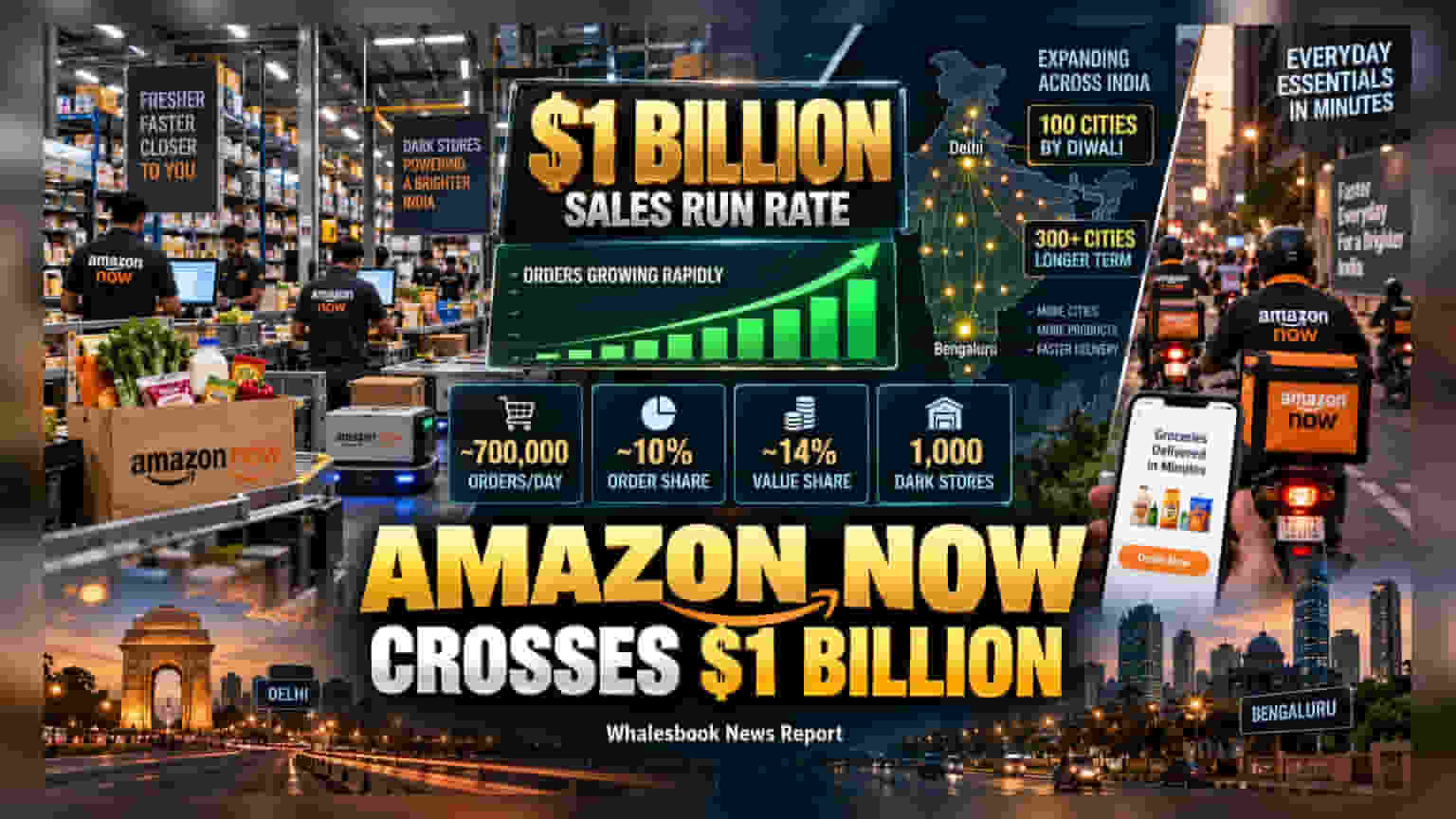
Amazon's quick-commerce service, Amazon Now, has crossed a $1 billion gross annualized sales run rate. This rapid growth intensifies competition with listed and private players like Blinkit, Swiggy Instamart, and Zepto, bringing more pressure on profitability and market share in the quick-commerce sector.
Amazon's quick-commerce venture, Amazon Now, has officially crossed a $1 billion gross annualized sales run rate in India. The platform is now processing approximately 700,000 orders daily, capturing roughly 10% of the market by order volume and 14% by value. This milestone is significant because it marks a rapid scale-up for a service that entered the Indian quick-commerce race months after rivals like Blinkit, Swiggy Instamart, and Zepto had already established their operations.
For the Indian market, this entry is not just about the milestone but about the aggressive expansion that follows. Amazon plans to increase its presence to 100 cities by Diwali and aims to have 1,000 dark stores—its specialized micro-fulfillment centers—operational by the end of this year. This pace of expansion signals that Amazon is prepared to spend heavily to catch up, leveraging its existing Prime membership base and logistics network to gain traction.
This development has direct implications for listed companies and market incumbents. The quick-commerce space has been a major growth driver for Zomato, which owns Blinkit, and is a crucial part of the business model for Swiggy. Amazon’s entry as a well-funded, large-scale competitor introduces potential pricing pressure and higher customer acquisition costs across the entire sector. As Amazon aims to attract both mass-market and premium customers, incumbents may face challenges in maintaining their current profit margins while defending their market share.
The quick-commerce model remains capital-intensive, requiring high spending on dark stores, inventory, and last-mile delivery fleets. Investors tracking this sector should be aware that the aggressive push for scale often comes at the cost of short-term profitability. While Amazon benefits from a massive existing logistics ecosystem, the high-frequency nature of quick commerce poses operational challenges that can lead to high cash burn.
There are also regulatory and operational risks to monitor. India has strict foreign direct investment rules regarding e-commerce, particularly concerning how foreign-funded companies manage inventory and pricing. Any shift in government policy or stricter enforcement regarding the quick-commerce operations of foreign entities could impact Amazon's expansion plans. Additionally, domestic trade bodies have previously expressed concerns regarding the impact of rapid quick-commerce expansion on small, traditional retailers. Any potential regulatory pushback remains a risk factor for all major players in the industry.
The key monitorable for investors in the coming quarters will be how companies manage the balance between growth and profitability. Investors should look for updates on order volumes, take-rates, and whether the heavy spending on dark stores and expansion leads to actual market share gains or if it merely increases sector-wide pressure. The next phase will likely be decided by which platform can achieve operational efficiency while maintaining service quality in the face of intense competition.