 Whalesbook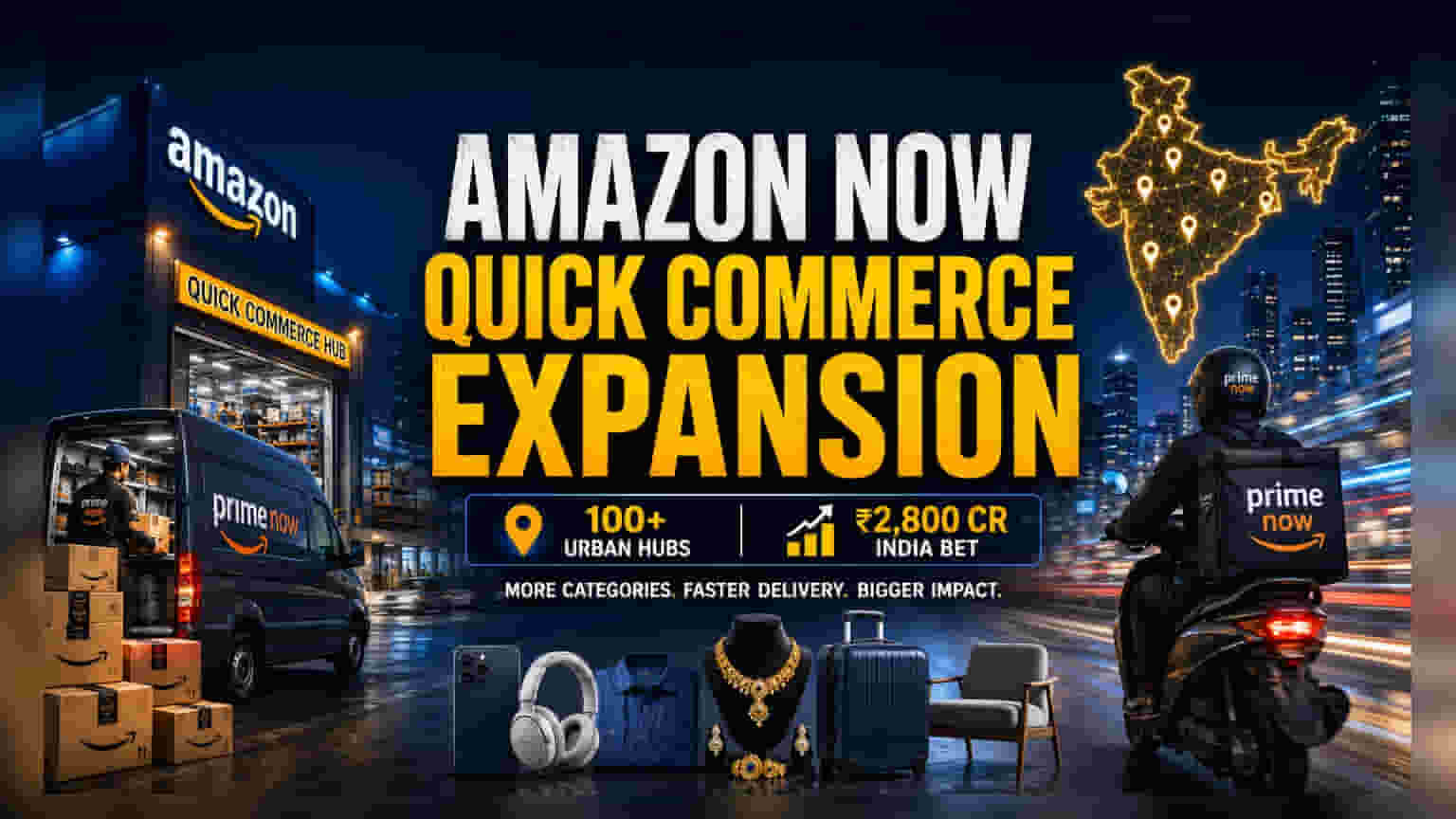


Amazon India is scaling its quick commerce operations by launching 100 new 'Urban Fulfillment Centres'. This move aims to deliver a wider range of goods, including electronics and fashion, within minutes. The strategy escalates competition with existing players like Blinkit, Zepto, and Swiggy Instamart, while highlighting the high-investment nature of the quick commerce sector.
What Happened
Amazon India is significantly increasing its presence in the quick commerce market by rolling out more than 100 new facilities called Urban Fulfillment Centres. These hubs are designed to help the company expand its Amazon Now delivery service. The core strategy is to move beyond the traditional quick commerce focus on groceries and daily essentials. Instead, these new centers will stock a much broader variety of items, such as apparel, electronics, jewelry, furniture, and luggage.
This expansion is a part of a larger planned investment of over ₹2,800 crore in India for 2026. This comes on the heels of a ₹2,000 crore investment in 2025 that focused on setting up fulfillment and sortation centers across the country.
Why This Matters For Investors
The quick commerce sector has been defined by a race to provide the fastest delivery times, usually restricted to groceries and small household items. By increasing the number of stock-keeping units (SKUs) at these urban hubs to four or five times the capacity of standard micro-fulfillment centers, Amazon is attempting to change the customer habit of waiting for same-day or next-day delivery to receiving items in minutes. For the broader Indian market, this signals that the '10-minute delivery' model is evolving into a more complex 'everything store' format.
Competitive Landscape
This move puts Amazon in direct competition with established quick commerce leaders like Blinkit (owned by Zomato), Zepto, and Swiggy Instamart. While these companies have traditionally focused on high-frequency grocery purchases to build customer loyalty, Amazon’s entry with a wider catalog—including high-value items like electronics and watches—could alter the competitive dynamics. Investors in the broader consumer and food-delivery sector are closely watching whether this increased variety will translate into higher order values or if the operational complexity will weigh on margins.
Operational Risks and Challenges
Operating large fulfillment centers within dense urban areas presents significant challenges. Real estate costs in major Indian cities are high, which increases the overhead expenses for these facilities. Managing inventory for a wider variety of goods, including electronics and fashion, is more complex than managing groceries. There is a risk that holding a larger, more diverse inventory could increase the potential for unsold stock or obsolescence. Additionally, the speed of delivery for these larger items will depend heavily on the efficiency of the company's 'last-mile' delivery network, which includes delivery partners and urban traffic conditions.
Financial Context
Amazon’s strategy relies on a hybrid model. It will continue to use its existing network for fast-moving daily necessities, while the new Urban Fulfillment Centres will serve as the backbone for the expanded product range. The substantial capital spending indicates that the company is willing to absorb high initial costs to capture market share. In this sector, profitability often takes a backseat to user acquisition and the expansion of the 'share of wallet'—meaning the company wants to be the first app a user opens for any purchase, not just groceries.
What Investors Should Track
The most important monitorable for the industry is how the 'unit economics'—the profit or loss made on each delivery—holds up with this shift toward a wider product mix. Investors should look for updates on order values, as higher-value items like electronics could improve the average order value, potentially offsetting the high delivery costs. Other key factors to track include the speed of the rollout, whether customer adoption rates continue to grow as the catalog expands, and how incumbent players like Zomato and Swiggy adjust their own inventory strategies in response to this new competition.