

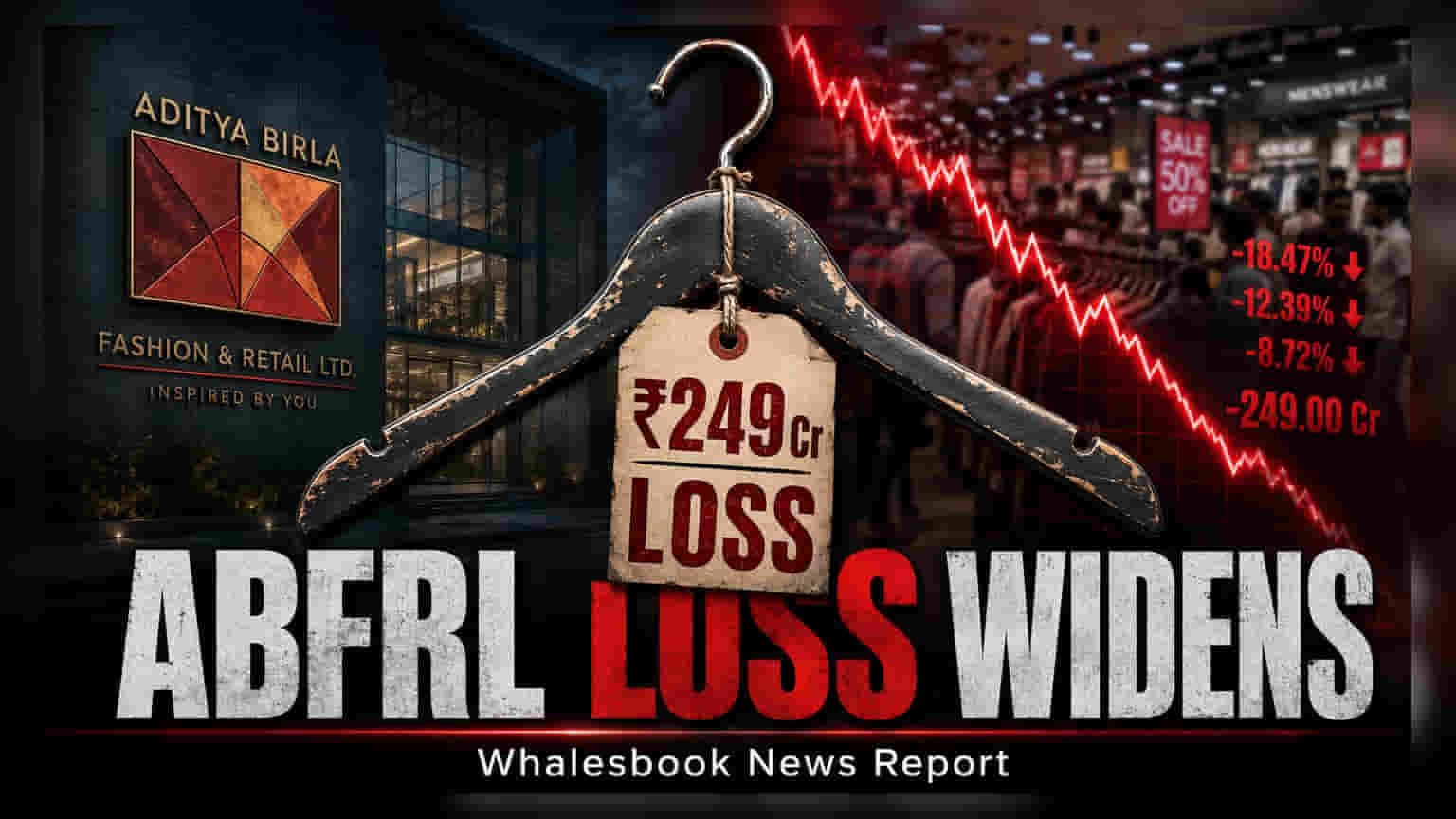
Aditya Birla Fashion and Retail (ABFRL) reported a net loss of ₹248.73 crore for the quarter ending June 2026, as total expenses outpaced revenue growth. While the company recorded a 10.6% rise in revenue, costs climbed by 11.5%, putting pressure on margins. Investors are tracking how the company's newer ethnic and retail segments manage profitability in this high-cost environment.
Aditya Birla Fashion and Retail Ltd. (ABFRL) has reported a consolidated net loss of ₹248.73 crore for the first quarter of the 2026-27 financial year. This figure is wider than the ₹233.73 crore loss the company reported in the same quarter last year. The results, released for the period ending June 30, 2026, highlight the ongoing challenge the company faces in balancing its expansion efforts with rising operational costs.
While the company saw growth in its top line, with revenue from operations rising 10.6% to ₹2,025.56 crore, this growth was offset by a sharper 11.5% increase in total expenses, which touched ₹2,395.45 crore. For shareholders, this gap between revenue growth and expense escalation is a primary area of focus, as it reflects the difficulty of keeping margins steady amid a push for retail growth.
The company’s performance was split across its key retail formats. The Pantaloons business remained a stable contributor, delivering revenue of ₹1,204.39 crore, a 10% increase compared to the previous year. However, the 'Ethnic and Others' segment continues to be a point of stress for the bottom line. Financial filings indicate that this specific segment recorded a loss of ₹188.54 crore, which effectively dragged down the overall consolidated profitability.
It is important for investors to view these results in the context of the significant restructuring the Aditya Birla Group completed last year. Effective May 1, 2025, the company demerged its Madura business into a separate listed entity known as Aditya Birla Lifestyle Brands Limited (ABLBL). This entity took over premium brands like Van Heusen, Louis Philippe, and Allen Solly. Consequently, the current ABFRL structure is now heavily focused on its retail formats like Pantaloons and a portfolio of designer ethnic brands, including Sabyasachi, Tarun Tahiliani, and Jaypore.
Because the business model has shifted significantly since the demerger, the company is in a transition phase. It is betting on the long-term potential of the ethnic wear market and newer retail formats, but these areas currently require heavy capital spending and operational support, which contributes to the higher expense levels.
Moving forward, investors may track whether the company can control its cost structure and improve the efficiency of its ethnic wear division. The speed at which these newer segments can move toward profitability will be the main factor in how the company's consolidated margins trend in the coming quarters. Market watchers will also look for management commentary on how they plan to manage liquidity and reduce the pressure on profitability given the current expense run rate.