

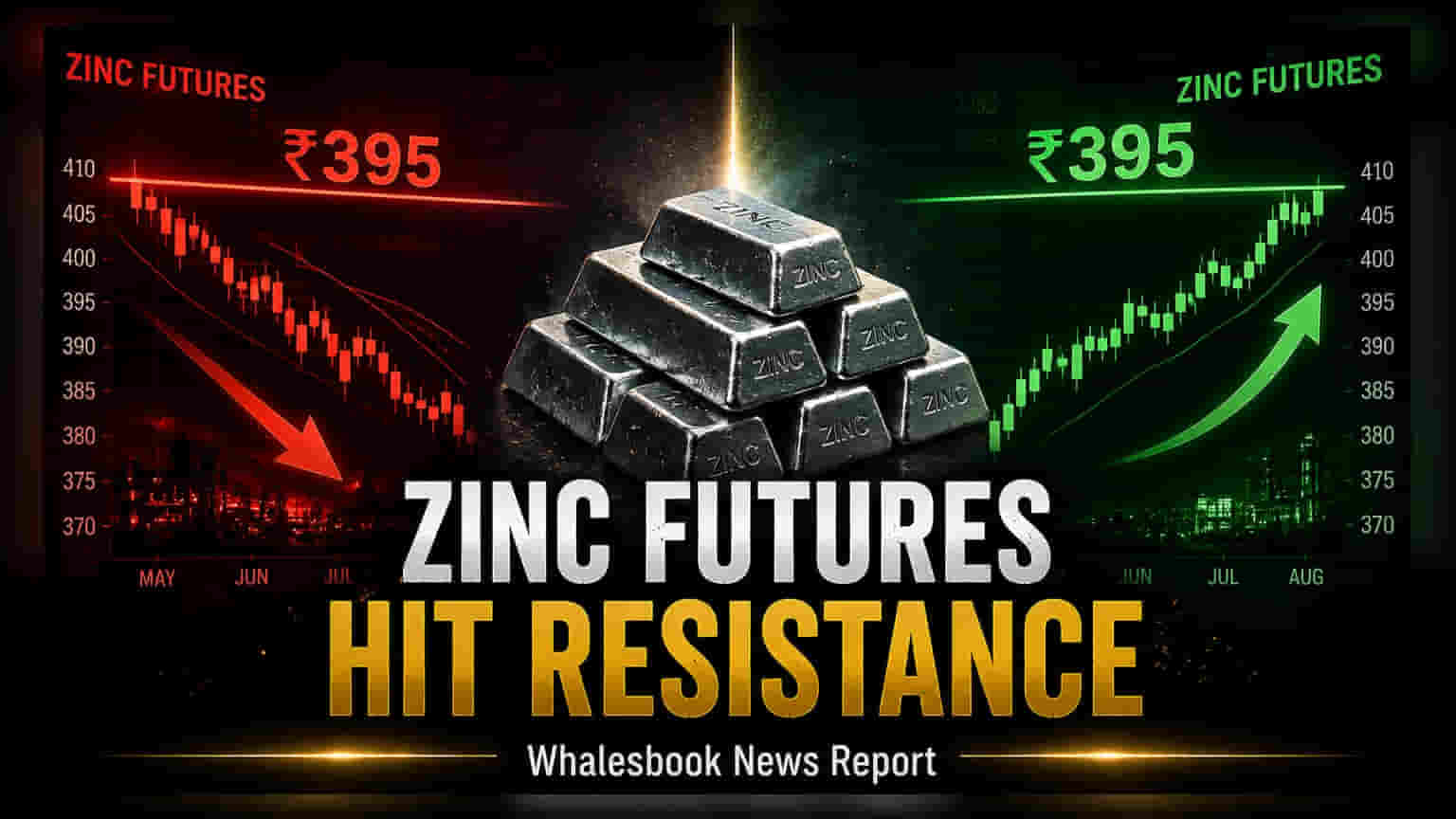
Zinc futures on the MCX are trading near ₹393 per kg, approaching a major resistance level at ₹395. While global supply constraints from major miners provide long-term support, technical factors suggest the price may face a near-term correction toward the ₹382–384 range.
Zinc futures on the Multi Commodity Exchange (MCX) have maintained an upward trend since the final week of June, rising from support levels around ₹350. As of August 6, 2026, the August futures contract is trading near ₹393 per kilogram, showing resilience in the current market environment.
Despite this strong performance, the contract is now approaching a significant trendline resistance level at ₹395. In technical market analysis, a resistance level represents a price point where buying momentum often struggles to push further, frequently leading to a period of consolidation or a temporary price decline.
Market participants are closely watching this level. If the contract fails to break and sustain itself above ₹395, it could trigger a minor price correction. Analysts indicate that in such a scenario, the price might ease back toward the ₹382–384 support zone. A breach below ₹382, and subsequently ₹380, would be seen as a sign that the immediate bullish momentum is weakening. However, many observers note that a sustained drop below the ₹380 support level remains less likely, given the underlying strength of the current uptrend.
Factors Influencing Price Trends
The broader rally in zinc prices is supported by structural supply-side constraints. Global output has faced challenges in the first half of 2026, with production declines reported by major mining companies such as Glencore, Boliden, and MMG. Additionally, supply has been tightened by operational maintenance at smelting facilities in China, which has kept the market sensitive to production news.
While supply tightness provides a floor for prices, investors should monitor potential risks that could dampen sentiment. These include fluctuations in the USD/INR exchange rate and changes in global industrial demand, which directly impact commodity pricing. Furthermore, any unexpected or sharp increase in zinc stocks held in London Metal Exchange (LME) warehouses could lead to downward pressure on futures contracts.
Because of the potential for a price dip near the ₹395 barrier, some market participants often engage in profit-booking at these levels, preferring to wait for price stability before entering fresh positions. The key monitorable for the coming sessions will be whether the contract can decisively breach the ₹395 mark or if technical resistance forces a temporary retracement to lower support levels.