

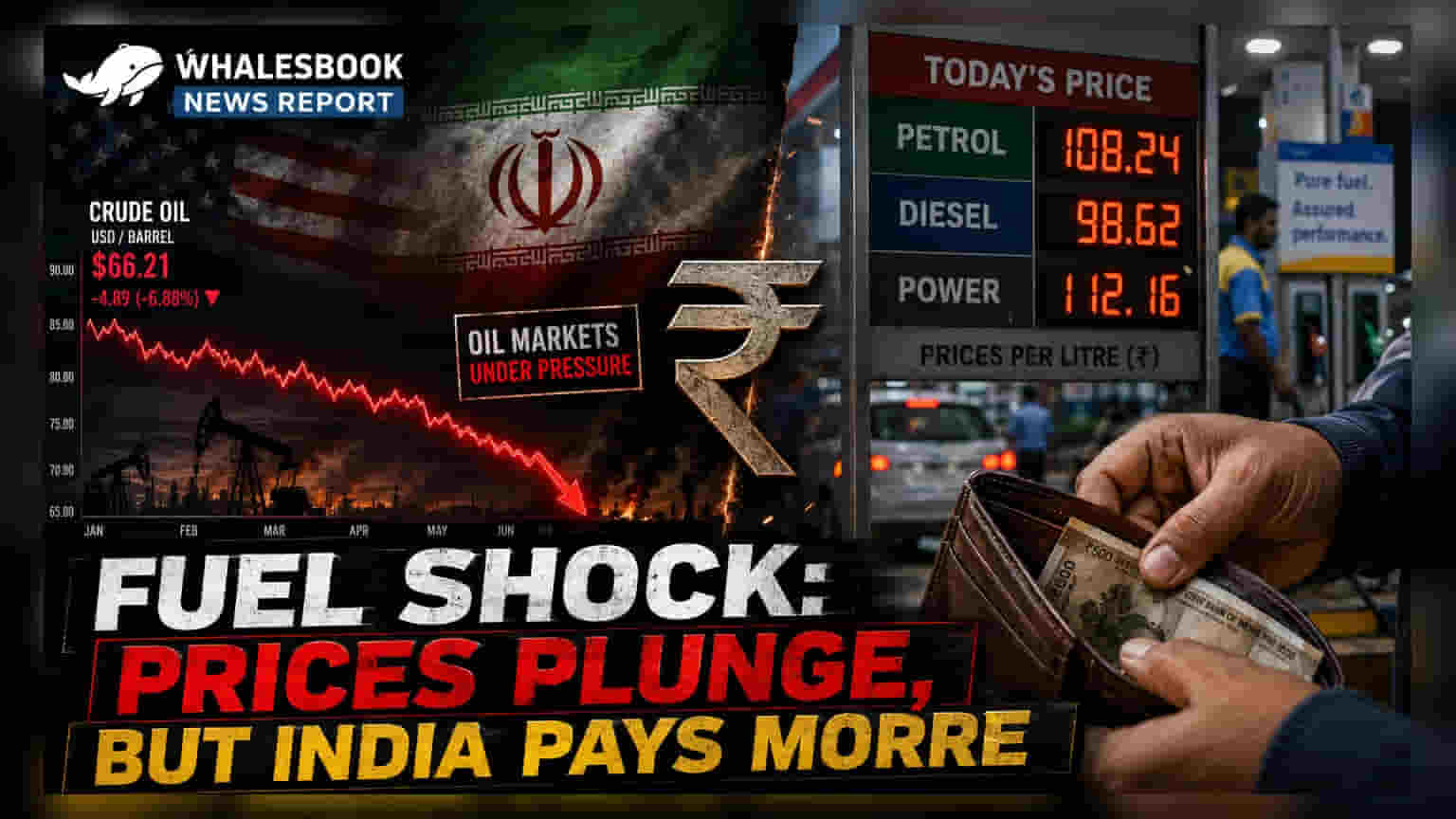
Global crude oil prices have fallen toward $70 per barrel, yet Indian retail fuel prices remain unchanged. Oil marketing companies are currently prioritizing the recovery of past losses, while the government remains cautious about restoring excise duties amid fiscal needs.
What Happened
Global crude oil prices have seen a significant decline, currently trading near $70 per barrel. This is a notable drop from earlier peaks near $120 per barrel, driven by improved geopolitical stability in West Asia and the reopening of key trade routes like the Strait of Hormuz. Despite this downward trend in global commodity prices, retail prices for petrol and diesel at Indian pumps have not seen a corresponding reduction. For Indian consumers and investors, this creates a disconnect between global market movements and local retail pricing, which is primarily influenced by state-run oil companies and government fiscal policy.
The Financial Health of Oil Marketers
Public sector oil marketing companies (OMCs), including Indian Oil Corporation, Bharat Petroleum, and Hindustan Petroleum, play a central role in this pricing structure. These companies have historically absorbed price fluctuations to keep retail rates stable. According to government data, these state-run firms accumulated significant losses—reaching approximately Rs 74,781 crore—due to selling fuels below cost during periods of high crude prices. Industry experts suggest that OMCs need crude oil to stabilize around the $75 per barrel mark for a sustained period of 6 to 12 months to clear these past losses. Until these balance sheets are restored to profitability, these companies face pressure to maintain current retail pricing.
Government Revenue and Fiscal Strategy
Beyond the profitability of OMCs, the government’s fiscal position remains a major factor. In previous years, the central government reduced excise duties on petrol and diesel to cushion the impact of rising global costs on consumers. These cuts resulted in substantial revenue trade-offs for the state. Economists and policy advisors note that the government is likely to prioritize restoring these excise duty levels before passing the benefits of lower crude prices to the public. Additionally, the government must manage ongoing capital spending commitments and fiscal deficit targets, which influences the decision to keep fuel tax collections stable.
Inventory and Geopolitical Considerations
Retail pricing is also affected by the timing of crude procurement. Refineries are currently processing crude inventory purchased at higher market prices during the recent period of geopolitical conflict. The financial benefit of cheaper oil only reaches the domestic market once these older, higher-cost stocks are fully depleted and refineries start processing new, lower-priced shipments. Furthermore, policymakers are likely observing the durability of current geopolitical calm in West Asia. Any volatility could quickly reverse the price gains, making the government hesitant to implement immediate cuts that might be difficult to reverse later.
What Investors Should Track
For investors following the oil and gas sector, the key monitorables include the sustained level of crude oil prices and the pace of under-recovery reduction by OMCs. Future updates on quarterly margin performance for Indian Oil, BPCL, and HPCL will provide insight into how quickly these firms are recovering their losses. Additionally, market participants will watch for any government announcements regarding the revision of excise duties, which will serve as a lead indicator for potential changes in retail petrol and diesel prices in the latter half of 2026.