

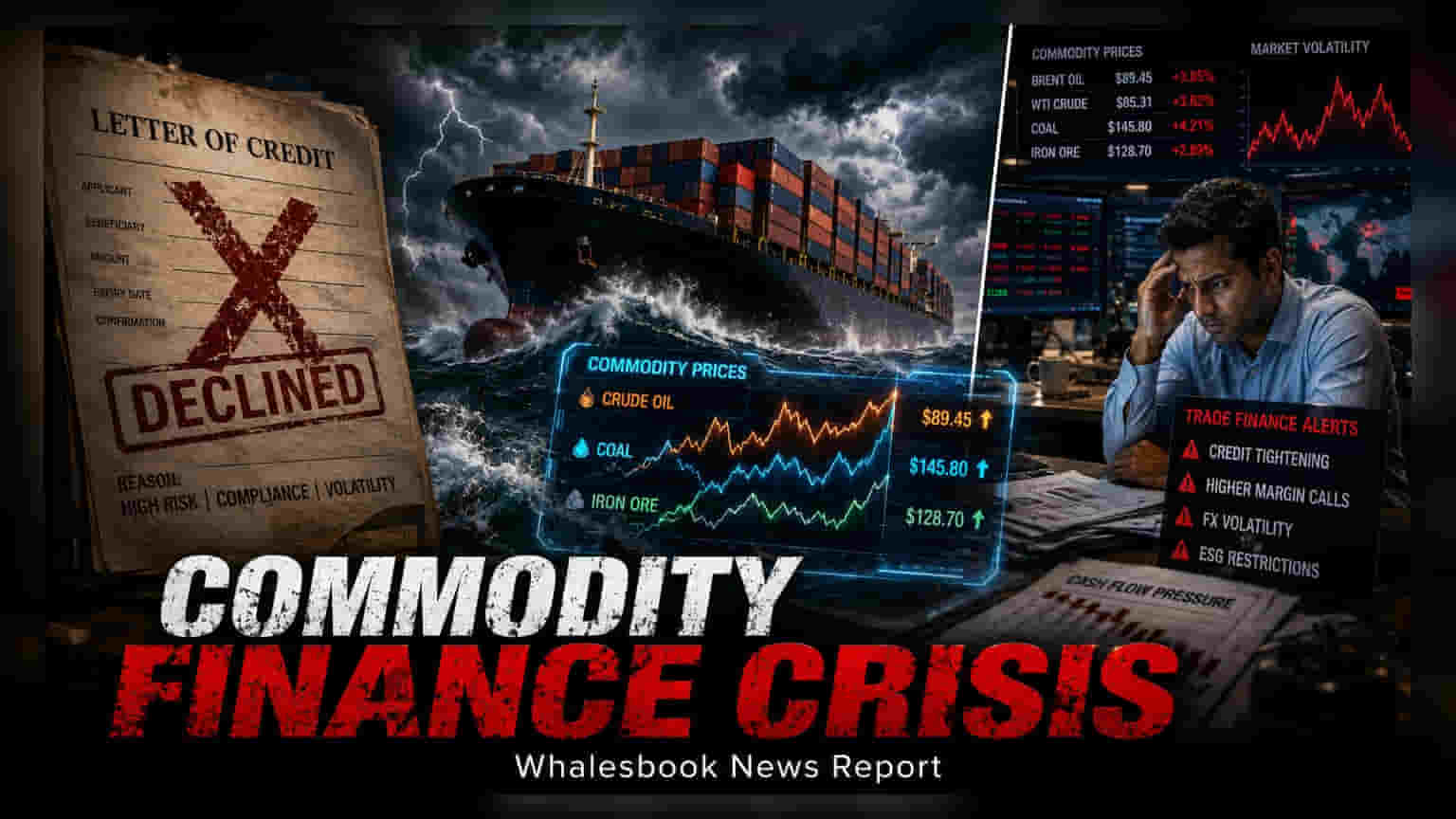
Rapid swings in global commodity prices and complex lending rules are complicating cross-border trade finance. For companies reliant on international supply chains, these challenges can strain cash flow and introduce unpredictable costs, making robust financial management a key factor for investors to track.
International commodity trading is facing a period of intense pressure as price volatility and complex regulatory hurdles make it harder for businesses to secure financing. While global trade relies on credit to keep goods moving, the unpredictable nature of prices—seen recently in sharp fluctuations for oil and industrial materials—is forcing a rethink of how these deals are funded.
The Mechanics of Financing Pressure
When commodity prices rise rapidly, the cost of a standard trade deal balloons. A company that previously secured a shipment with a fixed credit line may find that same credit line insufficient when the value of the goods doubles. This forces businesses to tie up more of their own cash, or capital, to complete the same volume of trade. If payments from buyers are delayed or if shipping times lengthen, that capital remains locked for longer periods, reducing the flexibility of the company's balance sheet.
Conversely, when prices drop, lenders may demand additional security because the value of the goods—the collateral—has fallen. This can trigger sudden calls for more cash or guarantees, putting immediate pressure on a company’s liquidity.
Understanding the Hidden Hurdles
Beyond price swings, trade finance is complicated by strict local regulations and environmental, social, and governance (ESG) standards. For instance, specific foreign exchange rules in different countries can unexpectedly delay the movement of funds, leaving suppliers and buyers in a deadlock. Furthermore, some lenders are increasingly restrictive about financing certain commodities, such as thermal coal, due to sustainability mandates. These factors mean that even a deal with a solid buyer can face significant financing roadblocks.
Risks That Investors Should Watch
Investors analyzing companies heavily involved in commodity imports or exports should look beyond top-line revenue growth. The ability of a business to navigate these transactions depends on how it manages four core risks:
- Credit Risk: The likelihood that a buyer may default or delay payment, which is critical in an uncertain economic environment.
- Commodity Risk: The danger of goods degrading in quality or perishing while in storage or transit, which directly affects their market value.
- Price Risk: The threat that the market value of the commodity will plummet while the goods are moving, creating a financing gap.
- Currency Risk: The potential for losses arising when a company trades in currencies that are fluctuating against each other.
Companies with strong balance sheets and established reputations are often better equipped to handle these complexities. However, firms with high debt levels may find it difficult to adjust when lenders tighten their requirements. When reviewing financial reports, investors may monitor working capital trends, the company's approach to hedging against price swings, and management commentary regarding credit availability for their trade operations. The primary monitorable for shareholders is whether the company can maintain steady operations and profit margins without excessive reliance on expensive or unstable short-term borrowing.