

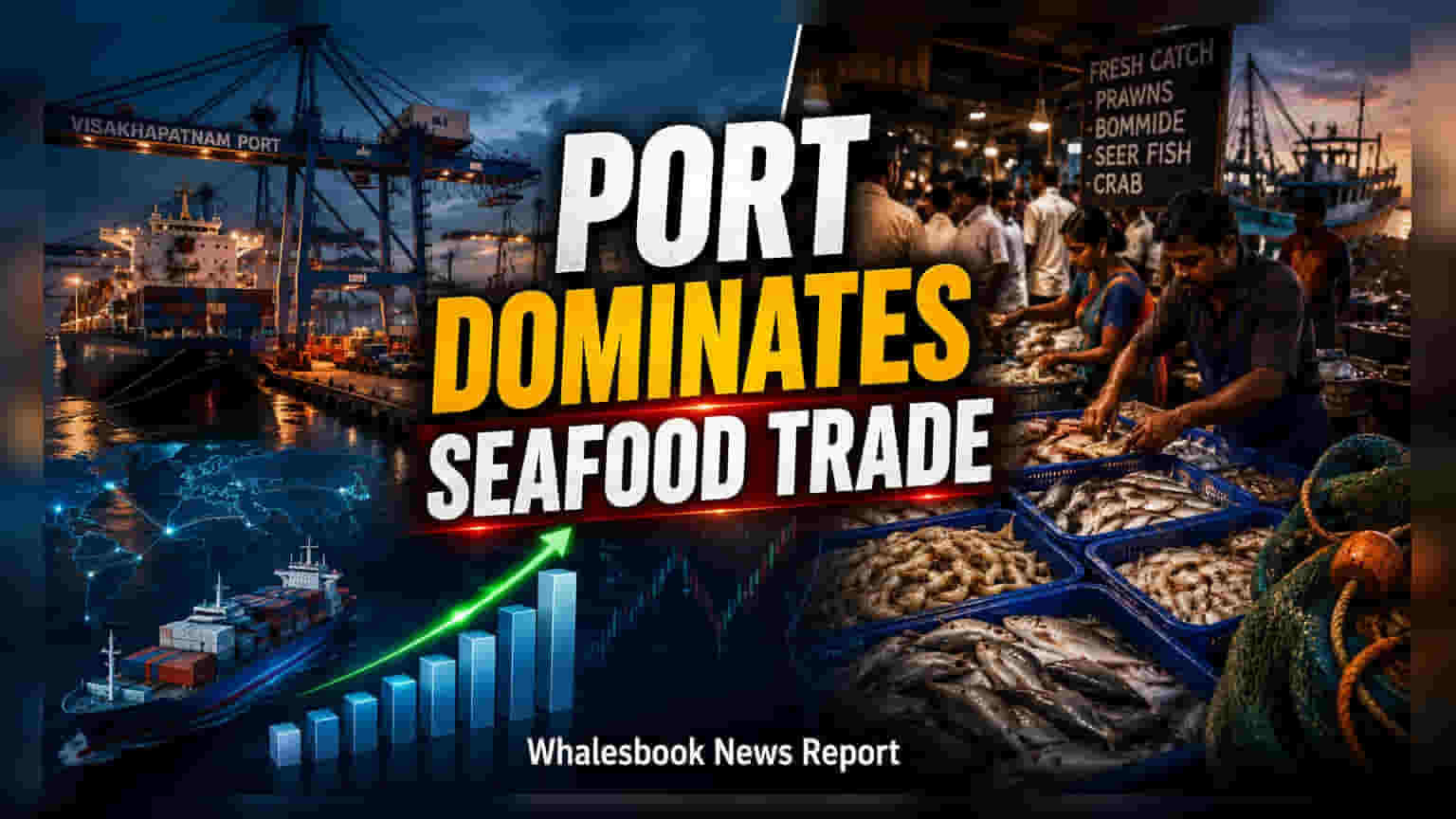
Visakhapatnam Port has emerged as India's primary seafood export gateway, managing nearly half of all national marine product shipments in fiscal year 2026. This shift underscores the growing importance of regional infrastructure in India's commodity trade and local industrial growth strategies.
Visakhapatnam Port has solidified its position as a central hub for India’s marine product exports, accounting for 49% of the nation's total seafood shipments in the 2025-26 fiscal year. Recent government data shared in the Lok Sabha indicates a notable trajectory in the port's activity, with its share of total marine exports rising from 29% in the 2023-24 financial year to 50.87% in 2024-25 before settling near the 49% mark.
Infrastructure and Trade Dynamics
This concentration of trade volume highlights the port's evolving role in India's logistics framework. As a major outlet for marine products, the port’s performance is closely linked to the demand for Indian seafood in international markets. For investors, this shift indicates that regional port efficiency and the underlying logistics network are becoming vital components in the country's export competitiveness. The ability of the port to sustain these volumes is supported by the broader One District One Product (ODOP) initiative, which aims to streamline the movement of goods from production centers to global markets.
Strategic Focus on Local Industries
The state of Andhra Pradesh has identified 99 products across 26 districts under the ODOP program, with marine products forming a significant portion of this focus. By facilitating buyer-seller meets and participating in international exhibitions, the state government is attempting to reduce market access barriers for local producers. These initiatives are intended to encourage the transition toward more value-added processing within the state, potentially improving margins for regional exporters who previously relied on raw commodity sales.
Investor Monitorables
The sustained reliance on a single port for nearly half of India's seafood exports introduces specific dependencies. Investors may track whether port congestion or logistical bottlenecks in Visakhapatnam could impact export timelines, especially during peak harvesting seasons. Additionally, the success of the ODOP initiative will depend on the state’s ability to scale processing infrastructure, as consistent demand from export markets remains subject to global price fluctuations and international food safety regulations. Future performance will likely hinge on the port's capacity to maintain operational efficiency while supporting the planned increase in value-added marine products from the region.