 Whalesbook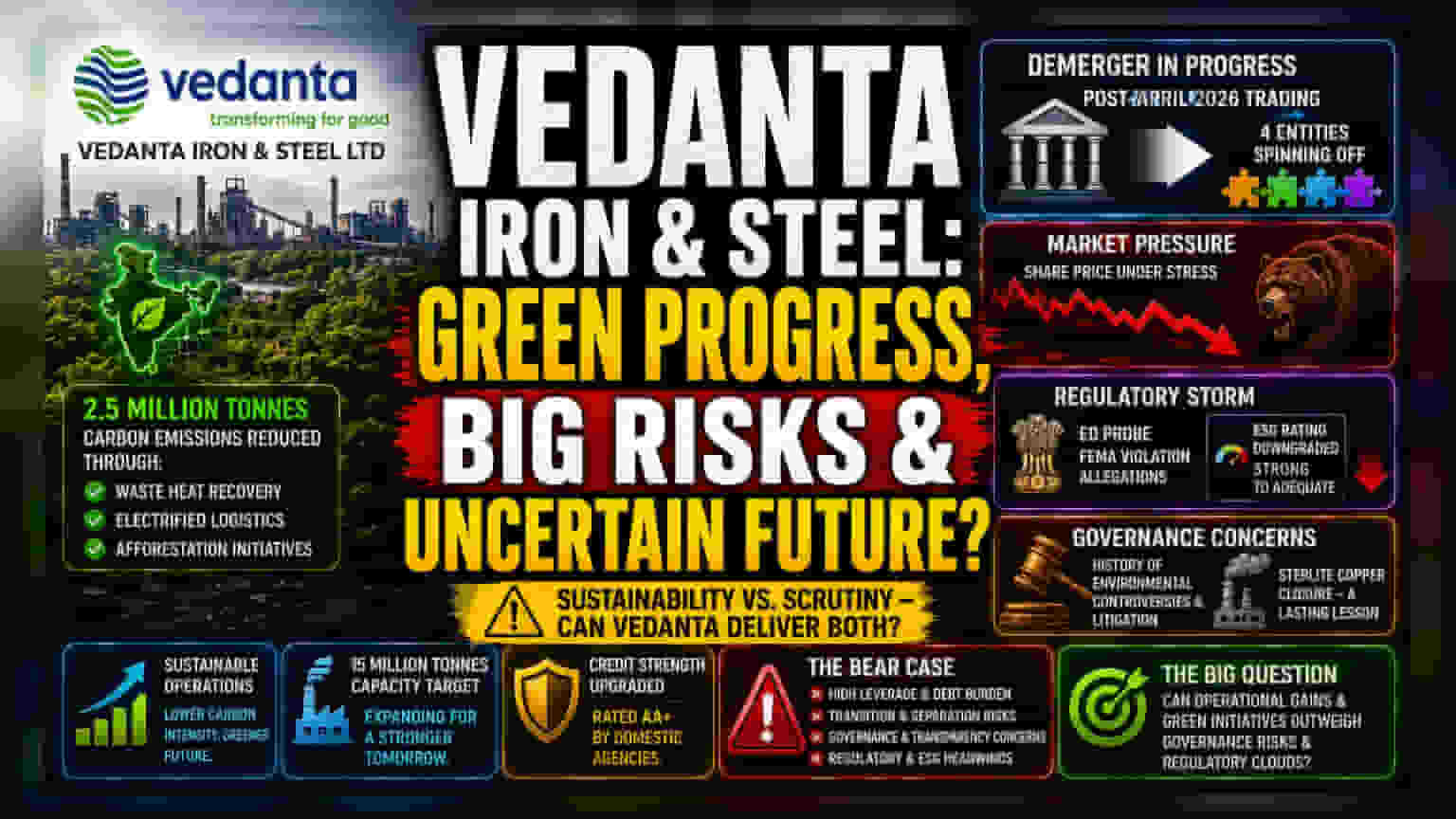


The Sustainability Narrative
Vedanta Iron and Steel Ltd (VISL), the commodity arm currently navigating a complex separation from its parent, has reported a multi-year reduction of 2.5 million tonnes in carbon emissions. The company attributes this to a mix of waste heat recovery at its Amona and Bokaro plants, the electrification of internal logistics, and large-scale afforestation efforts at its Goa mining sites. While these metrics reflect an operational shift toward lower carbon intensity, the timing of this disclosure coincides with a period of heightened corporate turbulence for the broader Vedanta Group.
The Demerger and Market Friction
The narrative of operational efficiency must be weighed against the structural reality of Vedanta’s current standing. Having officially moved into a post-demerger trading phase as of late April 2026, the company is undergoing a massive reorganization intended to unlock shareholder value. However, the market has responded with significant volatility. Shares have faced downward pressure, punctuated by sell-offs that reflect uncertainty regarding the valuation of the four newly spinning-off entities, including the iron and steel unit. Investors appear increasingly focused on the transition risks and the dilution of parent company financials rather than the incremental environmental wins of specific subsidiaries.
Regulatory and Governance Hurdles
The ESG-focused headlines from the company’s iron ore segment are being overshadowed by mounting regulatory scrutiny. Reports of Enforcement Directorate investigations into alleged FEMA (Foreign Exchange Management Act) violations regarding royalty payments to the parent company, Vedanta Resources, have introduced a substantial governance discount to the stock price. Furthermore, the company has recently contended with an unsolicited ESG rating downgrade from an external agency, which dropped it from a 'Strong' to an 'Adequate' category. These developments complicate the company’s appeal to sustainability-mandated institutional capital, which often relies on third-party verification rather than self-reported emission statistics.
The Forensic Bear Case
From a risk-averse perspective, Vedanta remains a complex play with structural vulnerabilities. While the iron and steel arm targets a capacity expansion to 15 million tonnes, the group continues to struggle with high leverage and a history of environmental controversies that have triggered litigation in the past. The closure of its Sterlite Copper unit remains a landmark failure in reconciling environmental responsibility with production objectives. Despite recent credit rating upgrades to AA+ from domestic agencies, the underlying tension remains: can a company burdened by multi-billion dollar expansion plans and historical governance allegations successfully pivot to a green utility model? The current regulatory atmosphere suggests that any operational 'green' achievements may face intense skepticism from both regulators and the street until a clearer, transparent governance record is established.