

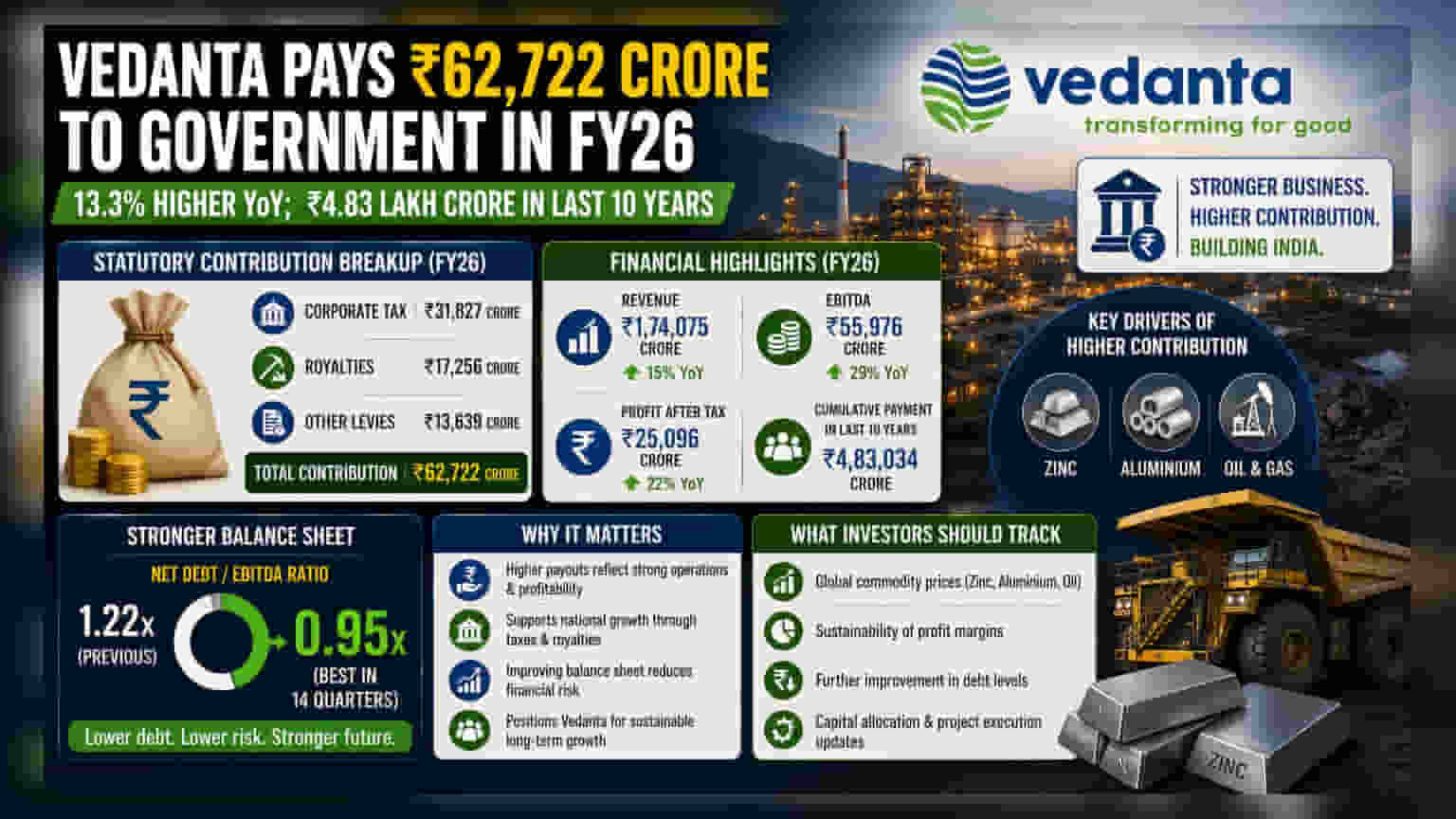
Vedanta Limited contributed ₹62,722 crore to the national exchequer in FY26, a 13.3% increase over the previous year. This payout, driven by strong operational performance across its mining and energy segments, highlights the company's high cash generation. For investors, the figures point to improved financial health and debt reduction, though the business remains sensitive to global commodity price cycles.
What Happened
Vedanta Limited reported a contribution of ₹62,722 crore to the government treasury for the fiscal year 2026. This statutory payment includes corporate taxes, royalties, and various levies across its business operations. The figure marks a 13.3% rise compared to the previous financial year, indicating a higher volume of business and profitability during the period. The company noted that this contribution is part of a cumulative payout of ₹4,83,034 crore made over the last decade.
The Financial Context
The increase in government payments follows a period of strong financial results for the company. Vedanta reported revenue of ₹1,74,075 crore, up 15% year-over-year. Operating profit, or EBITDA, grew significantly by 29% to ₹55,976 crore, while profit after tax climbed 22% to ₹25,096 crore. In the resources sector, such payouts and profits are often linked to the scale of operations and the pricing environment for metals like zinc, aluminium, and oil. The company stated that its zinc, aluminium, and oil & gas segments were the primary drivers for these statutory outflows.
Debt and Balance Sheet Position
For investors, one of the most important takeaways from this update is the status of the company's balance sheet. Vedanta has struggled with high debt levels in the past, which has historically been a major risk factor for shareholders. The company reported that its net debt-to-EBITDA ratio improved to 0.95x, the best level in 14 quarters, compared to 1.22x previously. A lower ratio suggests that the company is using its cash flow to reduce borrowings, which is generally viewed positively by analysts and credit agencies as it lowers interest expenses and financial risk.
Why Investors Should Track This
While the high tax payout confirms large-scale operations and strong cash generation, investors should remain aware of the cyclical nature of the business. The mining and metals sector is highly sensitive to global commodity prices. If prices for commodities like aluminium or zinc fall, the company’s revenue, profit, and consequently its ability to pay taxes and manage debt, could be impacted. The improvement in debt levels is a positive indicator, but maintaining this momentum requires stable operational execution and disciplined capital allocation.
What Investors Should Monitor
Moving forward, the primary focus for shareholders will be the company’s ability to sustain these profit margins if commodity prices fluctuate. Investors may track future updates on debt reduction, as this remains the key monitorable for the stock’s long-term stability. Additionally, management commentary on future capital spending and project execution will be important to understand how the company plans to balance growth with maintaining a cleaner balance sheet.