 Whalesbook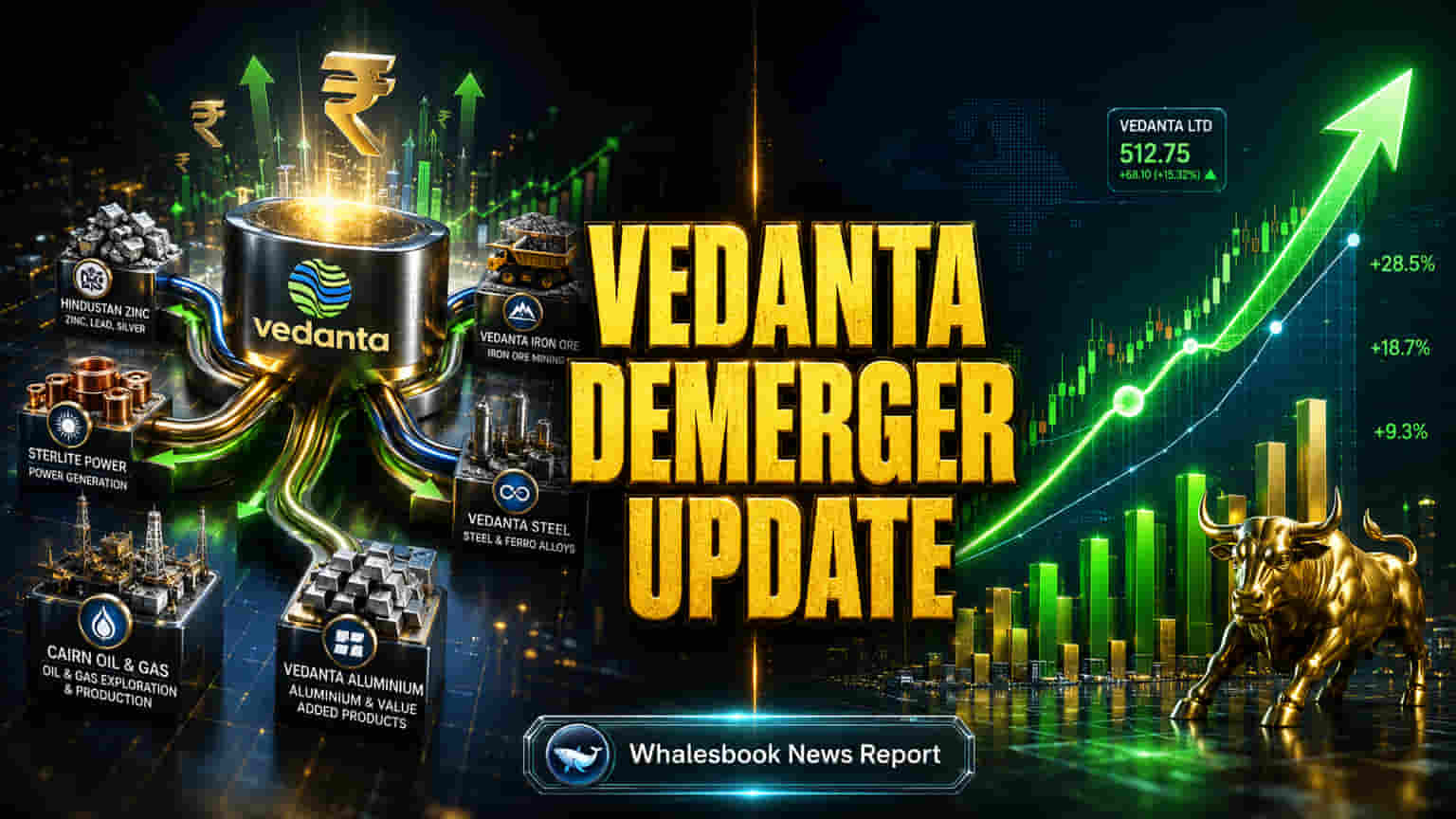


Vedanta Demerger Nears Completion, Aims for Focused Growth
Vedanta's plan to split its diverse operations into five separate listed companies is close to being finalized. Shareholders are set to receive new shares by May 11, 2026, with the new companies expected to list by mid-June. This strategic move aims to remove a conglomerate discount and drive focused growth, promising clearer strategies and specific capital allocation for segments including aluminium, oil & gas, power, iron & steel, and a residual entity for zinc and other metals. Chairman Anil Agarwal calls this a transformational phase, detailing ambitious expansion plans. These include boosting aluminium capacity significantly to 6 million tonnes annually and a $5 billion investment program for Vedanta Oil & Gas.
Mixed Outlook for New Entities Amid Competition and Debt
While the demerger intends to create standalone businesses, their individual futures will depend heavily on industry trends and competitive standing. Vedanta Aluminium enters a strong global market with prices around $3,200 per tonne expected for 2026, driven by demand from EVs and infrastructure. However, it faces rivals like Hindalco Industries (P/E ~14.3x-14.6x) and National Aluminium Company (NALCO) (P/E ~11.9x-13.1x). This segment will be assigned the largest debt burden, estimated at $3.27 billion post-demerger. Vedanta Oil & Gas faces differing forecasts for crude oil prices: ANZ predicts Brent crude at $90+ for 2026, while J.P. Morgan sees an average of $60 due to weak underlying conditions. Its main competitors are ONGC (P/E ~8.5x-9.9x) and Oil India. Vedanta's oil and gas segment aims for zero debt after the split.
The Iron & Steel division will compete with major players such as JSW Steel (P/E ~37.19x-41.79x) and Tata Steel (P/E ~28.72x-29.94x). Vedanta Power will face Tata Power, Adani Power, and NTPC amidst predictions of strong growth in India's energy sector. Global steel demand is forecast for slight growth in 2026, supported by infrastructure projects, though concerns about overcapacity remain. The residual Vedanta entity, backed by its stake in Hindustan Zinc (P/E ~18.22x-18.49x), offers stability but likely slower growth compared to its newly separated siblings. The overall valuation is debated, with analyst price targets varying widely from ₹320-330 for the demerged entity to pre-demerger valuations near ₹1000 based on adding up individual parts.
Key Risks: Debt, Competition, and Commodity Prices
Debt Burden Scrutiny: The primary risk lies in how Vedanta's total net debt, estimated at ₹53,400 crore as of FY26, is distributed among the new entities. Vedanta Aluminium is expected to take on the largest share ($3.27 billion). Vedanta Power faces the highest debt-to-earnings ratio, with a net debt-to-EBITDA of 4.7x. While analysts suggest these ratios might be manageable if cash flows remain strong, volatile commodity prices could reduce profits and hinder debt repayment and refinancing efforts, especially for the more leveraged segments. The residual entity, carrying $1 billion in net debt, is highly dependent on Hindustan Zinc's performance and dividends, which may limit its standalone growth potential.
Competitive Disadvantage & Execution Risk: Despite ambitious expansion plans, individual entities may struggle against large, well-funded competitors. Vedanta Aluminium's P/E ratio of 21.57x (TTM) is higher than the sector average of 9.9x and Hindalco's 14-15x. Similarly, while Vedanta Oil & Gas is debt-free, it faces competition from state-owned ONGC and possibly Reliance Industries. The steel segment contends with leading companies like JSW Steel and Tata Steel, which have greater scale and established market positions. Furthermore, past regulatory issues, including government ministry objections over liabilities and revenue reports, and the recent dismissal by NCLAT of Vedanta's bid in the Jaiprakash Associates insolvency case, point to potential governance and operational risks that could affect future financing and expansion plans.
Commodity Price Sensitivity: The profitability of most demerged companies is closely linked to volatile global commodity prices. While forecasts for aluminium and oil in 2026 suggest expected strong prices, they are affected by geopolitical events and supply-demand shifts. Reports differ, predicting either a tightening aluminium market at $3,200-$3,400/tonne, or a surplus causing prices to drop to $2,350/tonne by late 2026. Steel prices are expected to see a slight recovery but face risks from global overcapacity. These price fluctuations, coupled with rising input costs, particularly for power needed in aluminium smelting, pose a significant risk to profits and the ability to repay debt.
Looking Ahead: Investor Scrutiny and Execution
As Vedanta's demerger nears its listing phase, the market will increasingly examine the independent performance and capital allocation strategies of each new company. While management highlights efforts to reduce debt and improve efficiency, successfully managing high debt, strong competition, and fluctuating commodity markets will be key. Investor confidence will depend on management's ability to carry out growth plans clearly and independently, to ensure the promised value unlock happens, rather than being obscured by debt and market ups and downs. The next 12-18 months will show if the demerger creates five strong, independent businesses or just spreads current financial pressures across a more divided company.