

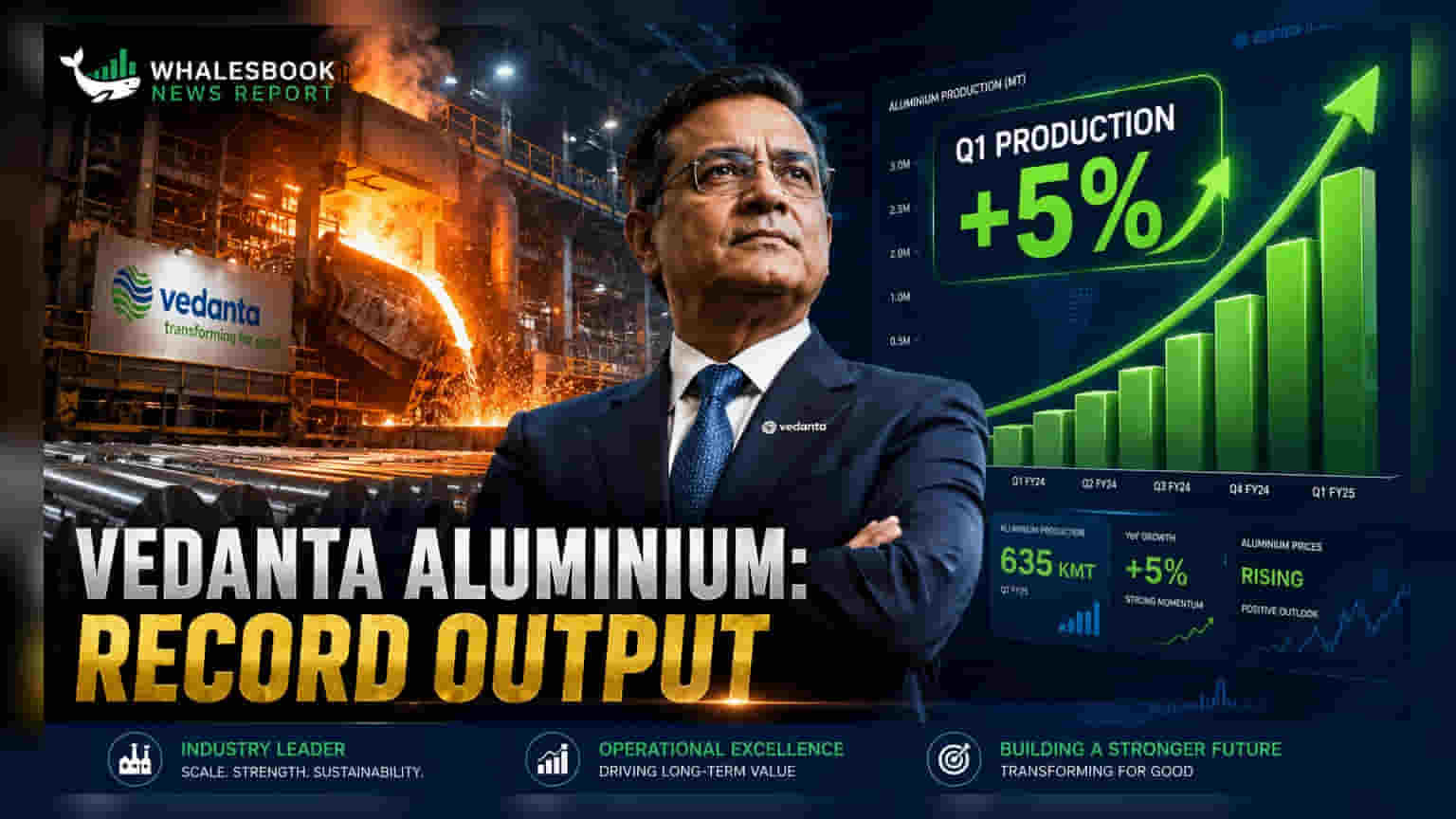
Vedanta Aluminium produced 632,000 tonnes of metal in the first quarter of FY27, a 5% year-on-year increase. The growth was led by a 17% jump in output at the BALCO facility and record production of value-added products. Investors are tracking how these capacity expansions and new bauxite mine clearances influence the company's margins after the formal demerger of its businesses.
What Happened
Vedanta Aluminium reported its highest-ever quarterly production of 632,000 tonnes for the first quarter of the 2027 financial year. This figure represents a 5% increase compared to the same quarter last year and a 3% growth over the previous quarter. The company attributed this performance to improved operational efficiency and higher output from its newly commissioned smelters. The data reflects performance prior to the formal demerger of Vedanta’s various business units, which became effective on May 1, 2026.
BALCO and Jharsuguda Performance
The company’s production growth was notably supported by its BALCO facility, which recorded a 17% year-on-year surge in production, totaling 168,000 tonnes. This facility also saw a 10% increase compared to the preceding quarter. Meanwhile, the flagship Jharsuguda plant maintained steady growth, producing 464,000 tonnes, which is a 1% increase over both the previous year and the prior quarter. Vedanta stated that the expansion project at BALCO is proceeding as planned, with the goal of reaching full capacity by the fourth quarter of this fiscal year.
Strategic Wins in Raw Material Security
A critical development for the company is the receipt of environmental and forest clearance for the Sijmali Bauxite Block from the Ministry of Environment. Additionally, the company secured Mine Opening Permission for the Kuraloi (A) North Block in June. Securing these approvals is essential for long-term raw material security, as bauxite is the primary raw material for alumina production. In the reporting quarter, alumina production grew by 41% year-on-year, though it faced a 6% sequential dip due to unplanned maintenance shutdowns.
Value-Added Products and Margin Focus
Vedanta Aluminium also reported record production of value-added products, reaching 389,000 tonnes. This represents a 14% year-on-year increase. Shifting the product mix toward higher-value offerings is a common strategy in the aluminium sector to protect profit margins from the volatility of global commodity prices. By increasing the share of these specialized products, the company aims to reduce its reliance on standard commodity-grade aluminium, which is more susceptible to price swings in the global market.
What Investors Should Track
Moving forward, the primary monitorables for investors include the successful ramp-up of the BALCO expansion project and the timeline for actual bauxite extraction from the newly cleared Sijmali and Kuraloi blocks. Additionally, investors may look for how the operational independence post-demerger affects the company’s capital allocation and debt servicing capabilities. The impact of these volume gains on overall profit margins will remain a key indicator of whether the company can maintain profitability despite global price fluctuations.