

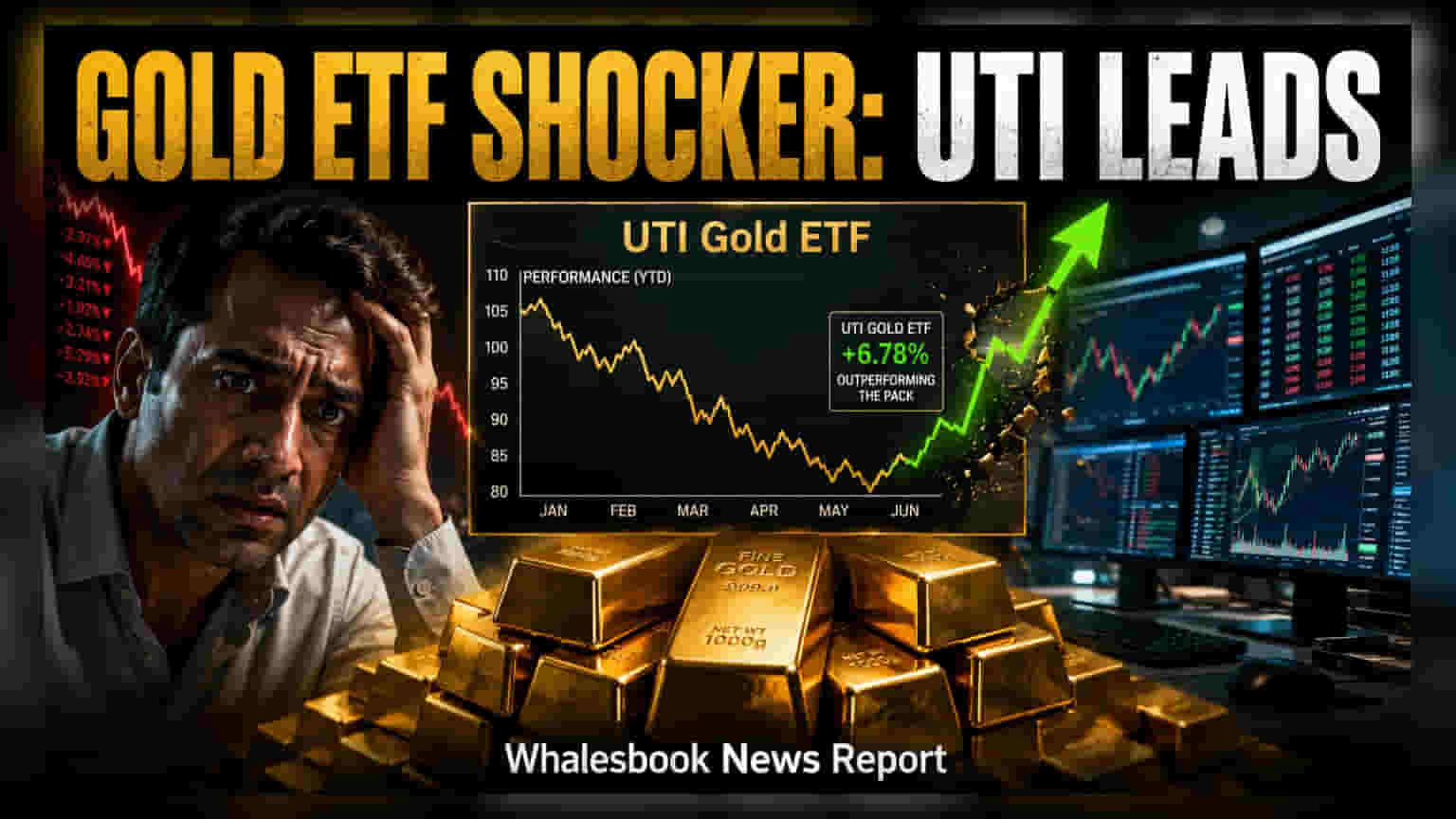
UTI Gold ETF outperformed peers in the gold ETF category over the last six months, despite a negative return of -9.1%. Investors should look beyond short-term performance and evaluate these funds based on long-term track records, benchmark tracking, and liquidity.
Detailed Coverage
UTI Gold ETF has recorded the strongest performance among gold-backed exchange-traded funds (ETFs) over the past six months, according to data compiled by ACE MF. While the fund delivered a return of -9.1 percent, this relative performance was sufficient to outpace several peers, including Mirae Asset Gold ETF and Aditya Birla SL Gold ETF, both of which reported returns of -9.5 percent for the same period.
This analysis specifically highlights funds with at least Rs 1,500 crore in assets under management (AUM). While UTI Gold ETF held the top spot for the six-month window, it is useful to note that other funds maintain larger asset bases. For instance, ICICI Pru Gold ETF remains the largest in this category, managing a corpus of Rs 25,226.1 crore, though its six-month return stood at -9.6 percent.
When evaluating gold ETFs, investors often look at performance across different time frames to understand how a fund tracks its underlying asset price. UTI Gold ETF has demonstrated a stronger position over longer periods compared to its benchmark. Over a one-year window, the fund delivered returns that exceeded its benchmark by 34.8 percentage points. A similar performance pattern appeared over a three-year period, with the fund returning 33.1 percent, significantly ahead of the benchmark’s 1.8 percent gain.
Gold ETFs are investment products listed on stock exchanges that generally track the domestic price of physical gold. Their goal is to replicate the performance of gold bullion as closely as possible. Because these funds hold physical gold, their returns are naturally influenced by global gold price movements, currency fluctuations between the Indian Rupee and the US Dollar, and local import duties.
For investors, the primary monitorable beyond absolute returns is the tracking error, which measures how closely the fund’s price follows the gold price benchmark. Additionally, liquidity on the stock exchange—the ability to buy or sell units easily without significantly impacting the price—is a key factor. Market leadership in short-term performance can shift frequently, as seen in the three-month data where Mirae Asset Gold ETF led the group. Therefore, focusing on long-term consistency, low expense ratios, and the fund's ability to mirror its benchmark index provides a more complete picture than evaluating short-term return cycles alone.