

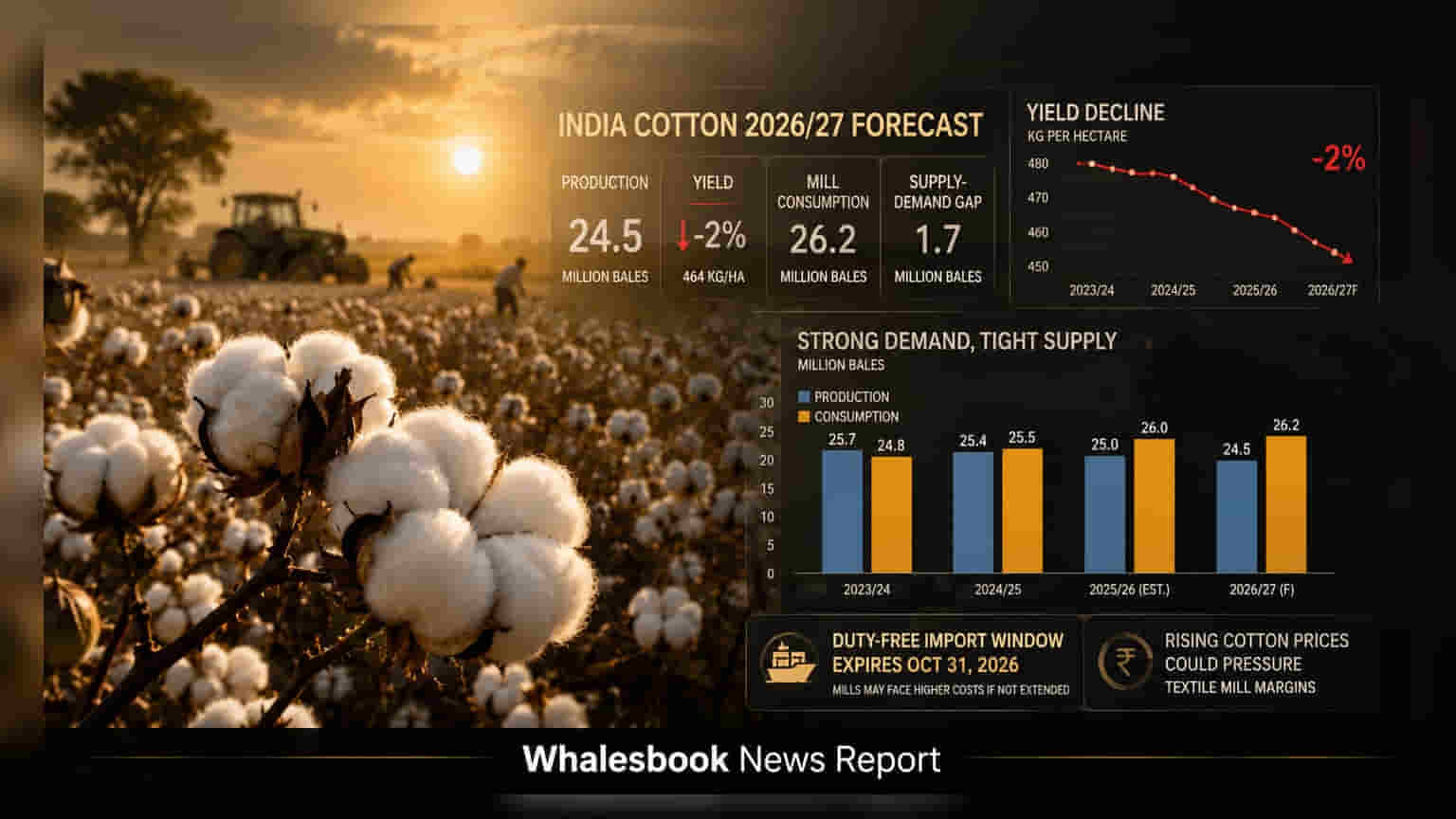
The USDA estimates India’s 2026 cotton production at 24.5 million bales, below the projected domestic demand of 26.2 million bales. This widening supply-demand gap, along with the October 31 deadline for duty-free cotton imports, could pressure margins for textile and spinning companies as raw material costs rise.
The United States Department of Agriculture (USDA) has released its latest forecast for India’s cotton season, estimating production at 24.5 million bales for the 2026/27 period. This projection comes as weather conditions, including uncertain rainfall patterns and reservoir levels currently at 60% of capacity, threaten to lower agricultural yields. The USDA expects a 2% decline in yields to 464 kg per hectare, primarily due to the risk of dry spells in key western and central cotton-growing regions of India.
While production is anticipated to tighten, the demand from India’s textile industry remains strong. Domestic mill consumption is forecasted to reach 26.2 million bales, driven by a steady flow of international orders for finished apparel and textile products. This creates a supply-demand mismatch where domestic consumption is expected to exceed local production. This deficit is a critical indicator for the textile sector, as it suggests the industry may need to rely on higher imports or face rising local cotton prices.
The timing of this supply crunch is particularly important due to government trade policy. The Indian government currently permits duty-free imports of cotton to help mills manage raw material costs, but this exemption is scheduled to expire on October 31, 2026. If the government decides not to extend this benefit, mills could face a significant increase in the cost of importing cotton, which is often used to blend with domestic fiber to manage quality and pricing.
For investors, the situation highlights potential margin pressure for companies in the spinning and textile manufacturing sector. These companies typically operate with thin profit margins and are highly sensitive to fluctuations in the price of raw cotton. If the domestic supply shortage leads to higher lint prices and the duty-free import window closes, companies may find it difficult to pass these additional costs on to their customers in a competitive global market. Conversely, companies with strong inventory management or those that have already secured raw material supplies may be better positioned to navigate the potential volatility.
The most important monitorable for the coming months will be whether the government extends the duty-free import status beyond October. Investors will also track domestic cotton price trends, as any sharp increase in prices without a corresponding rise in the price of finished yarn or fabric would be a negative signal for the profitability of textile manufacturers. Market observers will also watch rainfall progress in central India, as it remains a key factor in determining the final crop quality and quantity as the harvest season approaches.