

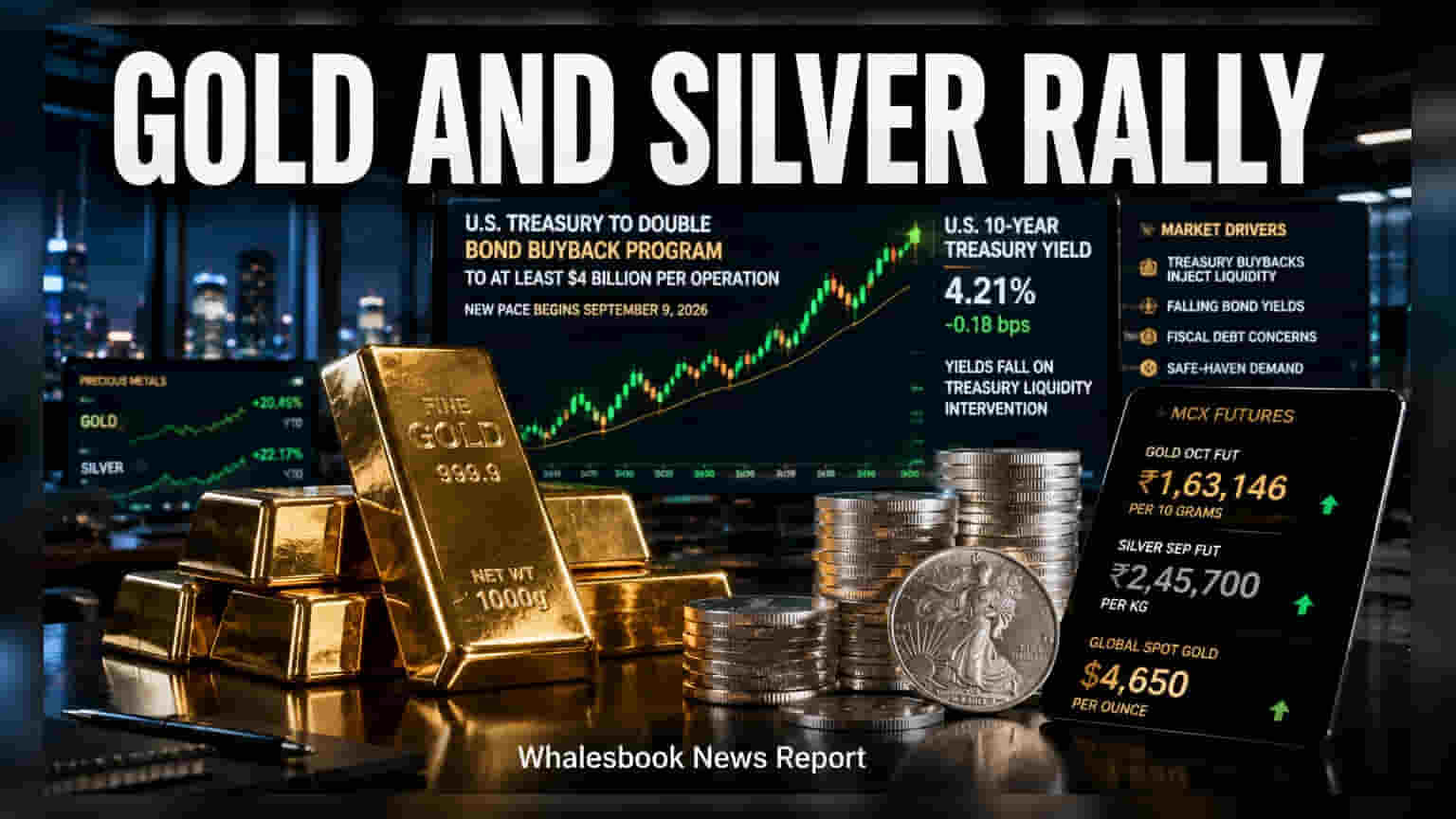
Precious metals rose in Indian markets following the U.S. Treasury's decision to double long-term bond buybacks to $4 billion per operation. This policy aims to lower borrowing costs, boosting gold and silver as alternative assets. Investors are now watching if this liquidity move will provide lasting stability or if debt concerns will keep price volatility high.
Precious metals have seen increased demand in both Indian and global markets following a significant policy shift by the U.S. Treasury. The Treasury announced it will double its long-term government bond buyback program to at least $4 billion per operation, with the new pace set to begin on September 9, 2026. This intervention is designed to inject liquidity into the bond market and help control long-term Treasury yields, which had recently climbed to multi-year highs.
In the Indian market, this global policy change has supported price levels for gold and silver. On the Multi Commodity Exchange (MCX), October gold futures were trading around ₹1,63,146 per 10 grams, while September silver futures were trading near ₹2,45,700 per kg. Global spot gold prices have also been resilient, hovering near the $4,650 per ounce level. Gold and silver often perform well when bond yields fall, as these metals do not pay interest, making them more attractive compared to government bonds when returns on the latter decline.
The Logic Behind the Metal Rally
Investors are currently viewing precious metals as a hedge against concerns over U.S. fiscal health. The Treasury’s decision to buy back its own debt is being interpreted by some market analysts as a form of currency debasement, where the value of money is perceived to decrease over time due to high debt levels and government intervention. When investors worry about the long-term sustainability of sovereign debt, they often shift capital into physical assets like gold and silver to protect their purchasing power. This 'debasement trade' has been a primary driver for the sustained interest in precious metals throughout the year.
Risks and Market Skepticism
While the Treasury's move has provided a temporary boost to sentiment, not all market participants believe this is a permanent solution. There is skepticism among analysts regarding whether increasing bond buybacks is a structural fix for the U.S. government's $40 trillion debt load or merely a temporary measure to suppress yields. If the Federal Reserve maintains a strict interest rate policy to combat persistent inflation, it could counteract the liquidity boost from the Treasury, potentially leading to increased market volatility.
Investors are also closely monitoring upcoming economic indicators, including U.S. Personal Consumption Expenditures (PCE) inflation data and discussions from central bank forums. These data points will be critical in determining whether the current precious metal momentum can continue or if market participants will pivot back toward the U.S. dollar if economic data suggests higher interest rates for longer. For now, the combination of fiscal policy, debt concerns, and central bank actions remains the main factor influencing gold and silver price trends.