 Whalesbook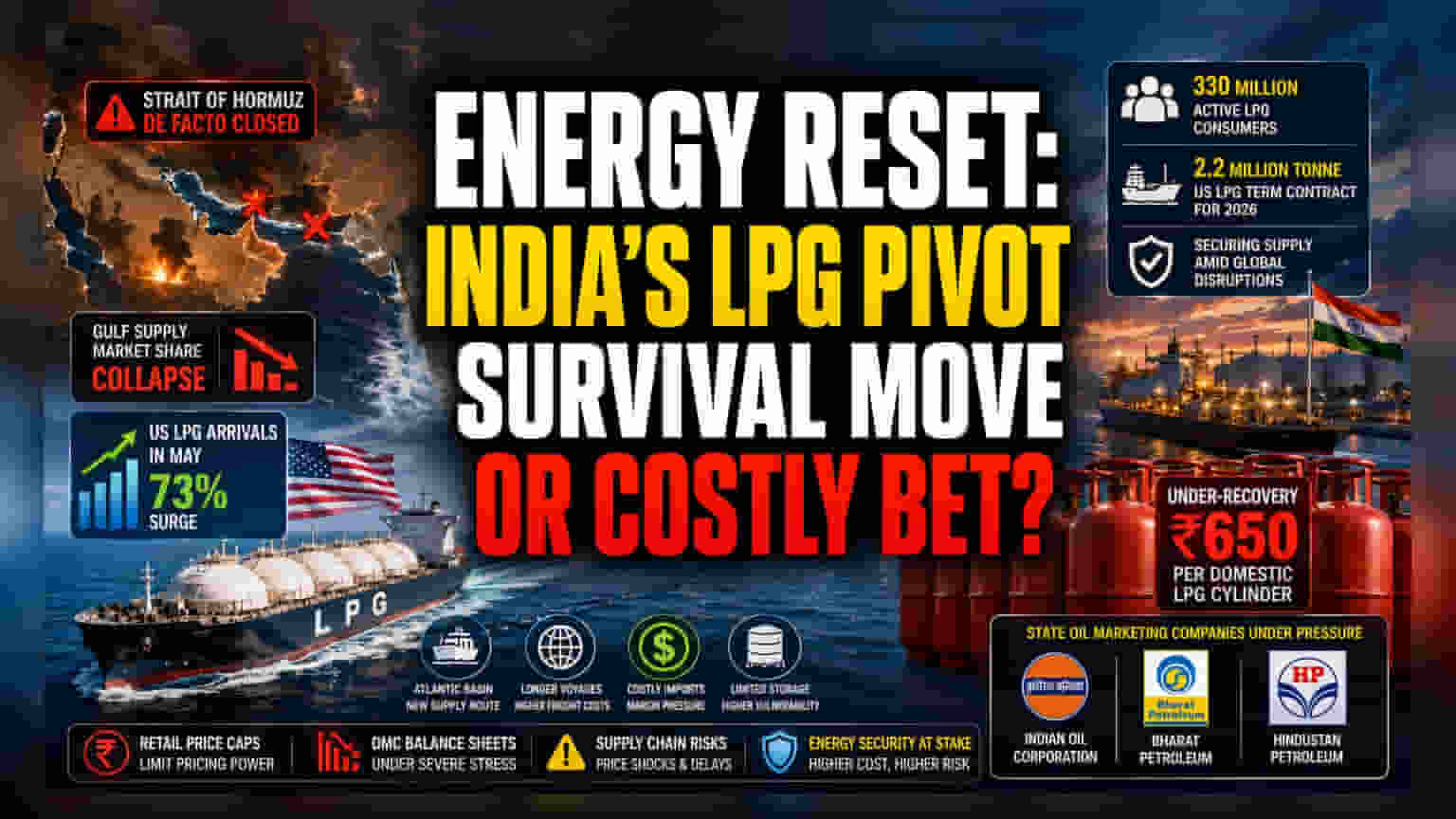


The Geopolitical Supply Pivot
India’s energy import architecture is undergoing a forced, rapid recalibration. Following the de facto closure of the Strait of Hormuz due to escalating regional conflict, traditional Gulf suppliers—long the bedrock of India’s energy security—have seen their market share collapse. In a desperate bid to maintain base-load supply for its 330 million active LPG consumers, India has redirected its sourcing toward the Atlantic Basin, resulting in a 73% surge in US LPG arrivals in May. This geographic pivot, while necessary for short-term survival, introduces significant logistical complexity and higher landed costs that the domestic market is currently struggling to absorb.
The Margin Compression Trap
While the import shift has bolstered physical inventory levels, the financial health of state-run oil marketing companies (OMCs)—Indian Oil Corporation, Bharat Petroleum, and Hindustan Petroleum—remains under extreme duress. These retailers are currently incurring an under-recovery of approximately ₹650 per domestic LPG cylinder. This disconnect between global market volatility and stagnant retail pricing, despite recent hikes in auto fuel, has created a structural deficit. Unlike private counterparts with more flexible pricing power, these state-run giants must contend with government-mandated price caps intended to shield low-income households, which complicates their balance sheets as they navigate these premium-priced American imports.
Structural Weaknesses and Risk Factors
Reliance on US-sourced LPG is not a cost-neutral solution. Atlantic-origin cargoes involve significantly longer voyage durations than those from the Middle East, leading to inflated shipping costs that further strain the fiscal position of importing firms. Market data indicates that these high freight rates have already forced some buyers to cancel US cargo bookings, underscoring the fragility of this new supply route. Furthermore, while the current 2.2 million tonne term contract for 2026 provides a degree of supply certainty, it remains insufficient to fully decouple India from its historical dependence on West Asian energy flows should the conflict prolong. The lack of adequate domestic storage capacity further exacerbates this vulnerability, making the nation’s energy sector susceptible to further price shocks and supply delays.
Future Outlook
As India continues to diversify its energy basket, the focus will likely remain on integrating more reliable, albeit costlier, alternative suppliers. While officials suggest that strengthening US-India energy cooperation is a strategic necessity, the long-term sustainability of this shift depends on stabilizing landed costs and potentially reforming retail pricing mechanisms. Investors should monitor the under-recovery levels of state OMCs as a primary indicator of sector health in the coming quarters, as any prolonged reliance on expensive, long-haul imports will continue to weigh on their margins.