 Whalesbook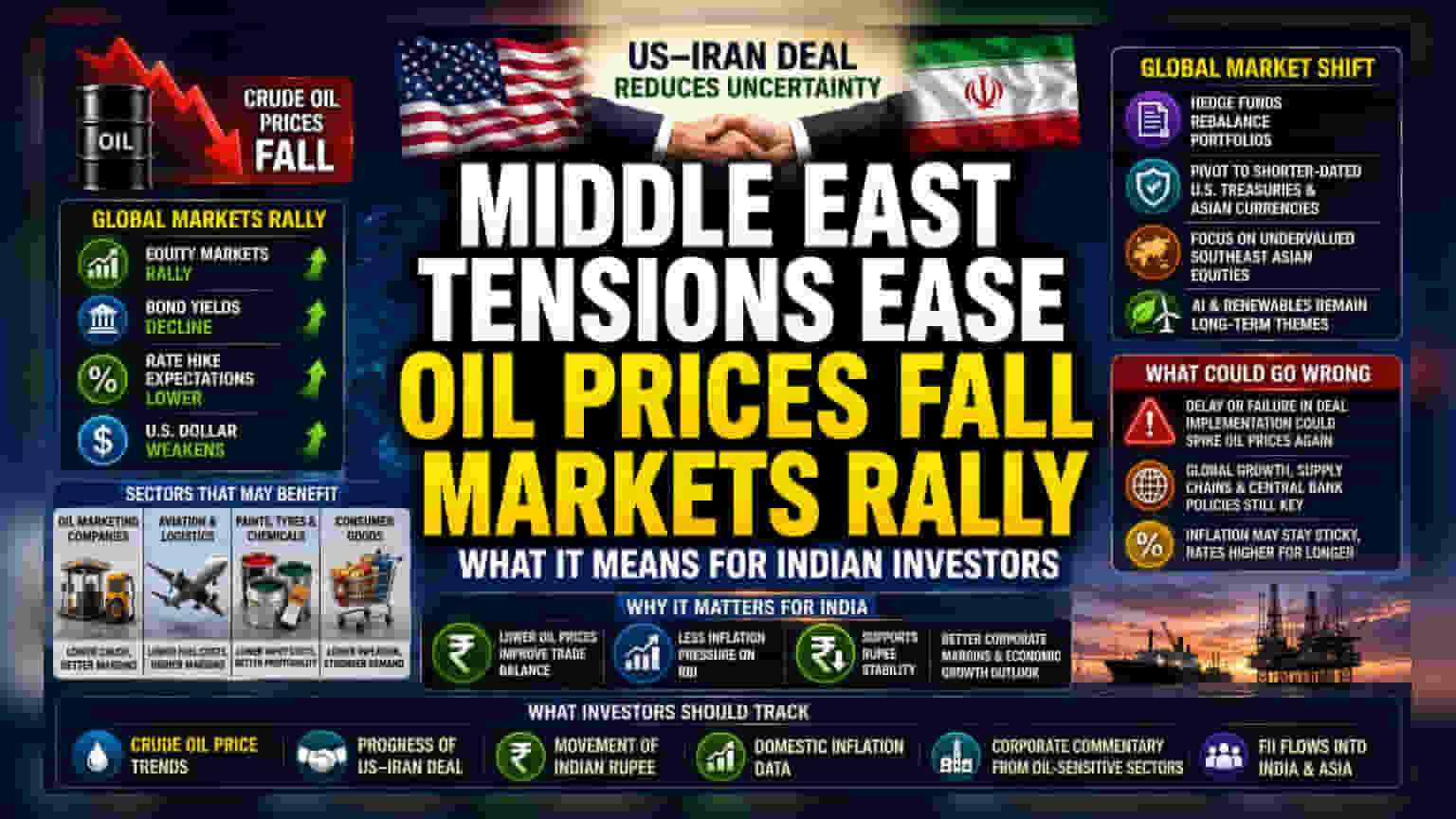


A breakthrough US-Iran agreement has caused crude oil prices to drop, sparking a global market rally. For Indian investors, lower energy prices are a potential positive, as they help reduce the import bill, support the rupee, and ease inflation concerns. Hedge funds are shifting strategies, favoring short-term government bonds and regional stocks. Investors will now watch for stability in energy prices and the progress of the peace deal to gauge the sustainability of this market shift.
What Happened
Geopolitical tensions in the Middle East have eased following a recent agreement between the United States and Iran. This development has triggered an immediate reaction in global commodity markets, with crude oil prices falling on Monday. The deal is seen as a move to reduce uncertainty that has previously disrupted global energy supplies. As oil prices softened, global equity and bond markets responded with a rally, as traders lowered their expectations for aggressive interest rate hikes from central banks. The U.S. dollar also saw a weakening trend as demand for safe-haven assets declined.
Why This Matters For Indian Investors
For the Indian economy, crude oil is a critical component of the import bill. When global oil prices rise, it often leads to higher inflation, a weaker rupee, and pressure on profit margins for many domestic companies. A sustained decline in oil prices is generally considered favorable for India. It can help improve the country’s trade balance and provide some relief to the Reserve Bank of India regarding inflation management. Lower input costs for businesses that rely on petroleum derivatives—such as paints, tyres, and chemicals—can lead to better operational margins, provided the companies pass on the benefits or maintain their pricing power.
Sector Sensitivity
Several sectors in India have a direct or indirect correlation with oil price movements. Oil Marketing Companies (OMCs) often benefit when crude prices stabilize at lower levels, as it reduces their under-recovery risks. Similarly, industries like aviation and logistics may see lower operational costs. On the other hand, the consumer goods sector often tracks inflationary trends; if lower oil prices lead to a broader cooling of inflation, it could potentially support consumer spending. Investors should observe how these companies manage their costs and whether the benefit of lower raw material prices reflects in their upcoming quarterly results.
Global Market Shifts
Global hedge funds are actively rebalancing their portfolios in response to this geopolitical de-escalation. There is a noticeable pivot toward shorter-dated U.S. Treasuries and Asian currencies, suggesting a preference for safer, income-generating assets. Furthermore, some institutional investors are eyeing undervalued Southeast Asian equities, which were previously weighed down by geopolitical risks. While AI and renewable energy remain core investment themes, the broader market is cautiously testing the waters by looking at sectors that were previously hit hard by the conflict-driven inflation.
What Could Go Wrong
While the market reaction has been positive, investors must remain cautious regarding the implementation of the peace deal. Geopolitical agreements are often complex, and delays or failures in execution can cause oil prices to spike again, reversing the recent gains. Additionally, while lower oil prices help, other macro factors—such as global economic growth, potential supply chain issues, and central bank policies—continue to influence market direction. The current optimism in the markets is based on the expectation of easing inflation; if inflation remains sticky despite lower energy costs, central banks may keep interest rates higher for longer than investors currently anticipate.
What Investors Should Track
Investors should closely monitor the progress of the US-Iran deal and the stability of crude oil prices. Key indicators to watch include the movement of the Indian rupee, domestic inflation data, and management commentary from companies in oil-sensitive sectors like paints, tyres, and aviation. The sustainability of this rally will depend on whether global oil supplies stabilize and whether central banks confirm a shift in their monetary policy stance. Market participants may also look for consistent trends in foreign institutional investor flows into Asian and Indian markets in the coming weeks.