

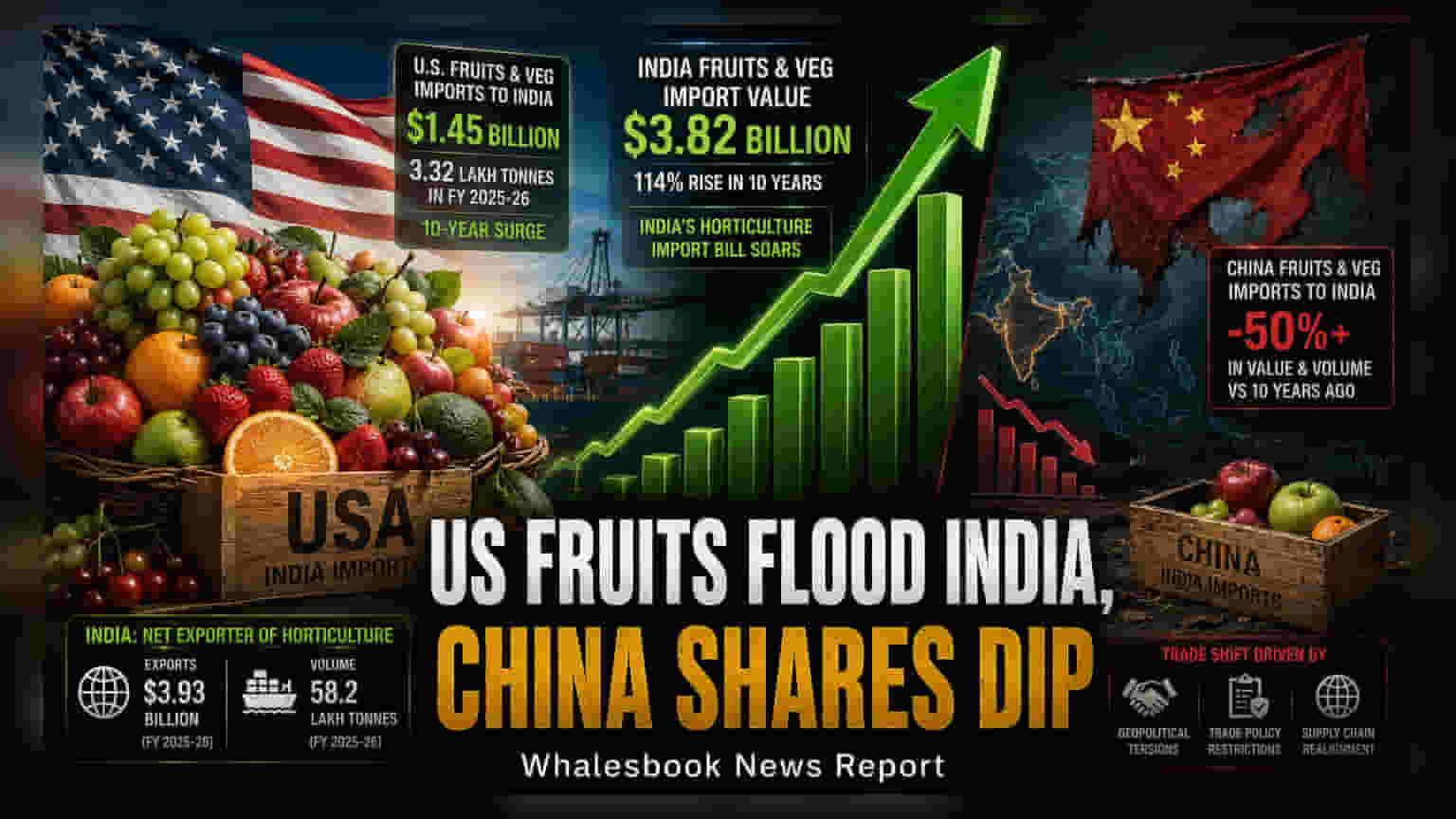
India’s fruit and vegetable import bill reached $3.82 billion in 2025-26, with the US emerging as the leading supplier. As trade relations evolve, imports from China have dropped significantly, while trade with Pakistan has nearly halted. Despite higher imports, India maintains its net exporter status, with horticultural exports totaling $3.93 billion, highlighting the resilience of domestic agriculture.
India’s agricultural trade map is undergoing a significant transformation. In the fiscal year 2025-26, the nation’s import bill for fruits and vegetables climbed to $3.82 billion, marking a 114% rise over the last decade. This shift reflects both changing consumption patterns and a major realignment in which nations supply India with fresh produce.
The United States has solidified its position as the primary supplier. Over the last ten years, American fruit and vegetable exports to India have surged, reaching $1.45 billion in 2025-26. During this period, the volume of these imports rose to 3.32 lakh tonnes. The sustained demand for high-value produce from the US indicates a maturing Indian market with an appetite for diverse international goods.
In contrast, trade with historical partners has changed dramatically due to geopolitical and regulatory factors. Imports from China have declined by more than 50% in both value and volume compared to a decade ago. Similarly, trade with Pakistan, once a steady source of fruits and vegetables, has dwindled to nearly zero. This sharp reduction in imports from neighboring countries is largely tied to diplomatic tensions and subsequent trade policy restrictions implemented by the Indian government.
Despite the rise in imported produce, India continues to be a net exporter of horticultural goods. Total exports in this category reached $3.93 billion in 2025-26, with volumes hitting 58.2 lakh tonnes. This demonstrates that domestic production remains robust enough to compete on the global stage, even as the country increases its own imports of specific varieties that may not be available locally.
For the Indian market, this shift represents a move toward more diversified supply chains. However, the heavy reliance on the US for a significant portion of fruit imports introduces a degree of concentration risk. If trade dynamics change or global supply chains are disrupted, the stability of this supply could be tested. Meanwhile, domestic producers continue to balance the need for export growth against the rising consumer demand for imported varieties. Moving forward, observers will track how trade policies and global agricultural demand influence these import and export levels, particularly as India balances its net exporter status with the growing domestic appetite for international produce.