

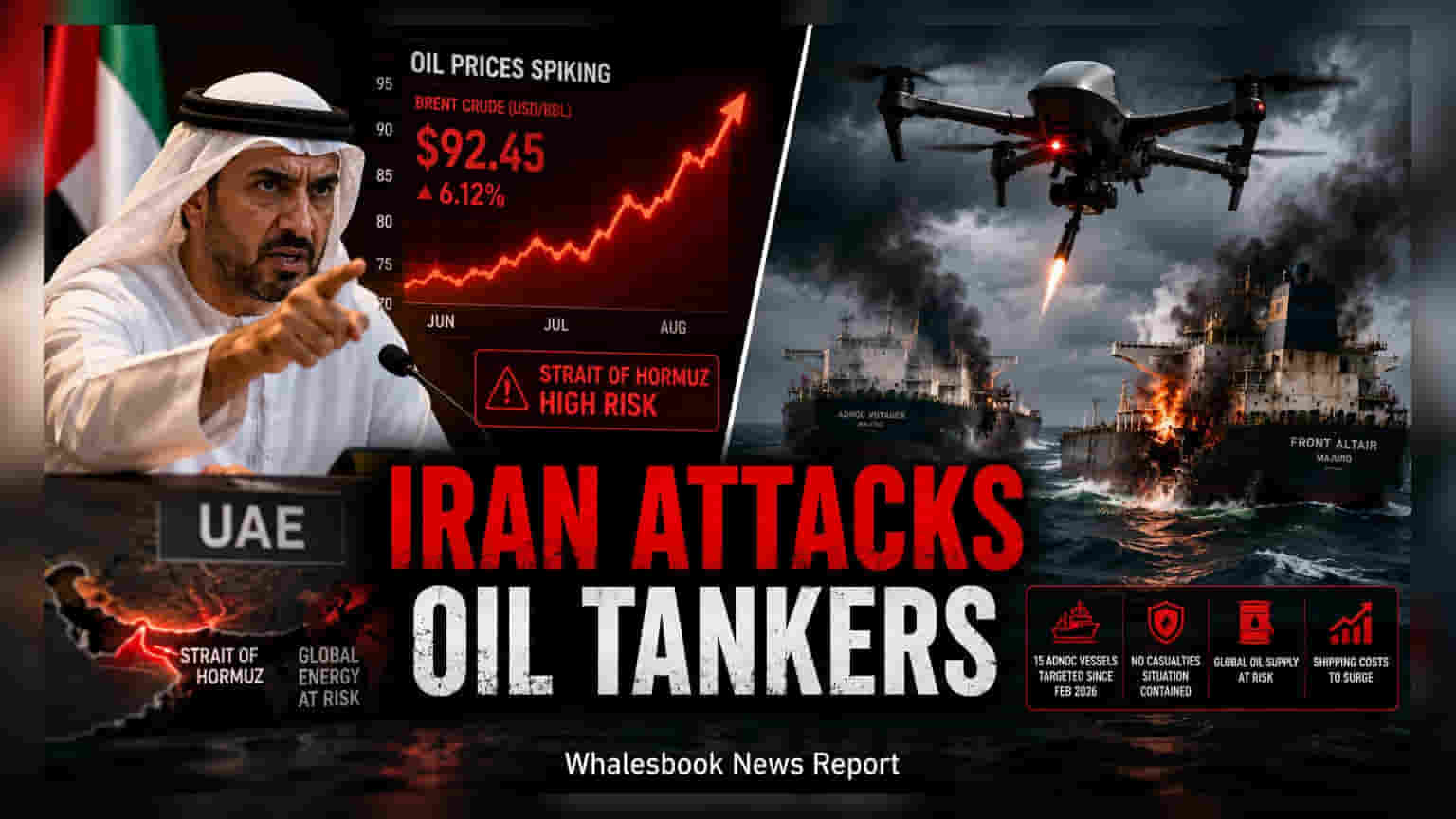
The United Arab Emirates has blamed Iran for drone attacks on two ADNOC oil tankers in the Strait of Hormuz. With this being the 15th such incident since February 2026, the event heightens concerns over energy supply security. Investors are monitoring the situation as rising maritime tensions can influence crude oil prices, insurance premiums, and freight costs for global shipping.
On August 13, 2026, the United Arab Emirates (UAE) formally accused Iran of conducting drone attacks against two oil tankers operated by the Abu Dhabi National Oil Company (ADNOC). The incident took place as the vessels were transiting the Strait of Hormuz, a critical maritime passage for global energy supplies. The UAE Ministry of Foreign Affairs described the event as an act of "piracy" and a violation of international navigation laws.
While officials confirmed there were no casualties and the situation was contained, the incident has drawn significant attention from global markets. This latest event is not an isolated occurrence; ADNOC has reported that 15 of its vessels have been targeted by drones and missiles since regional tensions began escalating in February 2026. The repetitive nature of these strikes has made shipping through this narrow waterway increasingly volatile.
Impact on Energy and Shipping Logistics
The Strait of Hormuz is one of the world's most important chokepoints for oil and gas transit. Any disruption or perceived risk in this region often leads to immediate concern regarding global energy security. For investors and companies involved in the energy and logistics sectors, the primary concern lies in the potential for rising costs.
Heightened security risks usually lead to an increase in "war risk" insurance premiums for commercial vessels. Furthermore, shipping companies may face pressure to secure more expensive, secure routes or invest in additional safety measures. These costs can eventually impact the profit margins of companies that rely heavily on crude oil imports and global supply chains. While oil prices fluctuate based on many factors, the persistent instability in such a vital transit zone often acts as a factor that keeps markets cautious.
Geopolitical Context and Market Monitorables
The incident occurs alongside broader diplomatic efforts in the region, with U.S. envoy Jared Kushner scheduled to visit the Middle East next week to discuss ongoing developments in Gaza. While this diplomatic trip highlights the complex geopolitical environment, the immediate focus for markets remains on the stability of maritime trade routes.
Moving forward, investors may track developments regarding maritime insurance rates, as any sharp increase could signal higher operating costs for global shipping lines and energy importers. The frequency of such attacks, now totaling 15 since February, suggests that security risks are a persistent, rather than a one-time, factor. Market participants will also watch for any official responses from international regulators or energy authorities that could impact the flow of oil through the region.