

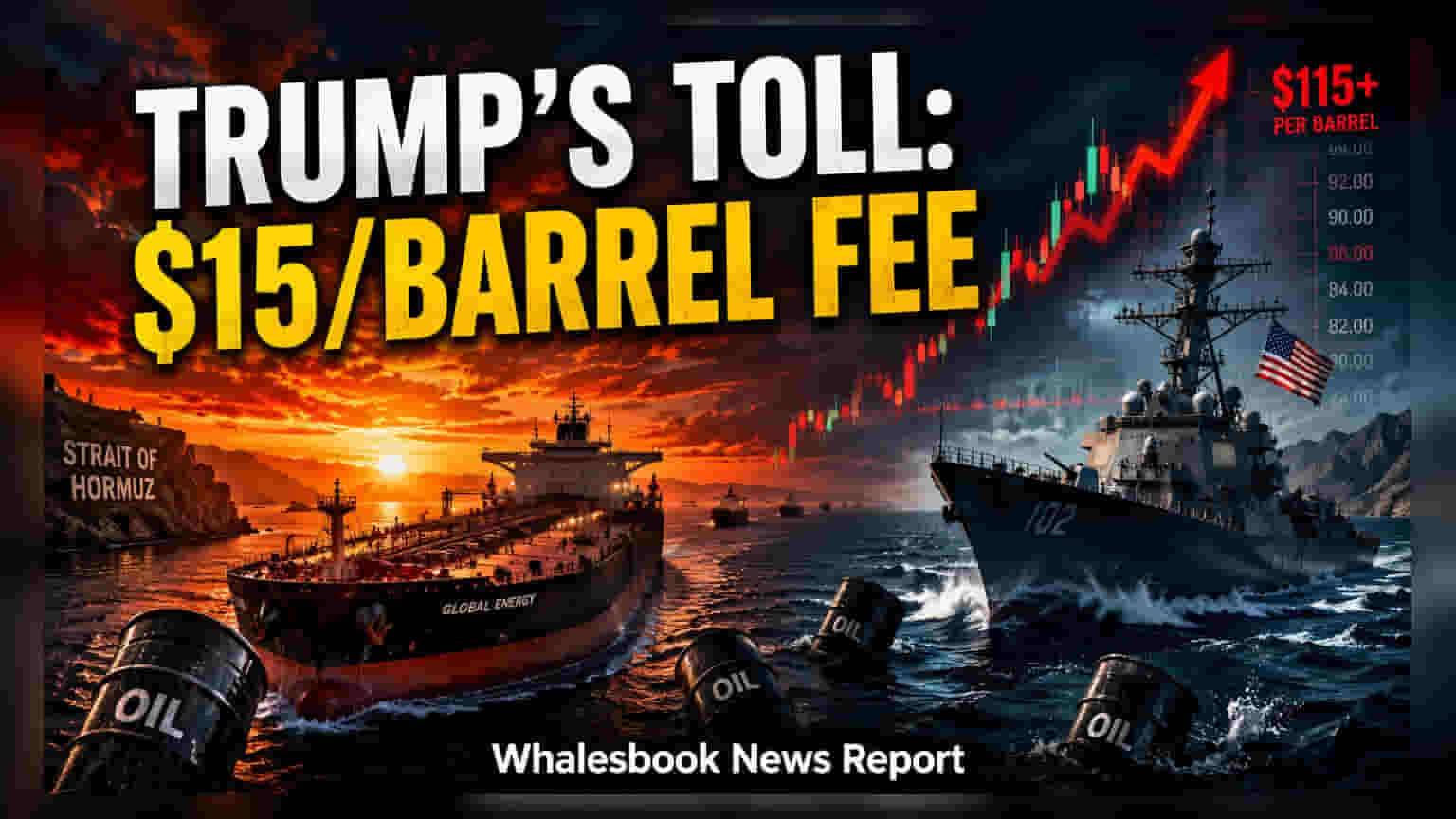
US President Donald Trump has proposed a $15 per barrel fee for oil tankers using the Strait of Hormuz, citing US Navy protection costs. While this could significantly impact global shipping logistics and oil prices, India's increased reliance on Russian crude may offer some insulation against immediate supply shocks.
President Donald Trump has announced a proposal to levy a $15 per barrel charge on oil tankers transiting the Strait of Hormuz. The administration argues that the U.S. Navy provides essential protection for this critical global energy chokepoint and should be compensated for these security efforts. The proposal carries significant implications for global trade, as a typical Very Large Crude Carrier transporting two million barrels of oil would face a transit fee of $30 million.
Global Energy Market Reaction
The announcement has triggered immediate volatility in global energy markets. Brent crude prices surged to $87 per barrel following renewed geopolitical friction between Iran and the United States. While prices remain below the year's high of $118 per barrel, the potential for increased shipping costs has heightened uncertainty. Industry analysts are now monitoring whether this fee structure, if implemented, will be passed on to end consumers through higher fuel prices or if it will disrupt established tanker routes entirely.
Impact on India’s Energy Security
India, as one of the world's largest importers of crude oil, faces a complex situation. The national energy import strategy has undergone a major shift in recent years, with Russia now accounting for approximately 52% of India's crude imports as of June. This diversification, along with increased sourcing of Liquefied Natural Gas (LNG) from the United States, has provided a degree of resilience against Middle Eastern supply disruptions. However, the cost of this security is rising. India's crude import bill reached $35.5 billion for April and May combined, marking a nearly 70% increase compared to the previous year. While diversification is a strategic benefit, sourcing energy from North America involves longer sea routes and higher transportation expenses compared to traditional Middle Eastern suppliers.
Infrastructure and Long-Term Risks
The Strait of Hormuz remains a critical artery for global energy, but regional infrastructure is evolving to mitigate transit risks. The United Arab Emirates is expanding port facilities at Fujairah and Khor Fakkan, which are located outside the strait. These projects, expected to be operational within the next 18 months, aim to utilize pipeline and land transport to bypass the chokepoint. Despite these developments, the region faces ongoing geopolitical challenges, including warnings from Iran regarding the security of these alternative infrastructure projects. For Asian economies, the primary risk remains a simultaneous disruption of the Strait of Hormuz and the Red Sea, which would create a severe bottleneck for global energy supplies. Investors will be monitoring future diplomatic developments, transit fee negotiations, and the pace of infrastructure expansion in the UAE as key indicators for global energy price stability.