 Whalesbook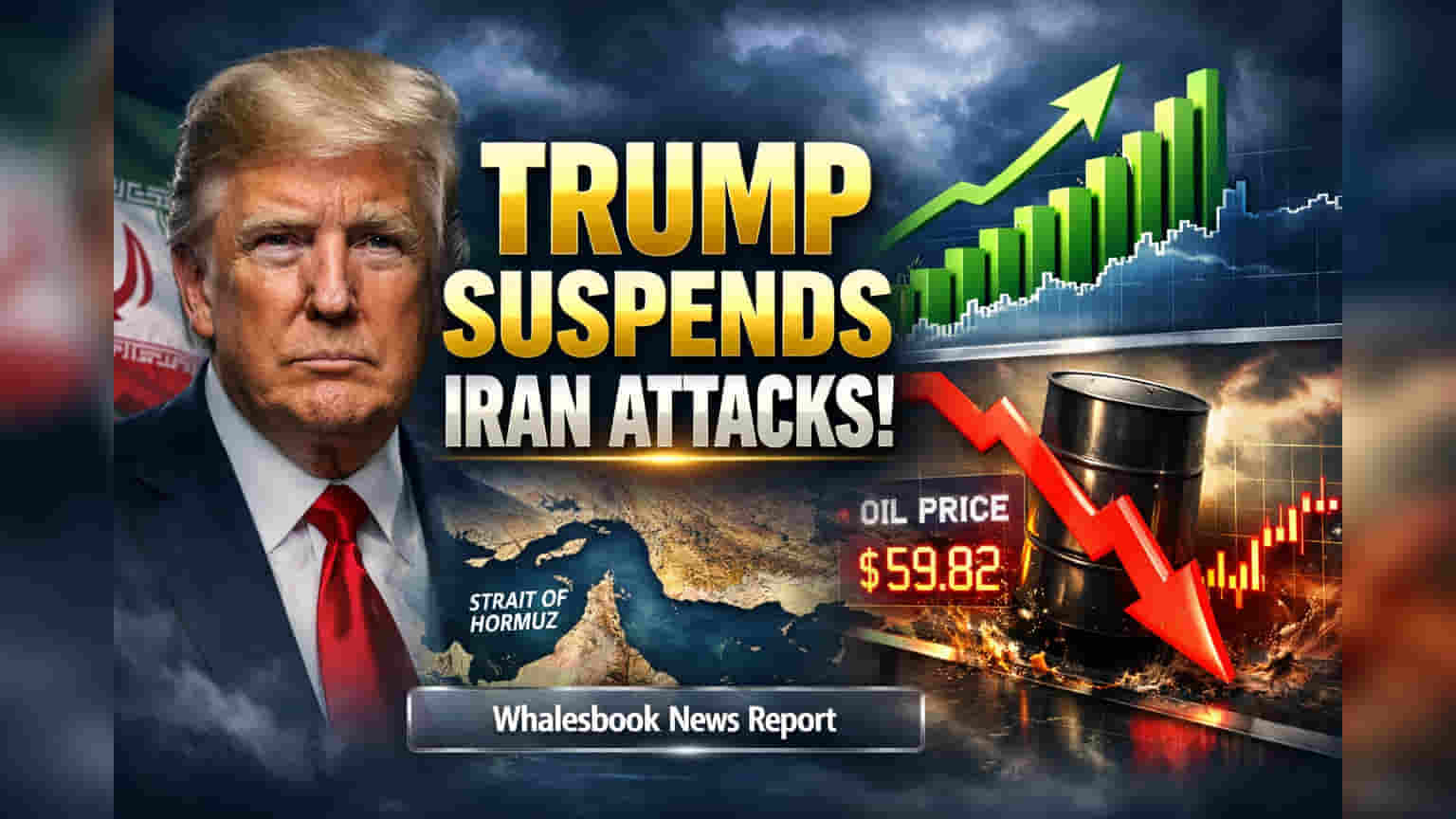


Market Surge on Trump's Iran Truce Offer
Futures markets surged Tuesday evening after President Donald Trump announced a conditional two-week pause on bombings against Iran. This development, influenced by diplomatic efforts from Pakistan, including Prime Minister Shehbaz Sharif and Field Marshal Asim Munir, aims to ease regional tensions. The market reacted immediately: Dow futures climbed over 700 points, with the S&P 500 and Nasdaq futures gaining 1.5% and 1.7% respectively. This surge shows investors moving towards riskier assets, reversing earlier anxiety. The rally is fueled by hopes of restoring energy flow, especially through the Strait of Hormuz, a vital shipping lane for about 20% of global crude oil.
Oil Prices Drop as Iran Tensions Ease
The announcement had a strong effect on crude oil markets. U.S. crude prices fell about 4%, dropping below $110 a barrel. Brent crude gave up earlier gains to close 0.5% lower at $109 a barrel. This sharp drop comes as fears of immediate supply disruptions have eased. However, this relief may not last. Analysts point out that oil prices have been driven up by geopolitical risk; this could return quickly if Iran fails to meet the strict conditions for reopening the Strait of Hormuz. Before this news, Brent crude traded between $105-$115 and WTI between $103-$113, due to these concerns. Renewed conflict or a prolonged Strait closure could send oil prices back up to $110-$120 or higher.
Other Markets React: Dollar Falls, Gold Edges Up
Other markets also moved. The U.S. Dollar Index dipped 0.5%, as demand for safe investments decreased with easing crisis fears. Gold and silver saw modest gains, though their performance as safe havens has been mixed lately. Gold has fallen up to 12% recently, partly due to inflation from high energy prices and forced selling. Silver, used for industry and as a store of value, has seen bigger swings, dropping nearly 50% from its January high before this slight rise. While the market reaction is mostly positive, underlying market weakness remains. Geopolitical events often cause short-term swings, but lasting supply issues, like at the Strait of Hormuz, can keep prices higher for a long time.
Key Condition: Iran Must Reopen Strait of Hormuz
The market rally depends on Iran unconditionally reopening the Strait of Hormuz within two weeks. This conditional pause, partly brokered by Pakistan, is a risky move. The announcement came amid reports of growing tensions and threats. Analysts stress that market optimism is fragile, as any non-compliance from Iran could cause quick reversals. The market is very responsive to geopolitical news; long uncertainty or renewed escalation could swiftly bring back high volatility, especially for oil prices. This situation differs from earlier predictions of an oil surplus for 2026, showing how geopolitical risks can greatly change market conditions.
Risks Remain: Iran Rejects Ultimatum, Seeks Talks
President Trump's offer carries major risk. Iran has rejected the ultimatum and offered counter-proposals. The possibility of long negotiations, outright rejection, or miscalculation by either side means the current de-escalation story could quickly fall apart. Closing the Strait of Hormuz has historically sent Brent crude prices sharply higher. If Iran does not comply, oil prices could surge, potentially pushing Brent towards $120 a barrel or more. This would worsen inflation, affect global economic growth, and likely strengthen the U.S. Dollar as a safe investment, reversing today's trends. Even if tensions ease temporarily, historical patterns show that uncertainty can keep oil prices high for long periods. The market's quick shift from expecting conflict to expecting peace shows extreme sensitivity, making it vulnerable to rapid sentiment changes if Iran's response differs from expectations.
Outlook Uncertain: Iran's Move Key to Market Future
While the immediate market reaction is relief, the future outlook is uncertain. Key will be Iran's response to Trump's ultimatum and its willingness to reopen the Strait of Hormuz. Analysts noted in early April 2026 that oil prices are heavily influenced by geopolitical risk premiums, which can vanish fast but return strongly. The current rally is based on the possibility of de-escalation, not a guarantee. Market performance in coming days depends on the clarity and commitment of any resolution. Brent crude might retest $110-$115 or surge higher if tensions persist or reignite. The overall sentiment is cautiously optimistic, but the potential for renewed conflict means energy market volatility will likely stay high.