

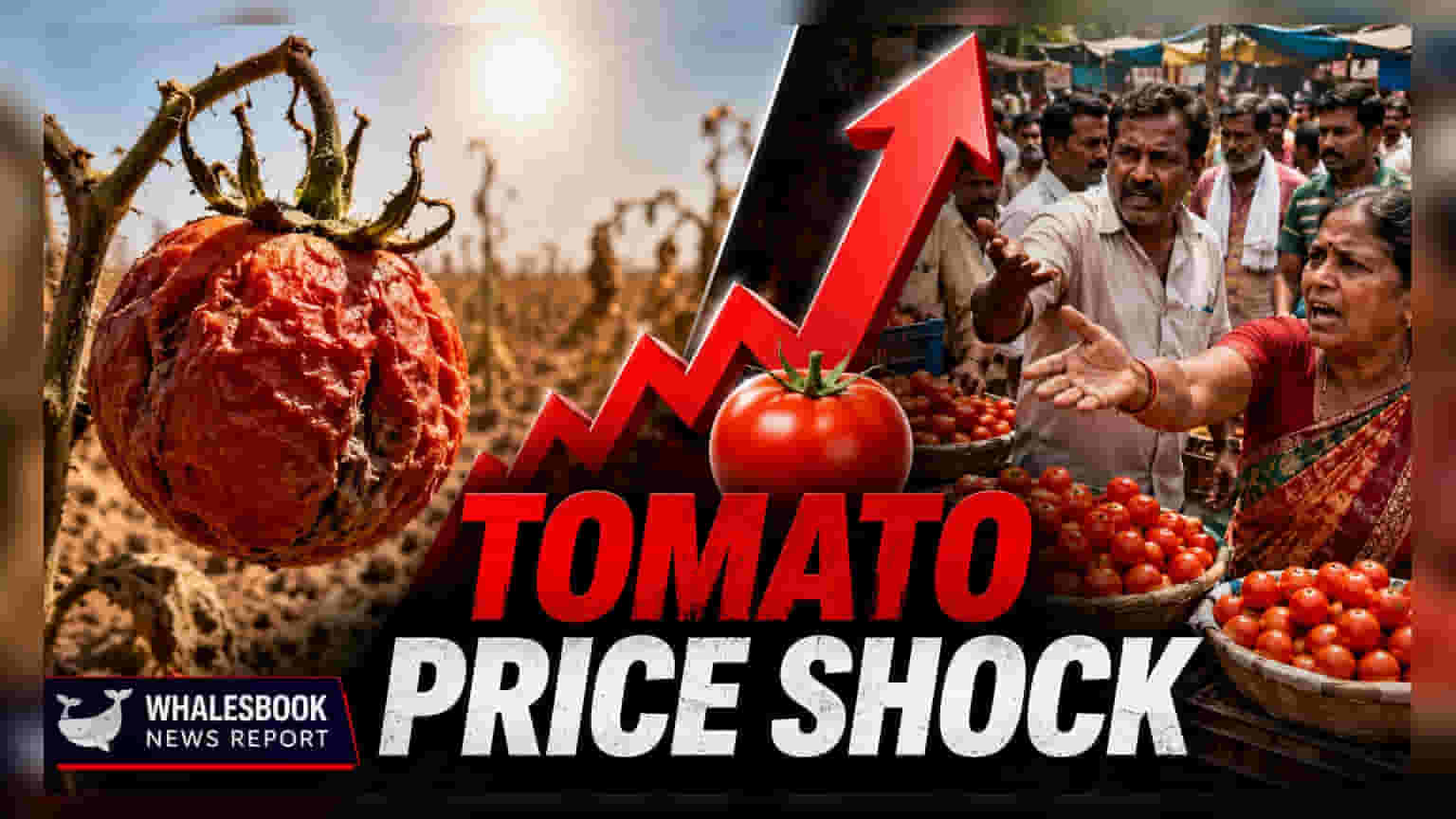
Tomato retail prices have surged 16% recently due to crop damage in Maharashtra and Karnataka. This rise, alongside 48% tomato inflation in May, signals potential pressure on food costs for households and food service businesses through August.
What Happened
Tomato prices across India have risen by 16% over the last month, marking a 23% increase compared to the same period last year. Official data points to severe weather conditions, including intense heatwaves and delays in monsoon rains, as the primary cause. These factors have disrupted supply chains in key producing states such as Maharashtra, Karnataka, and Uttar Pradesh. The resulting scarcity led to tomato-specific inflation reaching 48.43% in May, which has been a major contributor to broader food inflation trends in the country.
Why This Matters for Households and Businesses
The rising cost of tomatoes is more than just a retail market headline; it directly impacts household budgets and the profitability of food service companies. For families, this adds pressure to monthly grocery expenses. For the restaurant and processed food sectors, sustained high costs can pressure profit margins if companies cannot pass these price hikes on to consumers. Since tomatoes are a staple ingredient in many Indian dishes, a significant jump in their price often leads to a noticeable shift in overall food inflation metrics.
The Outlook Through August
Market experts and sector reports suggest that consumers and businesses may continue to face elevated prices through August. Several factors contribute to this outlook. Reduced sowing during the summer season has limited the current stock available in markets. While the total annual production of tomatoes is estimated to be higher for the 2025-26 period, this does not immediately solve the localized and seasonal supply squeezes occurring right now. Investors may monitor whether this supply-demand mismatch remains confined to tomatoes or if it spreads to other vegetable categories.
Impact on Exports and Competitiveness
A secondary effect of high domestic prices is the potential impact on India's global trade. When domestic prices stay significantly higher than global averages, it becomes difficult for Indian tomato exporters to remain competitive in foreign markets. This could lead to a temporary dip in export volumes for companies involved in agricultural exports or food processing.
What Investors Should Track
Investors tracking the food and retail sector may monitor upcoming government inflation data and monsoon progress reports. The key indicator will be whether vegetable inflation moderates after August or if supply chain disruptions persist. Additionally, companies in the quick-service restaurant (QSR) and packaged food industries are often the first to report the impact of these commodity price fluctuations in their quarterly profit margins. Tracking management commentary from these firms regarding input costs and pricing power will provide a clearer picture of how these commodity pressures are being managed.