

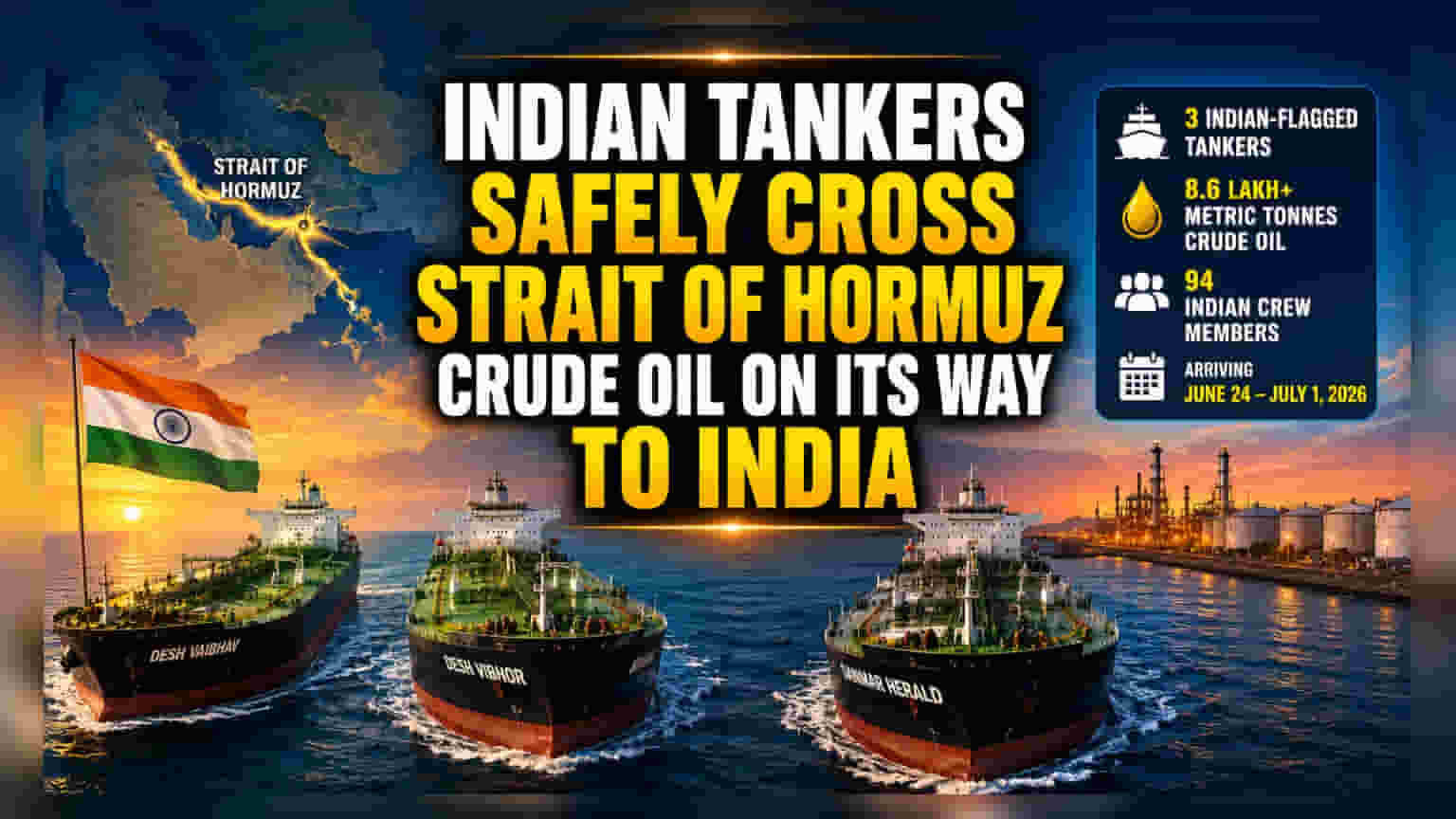
Three Indian-flagged crude oil tankers, carrying 8.6 lakh metric tonnes of cargo, have successfully passed through the Strait of Hormuz. This transit is a positive signal for India’s energy supply chains, which rely heavily on this critical maritime route for oil imports. Investors may monitor this as a sign of stabilization in a key global energy chokepoint that directly influences India’s energy security and import costs.
What Happened
Three Indian-flagged crude oil tankers—Desh Vaibhav, Desh Vibhor, and Sanmar Herald—have safely navigated the Strait of Hormuz, a narrow but critical maritime corridor. The vessels, carrying a combined load of over 8.6 lakh metric tonnes of crude oil and manned by 94 Indian crew members, are now on their way to Indian ports. According to Union Minister Sarbananda Sonowal, the vessels are scheduled to arrive in India between June 24 and July 1, 2026. This safe transit marks a notable development in the region, where shipping activity had faced uncertainty due to recent geopolitical tensions.
Why This Matters for India’s Energy Security
For India, the Strait of Hormuz is not just another shipping lane; it is a vital artery for energy security. India imports over 85% of its crude oil requirements, and a significant portion of this energy supply passes through this narrow chokepoint. Any disruption in this route can immediately impact India’s energy supply chains, leading to potential delays, increased freight and insurance costs, and volatility in global oil prices. When the flow of oil through such a critical gate is smooth, it supports the predictability of India’s energy imports, which is essential for managing the country’s fuel supplies and, by extension, inflationary pressures.
The Business and Investor Context
Investors often watch geopolitical developments in this region closely because they directly impact global oil supply dynamics. India’s energy import bill is a significant factor in its balance of trade, and elevated crude oil prices can affect the profitability of downstream industries, such as oil marketing companies, refineries, and petrochemical manufacturers.
Furthermore, Indian shipping companies, such as the Shipping Corporation of India (which owns Desh Vaibhav and Desh Vibhor), play a crucial role in maintaining these energy lifelines. Safe passage through volatile regions helps keep insurance premiums and operational costs in check, which is beneficial for the long-term efficiency of energy transportation.
The Bigger Picture: Shipping and Geopolitics
Global markets are highly sensitive to news from the Strait of Hormuz, as it handles approximately 20% of the world’s oil and a substantial portion of global liquefied natural gas (LNG) shipments. When commercial vessels move safely through this corridor, it helps reduce the risk premium that often gets added to global oil prices during times of tension. While this specific transit is a sign of resumption in activity, the region remains a complex geopolitical area where ongoing diplomatic and military monitoring is common.
What Investors Should Track
Investors and market participants may watch for a few key factors moving forward:
- Freight and Insurance Costs: Any change in insurance premiums for ships transiting the Gulf can affect the landed cost of crude oil for Indian refineries.
- Import Data: Monthly updates on India’s crude oil import volumes and the sources of these imports can provide insight into how companies are managing supply chain risks.
- Global Crude Prices: Developments in the Middle East continue to be a primary driver for oil price volatility, which affects India’s import bill and macroeconomic stability.
- Operational Efficiency: For energy and shipping companies, the ability to maintain consistent and safe operations through critical corridors remains an important metric for assessing risk management and operational reliability.