Supreme Court Questions NHAI on Highway Safety
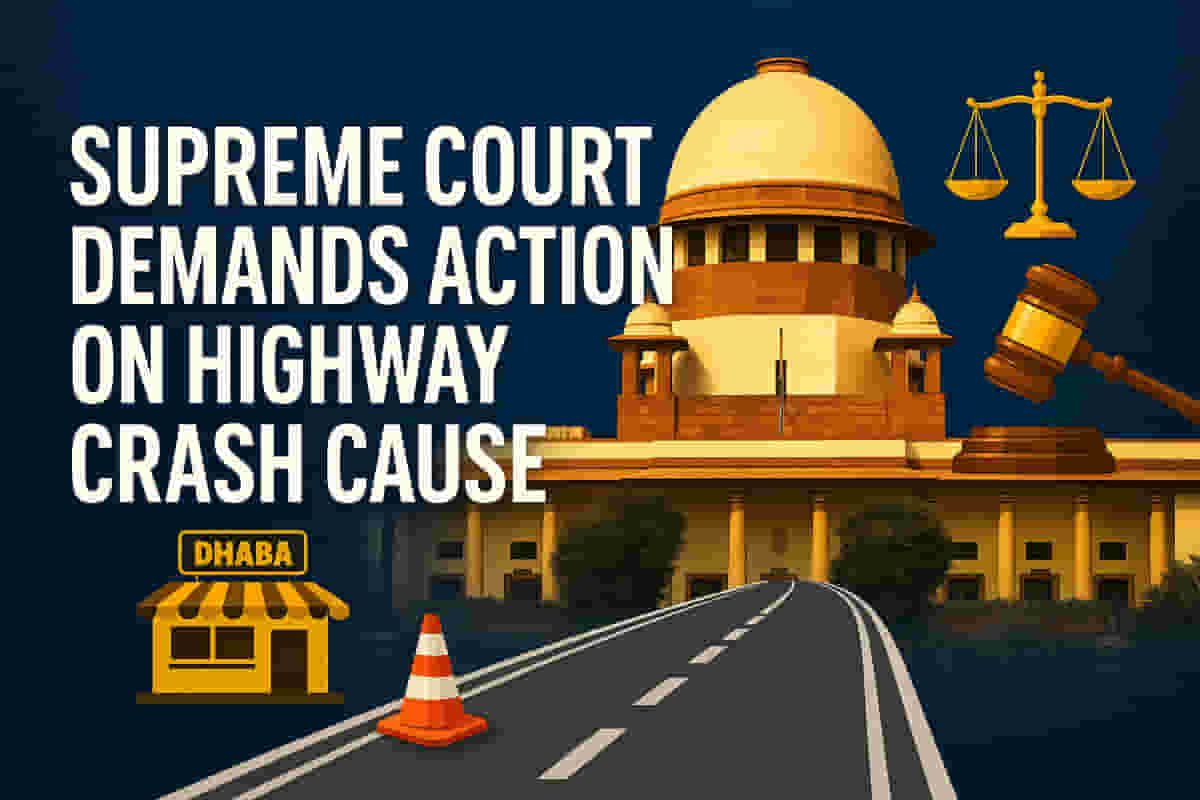
The Supreme Court of India has sharply questioned the National Highways Authority of India (NHAI) regarding its perceived inaction against illegal roadside dhabas and encroachments along national highways. This scrutiny comes in the wake of two devastating highway accidents in Rajasthan and Telangana that collectively claimed 34 lives in November. The apex court is seeking a clear understanding of NHAI's powers and responsibilities in tackling these safety hazards.
This suo motu case was initiated by the Court after receiving reports of the fatal accidents. In Rajasthan, a collision between a bus and a trailer truck near Phalodi resulted in 15 fatalities, while in Telangana, a similar incident involving a State Transport bus and a lorry in Rangareddy district led to 19 deaths. Media reports indicated that poor road conditions and illegally parked vehicles due to roadside establishments were contributing factors to these tragedies.
The Core Issue
Illegal roadside establishments, commonly known as dhabas, and other encroachments pose a significant threat to road safety on national highways. These structures often lead to vehicles parking in hazardous locations, obstructing the flow of traffic and reducing visibility for other motorists. The danger is amplified when these parked vehicles are stationary, creating unexpected obstacles, particularly for high-speed traffic and large commercial vehicles.
The incidents in Rajasthan and Telangana serve as stark examples of how these encroachments can directly contribute to catastrophic loss of life. The proximity of such establishments to the main carriageways creates a dangerous environment where drivers have limited reaction time, increasing the likelihood of severe accidents.
Court's Scrutiny
A Bench comprising Justices JK Maheshwari and Vijay Bishnoi made it clear that the NHAI cannot continually delegate its responsibility to district and police authorities. During the hearing, the Court specifically sought a detailed compilation of the NHAI's powers to take direct action against such illegal structures. This demand arises from the Court's desire to ascertain the statutory scope of NHAI's authority.
Justice Maheshwari expressed the Court's concern, stating, "The NHAI is throwing mud on the contractor, police authorities or local administration. We want to understand the powers of the NHAI, what do the Act and Rules say. Can we leave everything on administrative authorities?" The Court wants to understand the legal provisions empowering NHAI, not just its correspondence with other departments.
NHAI's Position and Response
Solicitor General Tushar Mehta, representing the NHAI, informed the Court that an affidavit detailing the steps taken had been filed. However, the Bench pressed for clarity on whether NHAI possessed the authority for direct enforcement or if it was deflecting its duties. Justice Bishnoi highlighted the widespread nature of the problem, noting the presence of illegal dhabas and trucks along the Bharatmala Expressway.
Mr. Mehta acknowledged that while the removal of dhabas falls within NHAI's powers, there is a general delegation of authority to district magistrates who control police forces. He indicated that the NHAI would explore mechanisms to address the issue effectively, stating, "We will have to find out some way."
Accountability and Future Guidelines
The Supreme Court emphasized that the issue extends beyond merely identifying encroachments; it involves establishing clear accountability among the agencies responsible for preventing them and ensuring overall road safety. Justice Maheshwari outlined the Court's requirement for a compilation of NHAI's statutory powers, rules, regulations, actions taken, and the identification of responsible individuals or entities for inaction.
Ultimately, the Supreme Court intends to formulate comprehensive, nationwide guidelines aimed at enhancing road safety across the country. The Court is expected to thoroughly examine the legal framework governing NHAI's enforcement capabilities before issuing these crucial directions on road safety and the removal of highway encroachments.
Impact
This development could lead to stricter enforcement and regulatory changes concerning highway infrastructure and land use.
It highlights a critical need for improved coordination between national, state, and local authorities for public safety initiatives.
The Supreme Court's intervention may spur infrastructure development companies and government bodies to prioritize safety compliance more rigorously.
There is potential for increased public awareness and demand for safer road conditions across India.
Impact Rating: 8/10
Difficult Terms Explained
Suo motu case: A legal case initiated by a court on its own accord, without a formal petition from involved parties.
Affidavit: A written statement confirmed by oath or affirmation, for use as evidence in court.
Statutory framework: The body of laws and legal principles governing a particular area or authority.
Delegation of power: The act of entrusting a lower authority with the responsibility and power to perform certain tasks.
Consonance: Agreement or harmony; in this context, acting in accordance with laws and regulations.
Supreme Court's SHOCKING Question to NHAI: Are Illegal Dhabas Causing Deadly Highway Crashes? Court DEMANDS Answers!
ECONOMY
Overview
The Supreme Court is scrutinizing the National Highways Authority of India (NHAI) for its failure to address illegal roadside dhabas and encroachments on national highways, which have been linked to fatal accidents. Hearing a suo motu case following two deadly crashes in Rajasthan and Telangana that killed 34 people, the Court questioned if NHAI is shirking responsibility and demanded details on its authority to take direct action against such violations. The Court aims to establish accountability and formulate nationwide guidelines for improved road safety.
Disclaimer:This content
is for educational and informational purposes only and does not constitute investment, financial, or
trading advice, nor a recommendation to buy or sell any securities. Readers should consult a
SEBI-registered advisor before making investment decisions, as markets involve risk and past performance
does not guarantee future results. The publisher and authors accept no liability for any losses. Some
content may be AI-generated and may contain errors; accuracy and completeness are not guaranteed. Views
expressed do not reflect the publication’s editorial stance.