

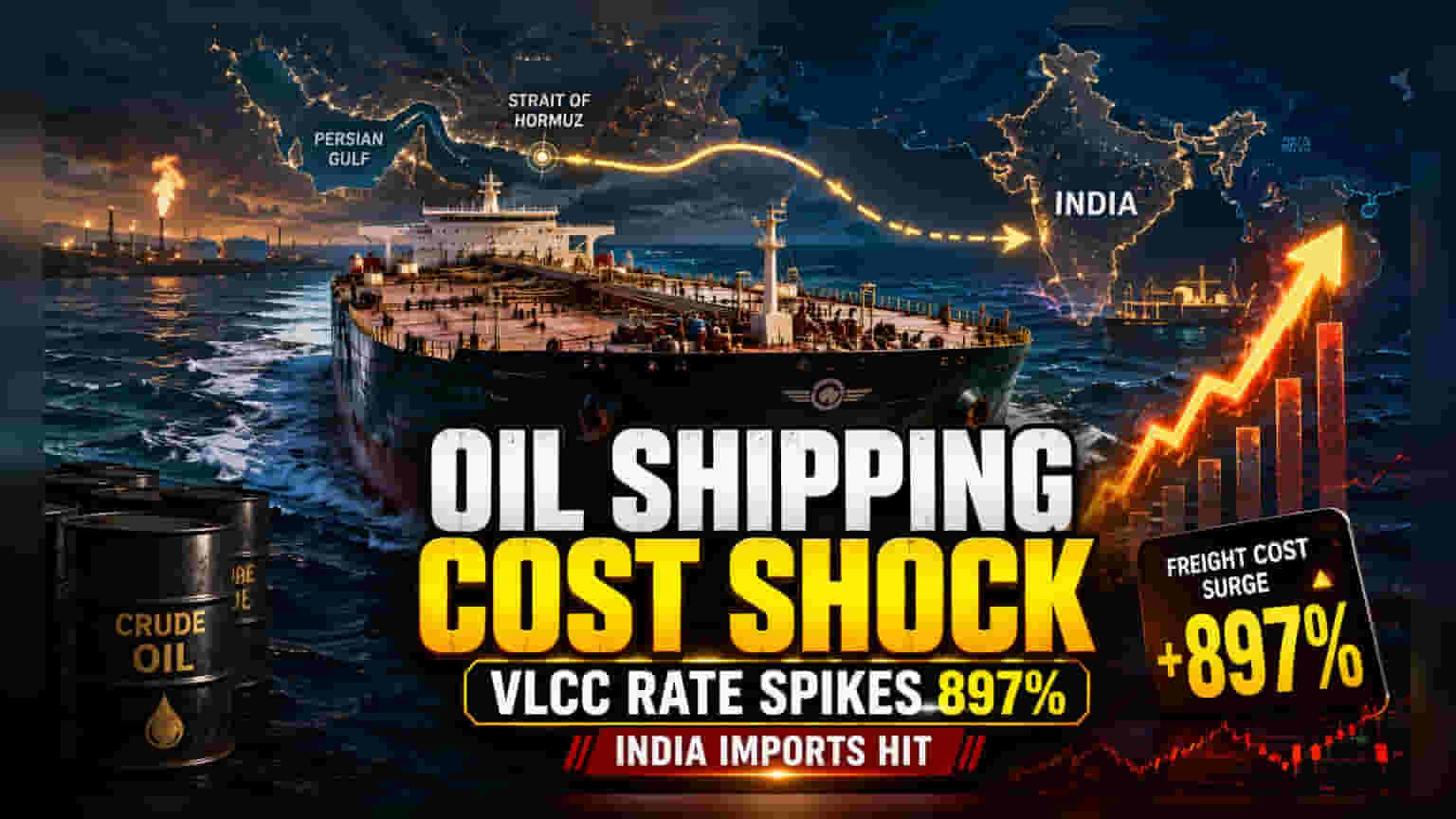
An oil supertanker destined for India has been chartered at nearly nine times the standard freight rate due to a severe shortage of vessels in the Persian Gulf. This significant rise in shipping costs highlights supply chain bottlenecks following recent geopolitical tensions. Investors are monitoring how these elevated logistics expenses could impact the profit margins of India's major oil marketing companies.
What Happened
A massive oil supertanker, known as a Very Large Crude Carrier (VLCC), has been booked to transport oil to India from the Persian Gulf at an extraordinary cost. Shipbrokers report that the vessel was chartered at 897% of the benchmark freight rate, a level not seen so far in 2026. The vessel is being supplied by South Korean operator Sinokor and is capable of carrying approximately two million barrels of crude oil. The booking rate is tied to the standard pricing index for the route between the Persian Gulf and Singapore.
Why Shipping Costs Are Spiking
The primary reason for this sharp rise is a scarcity of available tankers in the Persian Gulf region. Many shipowners had previously rerouted their fleets to alternative shipping lanes during a recent period when the Strait of Hormuz faced operational challenges. As global demand for crude shipments recovers, these vessels are now in high demand but are slow to return to the region, creating a bottleneck that has forced freight rates to record levels.
Impact on Indian Oil Importers
India imports the vast majority of its crude oil requirements. When shipping costs rise this sharply, it increases the "landed cost" of crude—the final price paid by Indian companies to get the oil into the country.
For Oil Marketing Companies (OMCs) like Indian Oil Corporation (IOCL), Bharat Petroleum Corporation (BPCL), and Hindustan Petroleum Corporation (HPCL), these high freight charges represent an additional expense. If global crude prices are already volatile, these extra logistics costs can put pressure on their operational margins. Whether these companies can absorb these costs or must pass them through to the system is a key point for analysis.
How Investors May Read This
Investors often look at these developments as a sign of underlying friction in the energy supply chain. While the commodity price of crude oil is the biggest factor for OMCs, the cost of moving that oil is a secondary but important variable. If high freight rates persist, it can act as a silent headwind for profitability, especially if these costs cannot be fully offset by domestic retail pricing adjustments.
What To Track Next
The key monitorable for investors is the duration of this shipping bottleneck. If tankers return to the Persian Gulf lanes quickly, the premium on freight rates should normalize. However, if geopolitical tensions continue to disrupt shipping routes, these elevated transport costs may become a recurring theme. Investors may also want to monitor management commentary from major Indian oil companies in their upcoming quarterly results regarding the impact of rising logistics costs on their gross refining margins.