

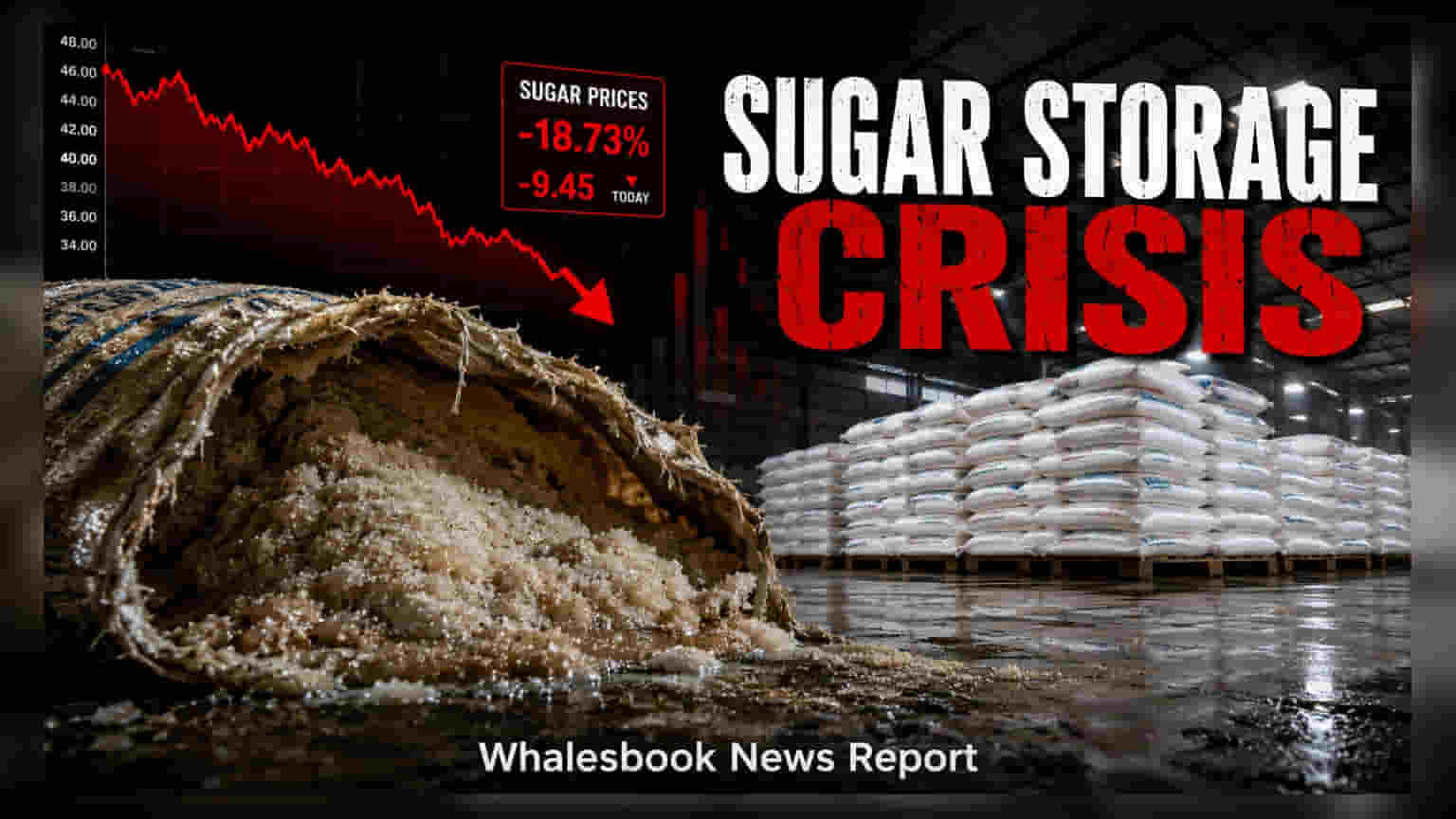
India’s sugar industry faces financial risks as improper warehouse management leads to significant post-harvest value erosion. For investors, this systemic issue highlights the importance of operational efficiency, as poor storage conditions directly damage inventory quality and compress profit margins. Companies that invest in modern storage infrastructure are better positioned to protect their bottom line in this sensitive commodity market.
The Indian sugar industry, a critical player in the global market, is facing a silent drain on profitability driven by post-harvest storage inefficiencies. Unlike grains or other hardy commodities, sugar is a highly sensitive, hygroscopic product that absorbs moisture from the air. When warehouses fail to maintain precise environmental controls, the commodity begins to degrade, leading to a permanent loss in value before it even reaches the consumer.
The Financial Impact of Storage Inefficiency
For sugar manufacturers, the inventory in warehouses represents a significant portion of working capital. When storage conditions are suboptimal—particularly during monsoon seasons where humidity frequently exceeds 60%—the sugar undergoes chemical changes. This includes sucrose inversion, where the sugar breaks down into glucose and fructose, and physical clumping, where the product turns into hardened masses. For the manufacturer, this is not just a storage issue; it is a direct financial loss. Damaged or clumped sugar often fetches a lower market price or requires costly reprocessing, both of which erode the company's EBITDA margins.
Operational Risks and Management Challenges
Warehouse management has evolved from a simple logistics function to a critical pillar of risk management for agricultural producers. Poor handling practices, such as direct floor stacking or the use of improper handling equipment, further exacerbate quality degradation. Rodent and insect infestation, which are common in poorly maintained facilities, can lead to contamination, forcing companies to write off inventory entirely. These operational inefficiencies add hidden costs to the supply chain that many investors overlook when evaluating the health of sugar manufacturers.
Monitoring Operational Efficiency
Investors looking at the sugar sector should move beyond just commodity prices and look closer at operational efficiency disclosures. Companies that are actively upgrading their warehousing, utilizing automated climate monitoring systems, and adhering to strict First-In, First-Out (FIFO) inventory protocols are better equipped to preserve value. During earnings calls or in annual reports, mentions of capital spending on warehouse modernization or digital inventory management are positive indicators that a company is managing its assets responsibly.
As the sugar industry continues to face volatility, the ability to store inventory safely acts as a competitive advantage. The difference between a high-performing sugar manufacturer and one struggling with margin compression often comes down to the efficiency of its supply chain, starting with how it treats its stock within the warehouse walls. Moving forward, the key monitorable for shareholders will be the extent to which sugar producers prioritize technological investments to curb these storage-related losses.