

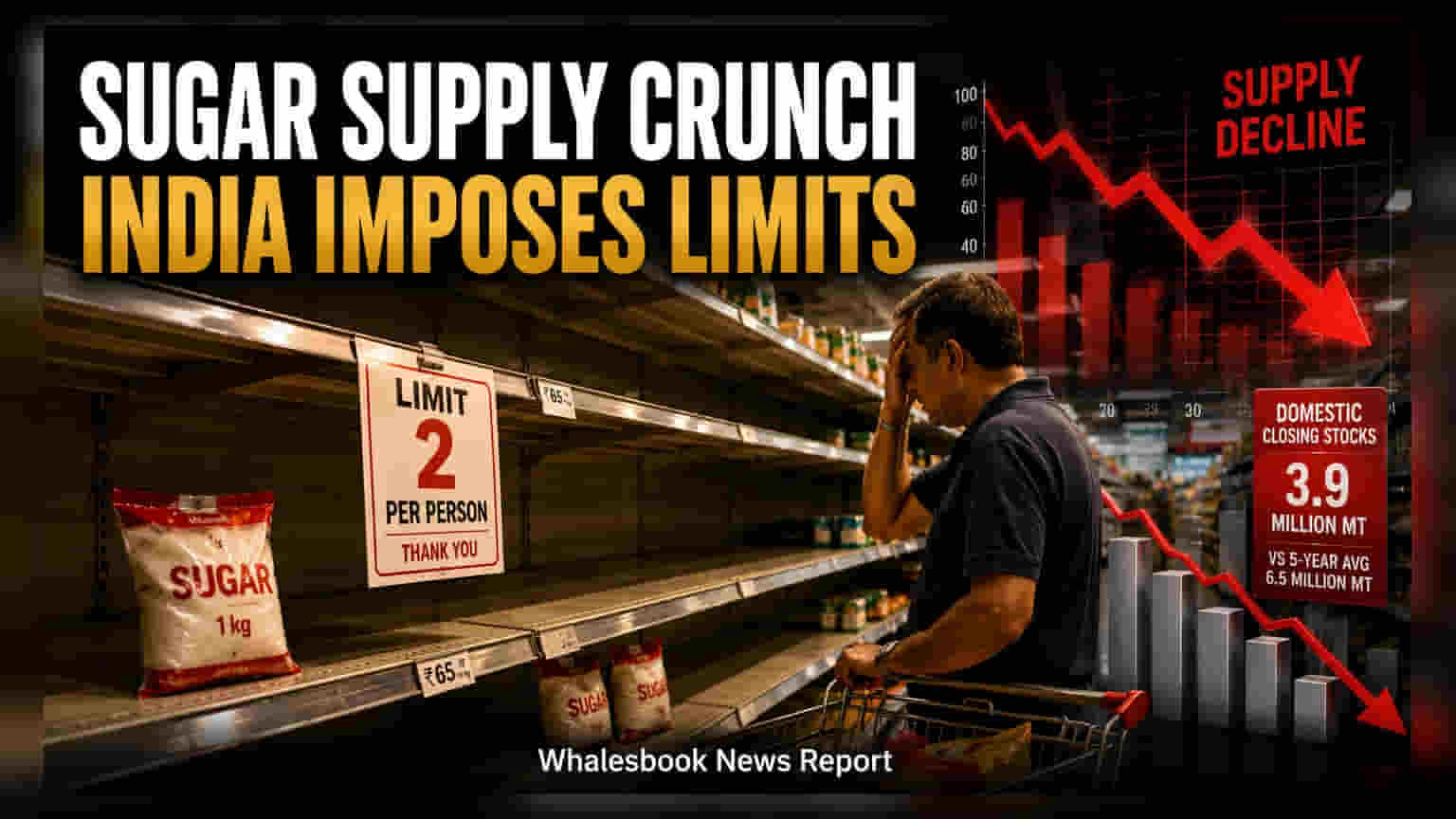
Indian retailers and quick-commerce platforms are capping sugar sales at 2–5 kg per customer as retail prices reach approximately ₹65 per kg. To stabilize supply, the government has permitted 1 million tonnes of raw sugar imports and imposed strict stockholding limits. Investors should monitor how these regulatory actions affect sugar manufacturer margins and input costs for downstream food and beverage companies.
Major grocery chains and quick-commerce platforms across India have implemented purchase caps, restricting individual customers to between two and five kilograms of sugar. This move comes in response to tightening domestic supplies as the country approaches the festive season, which has driven average all-India retail sugar prices to approximately ₹65 per kilogram. These restrictions are designed to prevent speculative hoarding and manage the limited inventory available in the market.
To address the supply-demand gap, the government has introduced several regulatory measures. It has authorized the duty-free import of 1 million tonnes of raw sugar to bolster domestic availability. Additionally, new stockholding limits have been implemented, effective from August 1 through November 30. Under these rules, dealers are restricted to holding a maximum of 4,000 quintals for a 30-day period. Meanwhile, bulk consumers—defined as those who utilize more than 10 tonnes of sugar monthly—must restrict their inventory to a 15-day supply. These steps indicate the government's priority to contain food inflation ahead of the peak festive demand period.
The sugar industry currently faces a complex environment. On one hand, domestic closing stocks for the 2026 season are estimated at 3.9 million metric tonnes, which is notably lower than the five-year average of 6.5 million metric tonnes. Historically, tight supply situations often create upward pressure on prices, which can support the revenue of sugar manufacturers. However, the government’s active intervention, including both imports and stockholding caps, acts as a check to prevent price volatility. Investors may track whether these measures succeed in stabilizing retail prices without significantly compressing the operating margins of sugar mills.
The situation also carries implications for downstream sectors, specifically the FMCG, confectionery, and beverage industries. For these companies, sugar is a critical raw material. A sustained increase in commodity costs can put significant pressure on profit margins if firms are unable to pass these expenses on to the end consumer. Consequently, investors in the food processing space should watch the upcoming quarterly financial results for indications of margin impact due to higher input costs.
The key monitorable for the next few months will be the effectiveness of these imported stocks in cooling domestic prices and whether the current inventory levels prove sufficient for the festive season. Further regulatory changes or updates on sugar output for the 2026-27 season will be important factors to watch, as they will determine the long-term pricing trend and the sustainability of current manufacturing margins.