

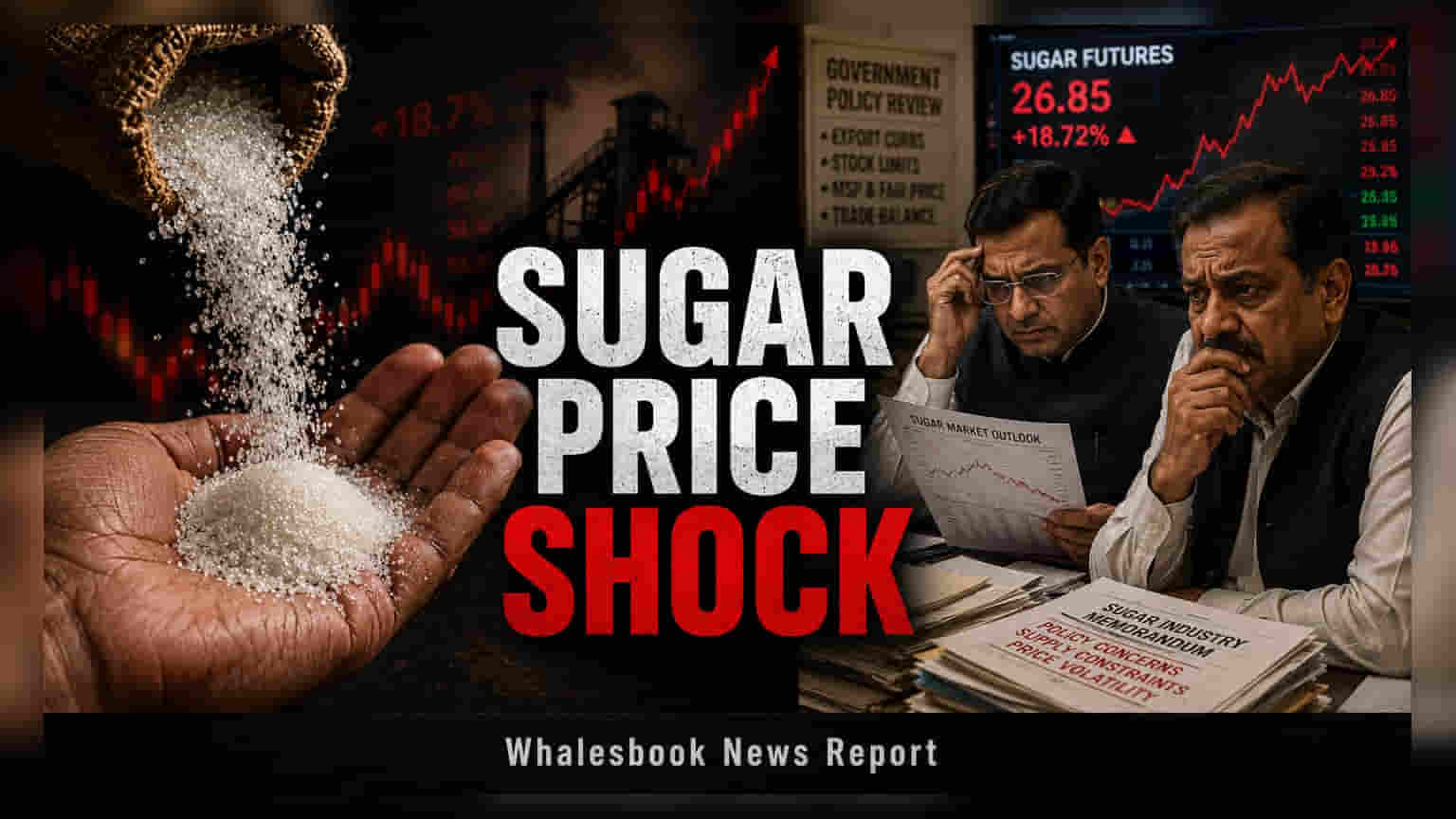
Sugar prices have risen about 8% since July, leading the Indian government to impose stock-holding limits on dealers until November 30, 2026. This intervention aims to curb festive season inflation while addressing supply concerns linked to El Nino. Investors should watch how these regulatory constraints and the industry's push for early crushing affect mill profitability and sugar recovery rates.
Sugar prices in India have risen by approximately 8% since the start of July 2026, creating a challenging environment for both consumers and policymakers. The primary driver behind this climb is concern over the El Nino weather pattern, which has sparked fears of a weak monsoon and its potential negative impact on sugarcane yields and overall production for the upcoming season.
In response to the price increase, the government has introduced stock-holding limits for sugar dealers. Effective from August 1, 2026, through November 30, 2026, dealers are restricted to holding a maximum of 4,000 quintals of sugar. This move is designed to prevent hoarding and ensure that domestic supply remains stable ahead of the busy festival season, during which demand for sugar typically peaks.
Industry bodies, including the Indian Sugar & Bio-energy Manufacturers Association and the National Federation of Cooperative Sugar Factories Ltd, have proposed starting the 2026–27 crushing season 10–15 days earlier than usual to increase supply in the market. While this proposal aims to cool prices, it presents an operational risk for sugar mills. Sugarcane harvested prematurely often has lower sucrose content, which can lead to reduced sugar recovery rates—meaning mills produce less sugar from every ton of cane crushed.
For investors, the sector presents a complex picture. Historically, higher sugar prices are a positive tailwind for sugar mills, potentially boosting revenues. However, the current environment is heavily influenced by government intervention. Regulatory actions, such as stock-holding limits and potential export or ethanol-diversion curbs, act as a ceiling on how much sugar mills can benefit from market price rallies. If the government perceives that prices are rising too quickly, further policy restrictions cannot be ruled out.
Investors may monitor the progress of the upcoming crushing season as a key update. The success of the early crushing strategy, the actual impact of weather conditions on yield, and whether the government decides to relax or tighten stock limits will be crucial for understanding the financial health of the sector. Additionally, the Ministry of Consumer Affairs, Food & Public Distribution continues to monitor domestic stock levels closely, maintaining that there is sufficient supply to meet current requirements.