

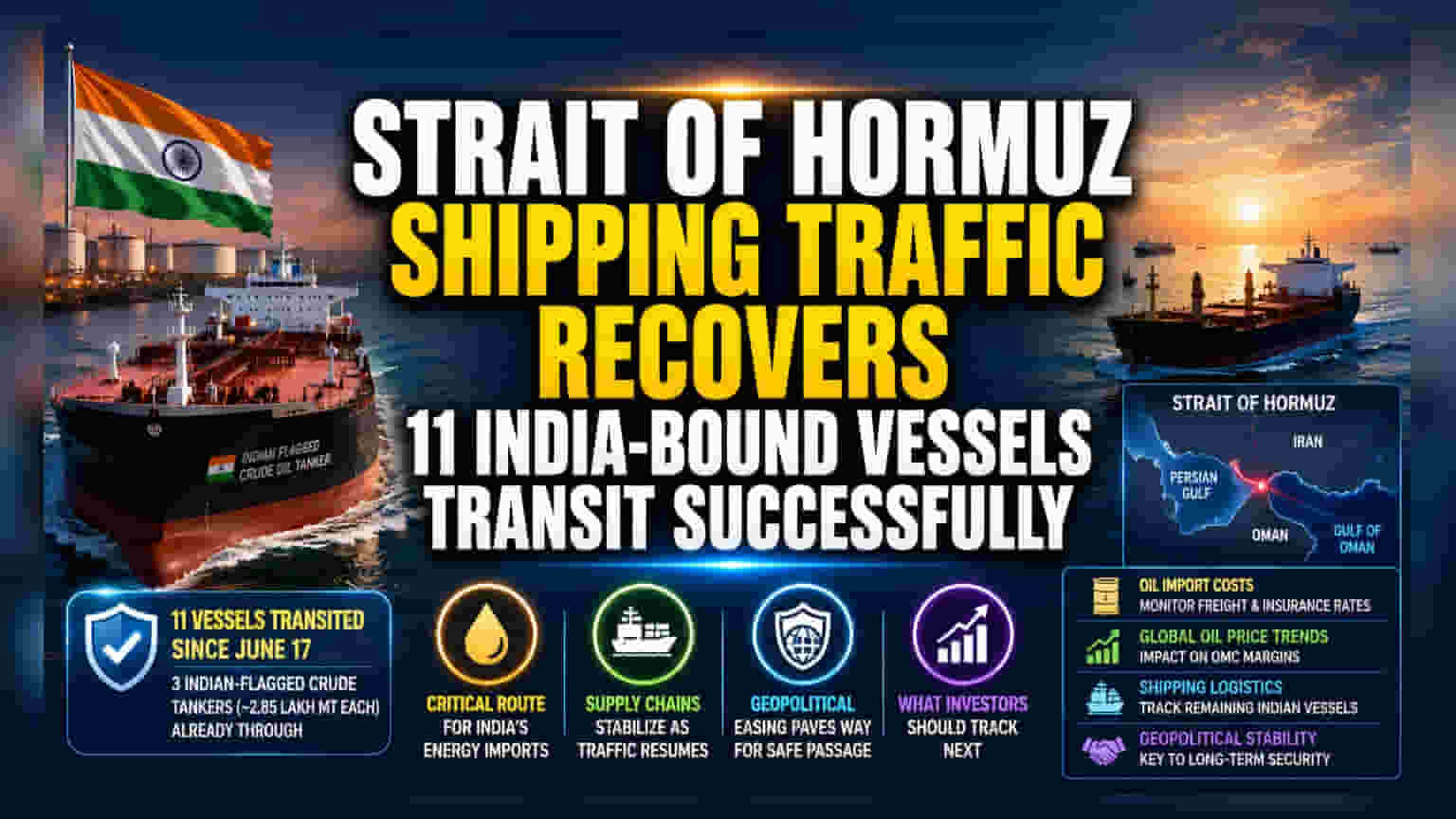
Eleven vessels, including crude oil tankers, have safely transited the Strait of Hormuz since June 17, marking a return to normal shipping activity. This normalization reduces concerns over supply chain disruptions and potential spikes in logistics costs for India’s energy imports.
What Happened
Shipping traffic through the Strait of Hormuz is showing signs of recovery, with eleven India-bound vessels successfully transiting the waterway since June 17. This group includes three Indian-flagged crude oil tankers, each carrying approximately 2.85 lakh metric tonnes of crude oil. The movement follows recent hostilities in the region, which had previously created significant uncertainty for maritime trade. The Ministry of External Affairs (MEA) confirmed the transit, noting that while two Indian ships have already entered the Persian Gulf, efforts are ongoing to ensure the safe passage of the remaining ten Indian-flagged vessels stranded in the region.
Why The Strait Matters For Energy Imports
The Strait of Hormuz is one of the world's most critical maritime chokepoints for energy supplies. Any disruption in this narrow waterway typically forces ships to take longer, alternative routes, leading to delays and increased freight costs. For India, a country that relies heavily on imported crude oil and fertilizers to meet its domestic demand, the stability of this route is essential. When the strait is closed or volatile, shipping companies often face higher war-risk insurance premiums, which can eventually add to the landed cost of commodities.
Impact On Logistics And Supply Chains
The resumption of normal traffic is a positive sign for logistics and supply chain stability. Beyond crude oil, the transiting vessels included foreign-flagged bulk carriers transporting fertilizers. By allowing these commodities to move freely again, the risk of supply shortages and sudden price fluctuations is reduced. For Indian industries, particularly those in oil marketing and agriculture, a consistent flow of imports helps in better inventory management and cost control.
The Broader Geopolitical Context
The stabilization of the waterway follows a reported Memorandum of Understanding (MoU) aimed at pausing military operations and reopening the strait. While the situation in West Asia remains complex, the movement of ships suggests a cautious easing of tensions. India’s policy, as articulated by the government, continues to focus on securing affordable energy from diverse global sources to serve its domestic requirements, navigating through geopolitical shifts while prioritizing national interests.
What Investors Should Track Next
While the current transit is a stabilizing factor, the situation in the region remains fluid. Investors may track several monitorables moving forward:
- Oil Import Costs: Watch for any sustained changes in freight rates and insurance premiums for shipments originating from the Middle East.
- Global Oil Price Trends: Any shift in the geopolitical environment can influence crude oil prices, which directly impacts the margins of domestic Oil Marketing Companies (OMCs).
- Shipping Logistics: Monitor updates on the remaining Indian-flagged vessels in the region and whether the normalization of traffic is consistent over the coming weeks.
- Geopolitical Stability: Continued diplomatic efforts and the status of the reported peace agreements will be key indicators of long-term trade route security.