

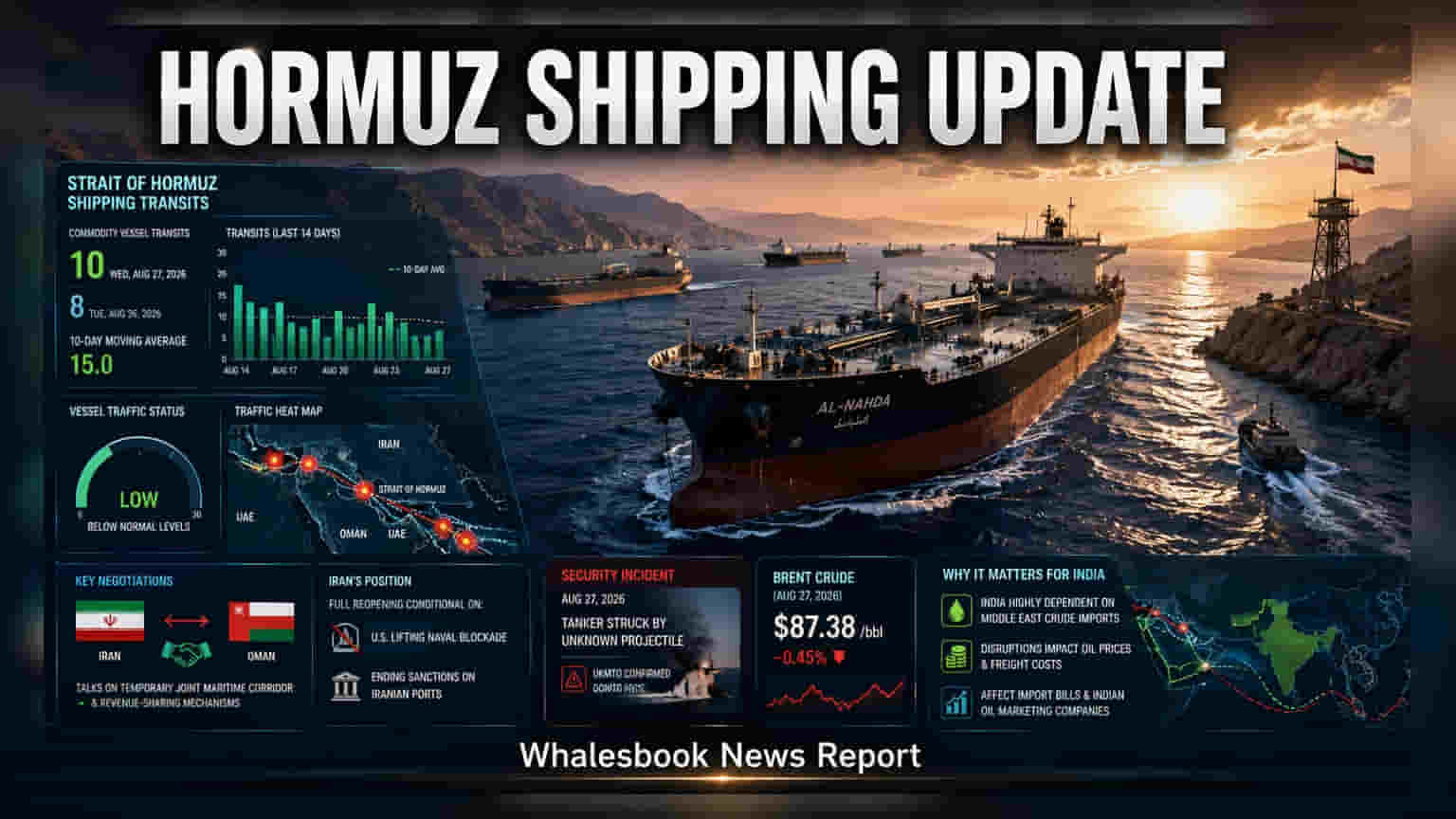
Shipping volumes through the Strait of Hormuz continue to lag, with 10 commodity vessel transits recorded on Wednesday against a 15-vessel average. Ongoing negotiations between Iran and Oman are coupled with heightened security risks following a reported projectile strike on a tanker, impacting global energy market sentiment.
Shipping activity through the Strait of Hormuz remains significantly below normal levels as geopolitical tensions and diplomatic maneuvers continue to influence one of the world’s most critical energy chokepoints. Data for Wednesday showed only 10 commodity vessel transits, a minor improvement from the eight recorded on Tuesday but still well below the 10-day moving average of approximately 15 vessels. This ongoing reduction in traffic reflects the continued uncertainty surrounding the free flow of goods through the region.
Diplomatic Negotiations and Transit Trends
Market observers are closely watching active negotiations between Iran and Oman regarding the potential establishment of a temporary joint maritime corridor and revenue-sharing mechanisms for the waterway. While these talks suggest a possible path toward easing restrictions, Tehran has maintained a firm stance. Official communications indicate that a full reopening of the strait is contingent upon the United States lifting its naval blockade and ending economic sanctions on Iranian ports. The lack of a finalized agreement continues to create uncertainty for global supply chains that rely on the strait for oil and gas transport.
Security Risks and Market Impact
Investor sentiment remains sensitive to regional security developments, which have added another layer of volatility to energy markets. Reports from the United Kingdom Maritime Trade Operations (UKMTO) confirmed a tanker was struck by an unknown projectile in the strait on August 27, 2026. This incident has raised concerns regarding maritime safety and the potential for rising insurance premiums for vessels operating in the region.
Global energy markets have reacted with volatility to the supply-side pressures. Brent crude prices traded at approximately $87.38 per barrel on August 27, marking a decline of about 0.5% as markets balanced concerns over supply disruptions with broader demand trends. For Indian investors, the situation is particularly relevant given India’s high dependency on crude oil imports from the Middle East. Persistent bottlenecks in the Strait of Hormuz or the nearby Bab el-Mandeb strait can influence global oil pricing and freight costs, which directly affect import bills for Indian oil marketing companies and domestic logistics sectors. The next important update will be the progress of the Iran-Oman talks and any further clarification on maritime security measures, as these factors will determine whether the transit volumes begin to normalize or face further decline.