

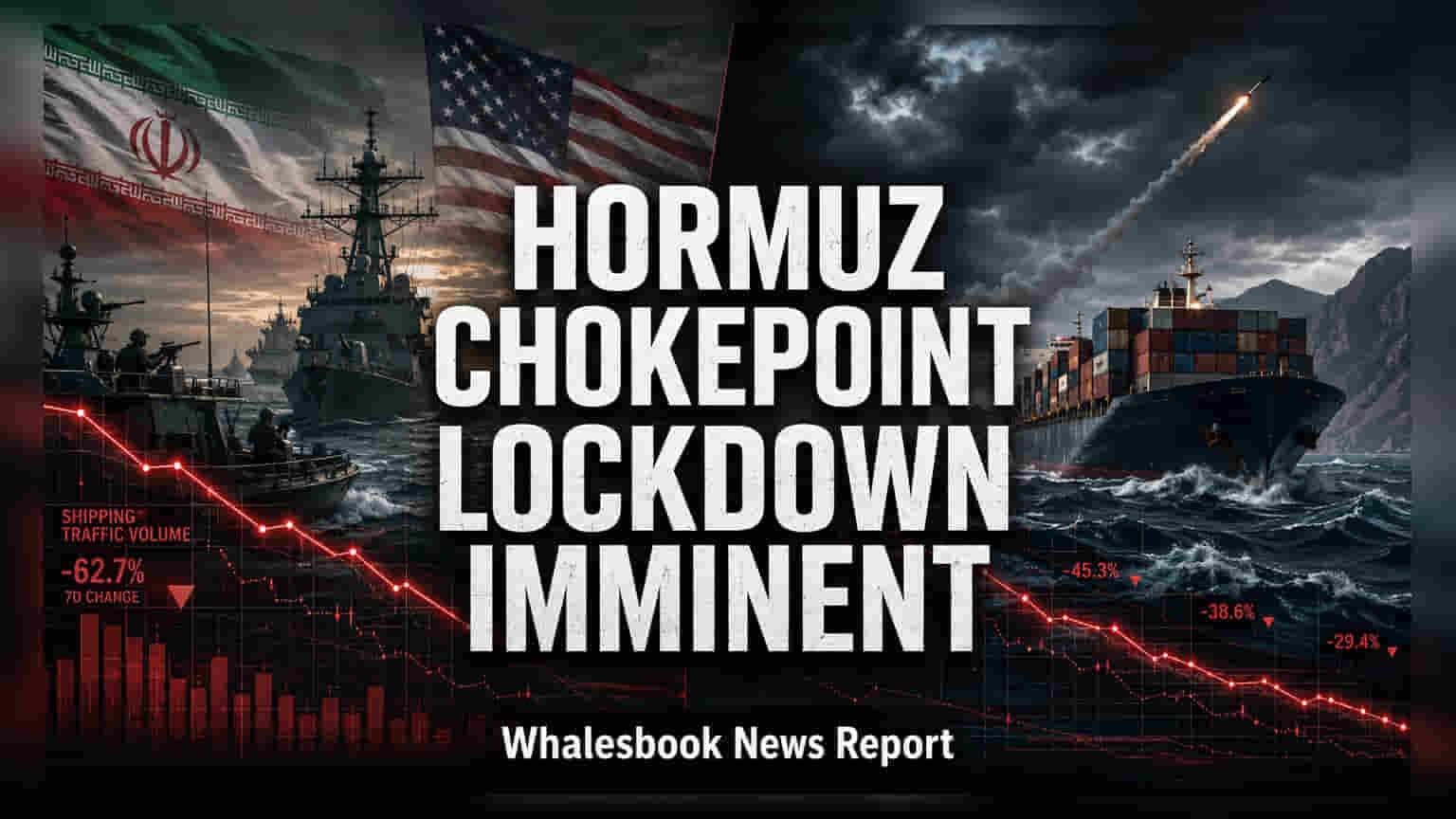
Shipping traffic in the Strait of Hormuz has dropped to its lowest daily level since mid-June following escalating military friction. The uncertainty poses risks to global commodity supply chains and energy transport costs for Indian importers.
The Strait of Hormuz, a critical global chokepoint for oil and commodity shipments, is experiencing a sharp decline in activity as geopolitical tensions between Iran and the United States intensify. On Sunday, daily transit volume fell to 14 vessels, the lowest level recorded since June 13. While traffic remains thin, the continued presence of commodity vessels, including three reported on Monday, indicates that essential trade is still struggling to navigate the volatile region.
The recent disruption follows a series of security incidents, including reported attacks on vessels earlier in July. A short-lived reduction in hostilities, which had briefly improved shipping confidence in mid-June, has effectively ended. Maritime data indicates that many ships are now moving through the area with transponders switched off to avoid detection, highlighting the extreme risk environment currently facing commercial operators.
Security Corridors and Operational Risks
Shipping companies are currently choosing between several high-risk paths. While the official maritime corridor designated by the International Maritime Organization is largely being avoided due to fears of sea mines, some vessels are utilizing a US-supported southern route. This corridor provides limited security assistance, including transit advisories and defense support, for ships that coordinate their passage. However, this level of dependency on US military presence adds a layer of operational complexity and potential legal or political risk for vessels.
Implications for Commodity Markets
For Indian investors, the situation in the Strait of Hormuz is a primary monitorable due to the region's role in global energy security. Any sustained blockade or significant threat to shipping can lead to increased insurance premiums, often referred to as war risk surcharges, and higher freight costs for oil and liquefied natural gas imports. These added costs can eventually impact the profit margins of Indian oil marketing companies and downstream chemical manufacturers who depend on consistent feedstock supplies.
Market participants should watch for further updates regarding the security of the southern corridor and any formal policy shifts from the US, such as the reported proposal to charge for security services or potential blockades on Iranian-flagged vessels. Future trade flows through the region will depend heavily on whether diplomatic channels can stabilize the waterway or if the current military standoff persists, potentially leading to further supply chain delays and commodity price volatility.