

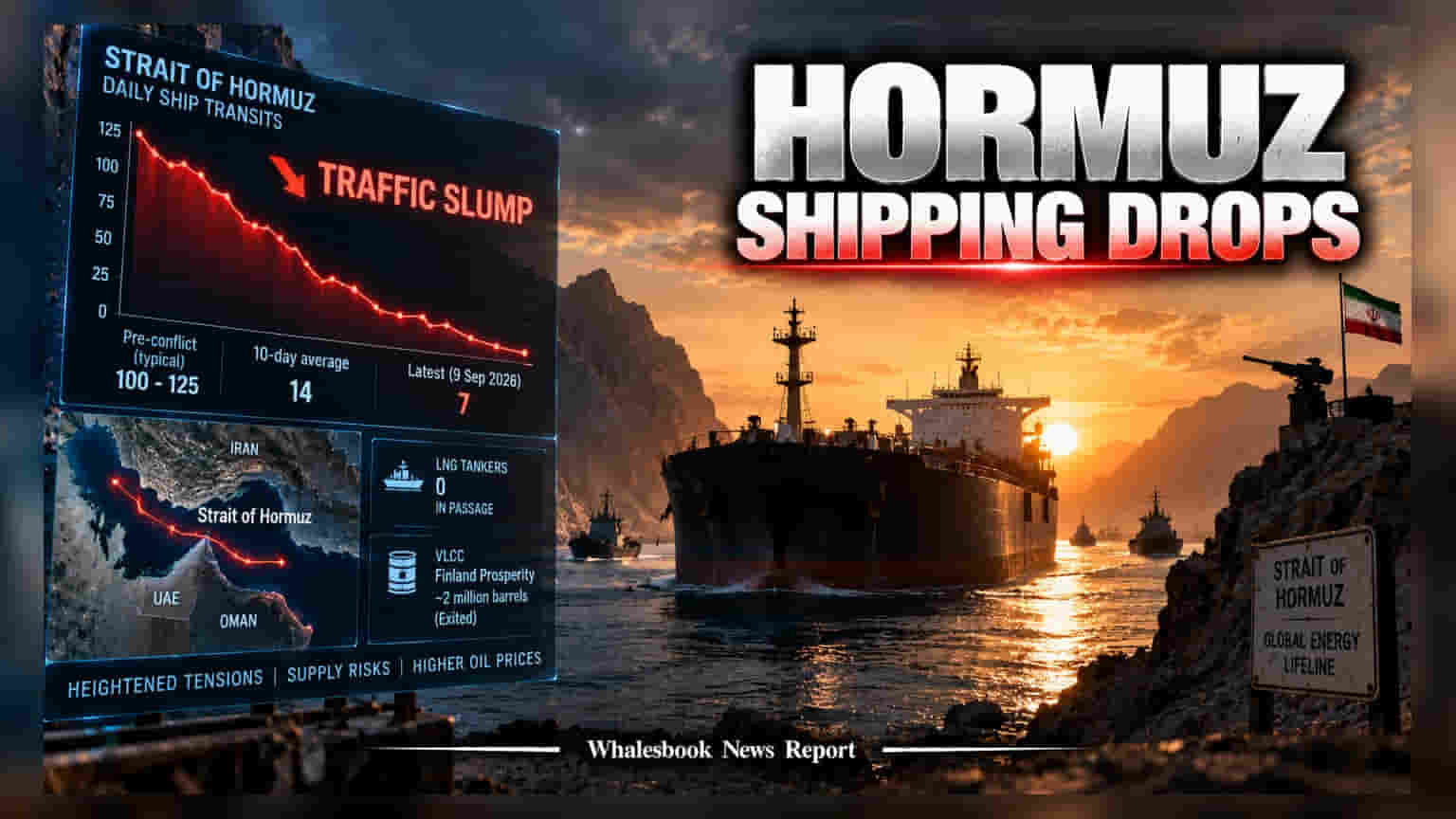
Shipping activity through the Strait of Hormuz fell to just seven vessels on Wednesday, significantly below the recent 10-day average of 14. This sharp decline, driven by intensifying maritime conflict between the U.S. and Iran, has helped push global oil prices above $100 per barrel, heightening supply chain and security risks for energy markets.
Shipping traffic through the Strait of Hormuz, a critical global energy chokepoint, slumped to just seven vessels on Wednesday, September 9, 2026. This figure marks a significant decline from the 10-day rolling average of 14 vessels and remains a fraction of pre-conflict levels, which historically saw over 100 to 125 ships transit daily. The drop comes as direct maritime confrontations between U.S. and Iranian forces have intensified, leading to the reported disabling or destruction of multiple tankers in the region.
Among the limited activity recorded, the exit of the very large crude carrier (VLCC) 'Finland Prosperity' was a notable event. The vessel successfully transited the waterway carrying approximately 2 million barrels of crude oil. However, the data also highlighted a complete absence of liquefied natural gas (LNG) tankers in the passage during this period. Market tracking remains difficult, as many vessels now sail with transponders disabled—a practice known as 'dark' shipping—to evade detection and minimize risks from the ongoing military engagements.
While the Strait of Hormuz faces severe disruption, other maritime corridors present a different picture. The Bab el-Mandeb Strait, which serves as a key passage to the Red Sea, has maintained relatively consistent traffic. Approximately 28 commodity ships navigated this passage on Wednesday, aligning with its recent 10-day average. This suggests that while energy markets are grappling with extreme volatility and supply chain insecurity in the Persian Gulf, global trade through the Red Sea remains more stable for now.
For investors, the primary impact of this maritime security crisis is the volatility in global energy prices. With benchmark oil prices recently climbing past $100 per barrel, the market is pricing in significant supply risks. Energy and logistics companies with exposure to the Middle East face heightened uncertainty, as elevated insurance premiums, rerouting costs, and the physical threat to assets put pressure on operational margins.
The conflict carries broader risks that market participants are closely tracking, including the potential for catastrophic environmental damage should active hostilities result in tanker spills. Furthermore, the use of 'dark' shipping complicates the ability of global energy traders to assess supply levels accurately. Investors may continue to monitor military developments in the region, as any further escalation in naval engagements will likely result in continued energy price pressure and potential shifts in global trade routes.