

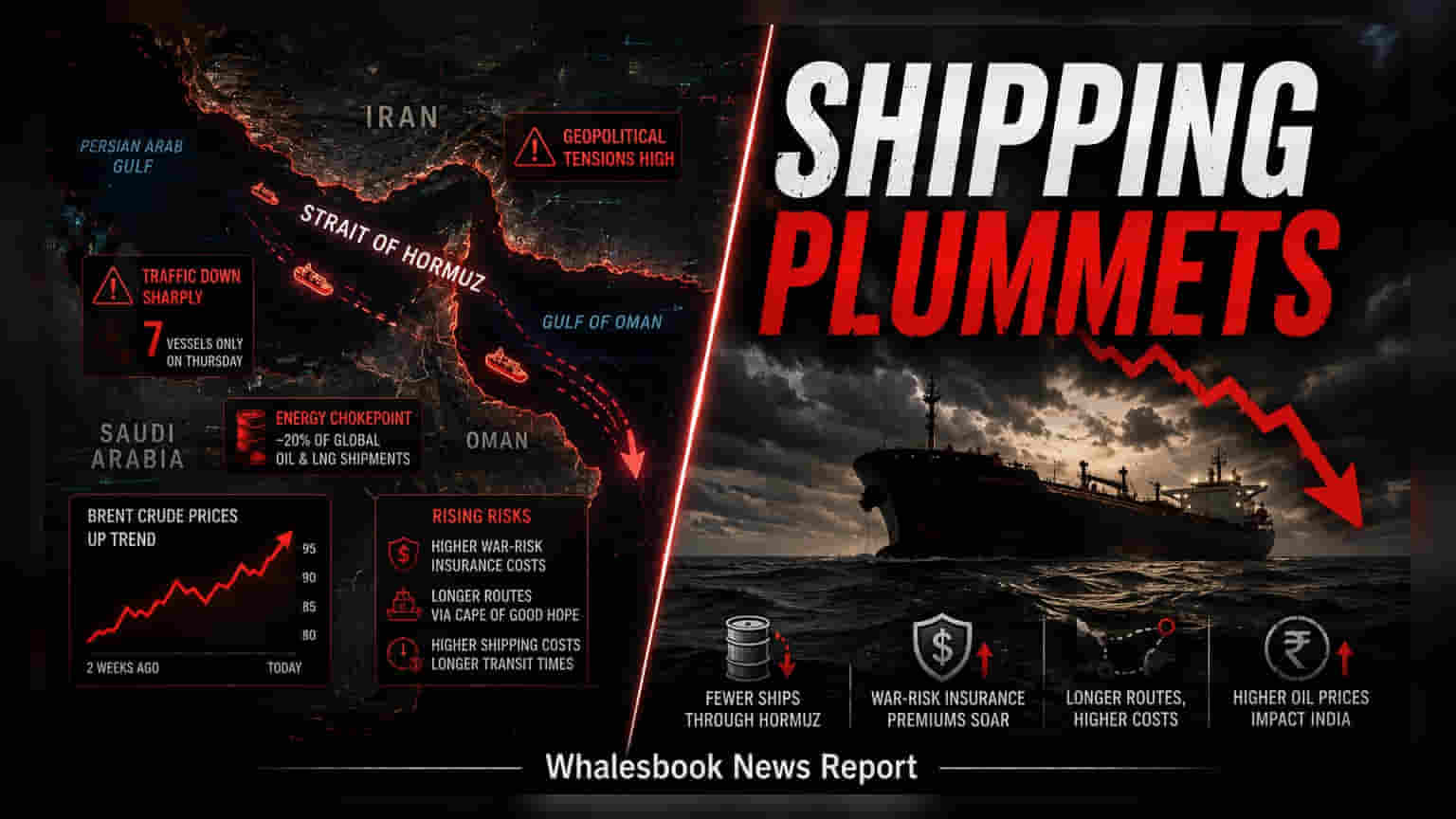
Commodity ship traffic through the Strait of Hormuz fell to just seven vessels on Thursday amid stalled U.S.-Iran diplomatic talks. This decline at a critical energy chokepoint raises concerns for global oil supply security. For Indian investors, the situation creates potential risks, including higher crude import costs and inflationary pressure on oil-dependent sectors.
Shipping traffic through the Strait of Hormuz, a vital artery for global energy, has declined sharply. Only seven commodity vessels navigated the chokepoint on Thursday, a significant reduction that reflects the growing geopolitical uncertainty in the Middle East. The slowdown follows the expiration of a previous ceasefire and stalled peace negotiations between the U.S. and Iran, leading to heightened anxiety among shippers and insurers.
The Strait of Hormuz is a major chokepoint that historically handles nearly one-fifth of the world’s crude oil and liquefied natural gas (LNG) shipments. For the Indian market, this region is a critical source of energy imports. Any sustained disruption to traffic in this area typically leads to volatility in global oil prices. With Brent crude already showing an upward trend over the past two weeks due to fears of supply shortages, the risk of higher import bills for the country remains a primary concern for the economy.
The ongoing tension is creating tangible operational risks for the shipping industry. Vessels transiting Middle Eastern waters are facing significantly elevated war-risk insurance premiums, which adds to the total cost of energy transport. To mitigate these security concerns, some shipping companies are opting to bypass the strait entirely. These operators are increasingly choosing longer, more expensive routes, such as navigating around the Cape of Good Hope, or moving cargo through alternative loading points in the Gulf of Oman. While these adjustments ensure cargo safety, they extend transit times and increase logistical costs, which can eventually impact global supply chains.
From an investor perspective, the sector-wide implications are significant. Oil marketing companies (OMCs) often face margin pressure during periods of crude oil volatility, especially if they cannot fully pass on increased costs to consumers. Furthermore, Indian sectors that rely heavily on oil derivatives, such as aviation, paints, and logistics, are particularly sensitive to these fluctuations. Higher fuel and input costs can affect corporate profitability in these segments.
The situation remains fluid, and the impact on the Indian market will largely depend on the duration of the current stalemate and any subsequent regional developments. Investors are likely to track key indicators, such as daily Brent crude price movements, government policy updates regarding energy security, and reports on insurance costs for maritime transport. Whether global supply lines can remain stable without significant cost increases will be the important factor to monitor in the coming weeks.