

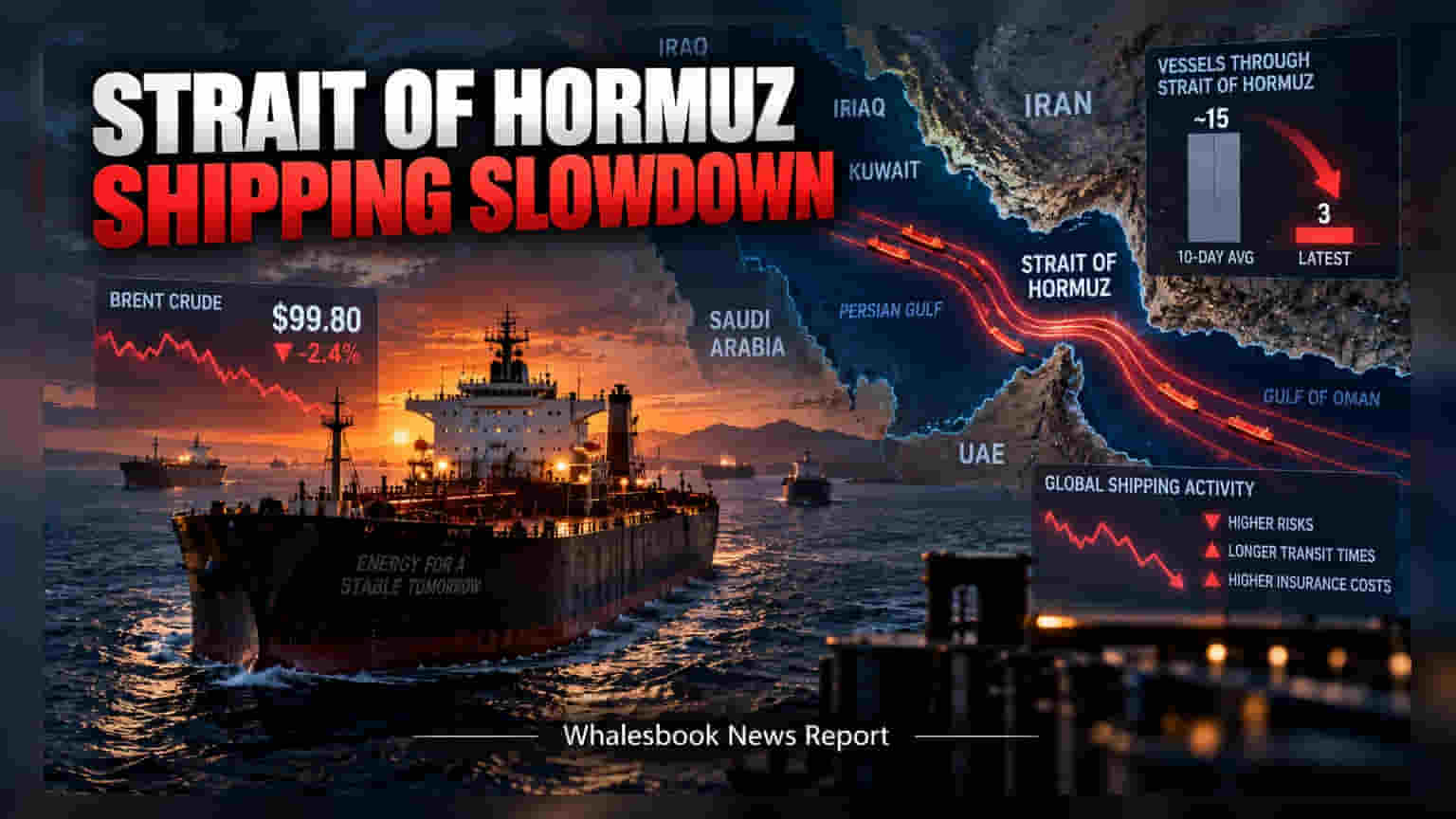
Vessel traffic in the Strait of Hormuz has dropped to just three ships, far below the average, due to rising US-Iran tensions. This slowdown, combined with reduced activity in the Bab el-Mandeb Strait, signals potential risks for global oil supplies. For Indian investors, any disruption in these critical waterways could lead to volatility in crude oil prices, impacting the energy import costs of Indian oil marketing companies.
Shipping activity through the Strait of Hormuz experienced a sharp decline on Tuesday, with tracking data from Kpler showing only three commodity vessels navigating the corridor. This figure is significantly lower than the recent 10-day moving average of approximately 15 ships. The Strait of Hormuz is one of the world's most critical maritime chokepoints, historically accounting for about one-fifth of global oil and gas transit. When traffic slows in this region, it often acts as a barometer for geopolitical uncertainty.
The decline follows intensified diplomatic and political rhetoric between the United States and Iran. Markets are currently sensitive to these developments, as any threat of a permanent closure or a significant disruption in the strait could lead to a spike in international crude oil prices. The situation has been further complicated by statements from major political figures regarding potential diplomatic outcomes or conflicts, causing uncertainty among global logistics operators.
Pressure is also visible at the Bab el-Mandeb Strait, another vital passage connecting the Red Sea and the Gulf of Aden. Recent data indicates that traffic here has also softened, with 22 commodity vessels recorded on Tuesday, compared to a 10-day average of 26 ships. The simultaneous dip in activity across these two critical maritime paths suggests that shipping companies are adopting a cautious approach to security risks in the Middle East, potentially leading to increased insurance premiums and longer transit times for global energy shipments.
For Indian investors, the situation is particularly relevant due to the country’s high dependence on energy imports. A prolonged disruption or a sharp rise in crude prices can put pressure on the financials of Indian oil marketing companies, such as IOC, BPCL, and HPCL. While upstream companies like ONGC and Oil India may benefit from higher crude realizations, the downstream impact on oil marketing companies—which often bear the burden of high import costs—can be negative if they cannot pass on price hikes to consumers.
The most important monitorable for investors in the coming days will be global crude oil prices and updates from maritime tracking agencies. If the decline in vessel traffic persists, it may signal that shippers are avoiding these routes, leading to supply chain delays that could influence global energy costs. Investors should track official reports on transit levels and government commentary from both regional and global stakeholders to gauge whether this is a temporary pause in logistics or a more sustained impact on global energy trade.