

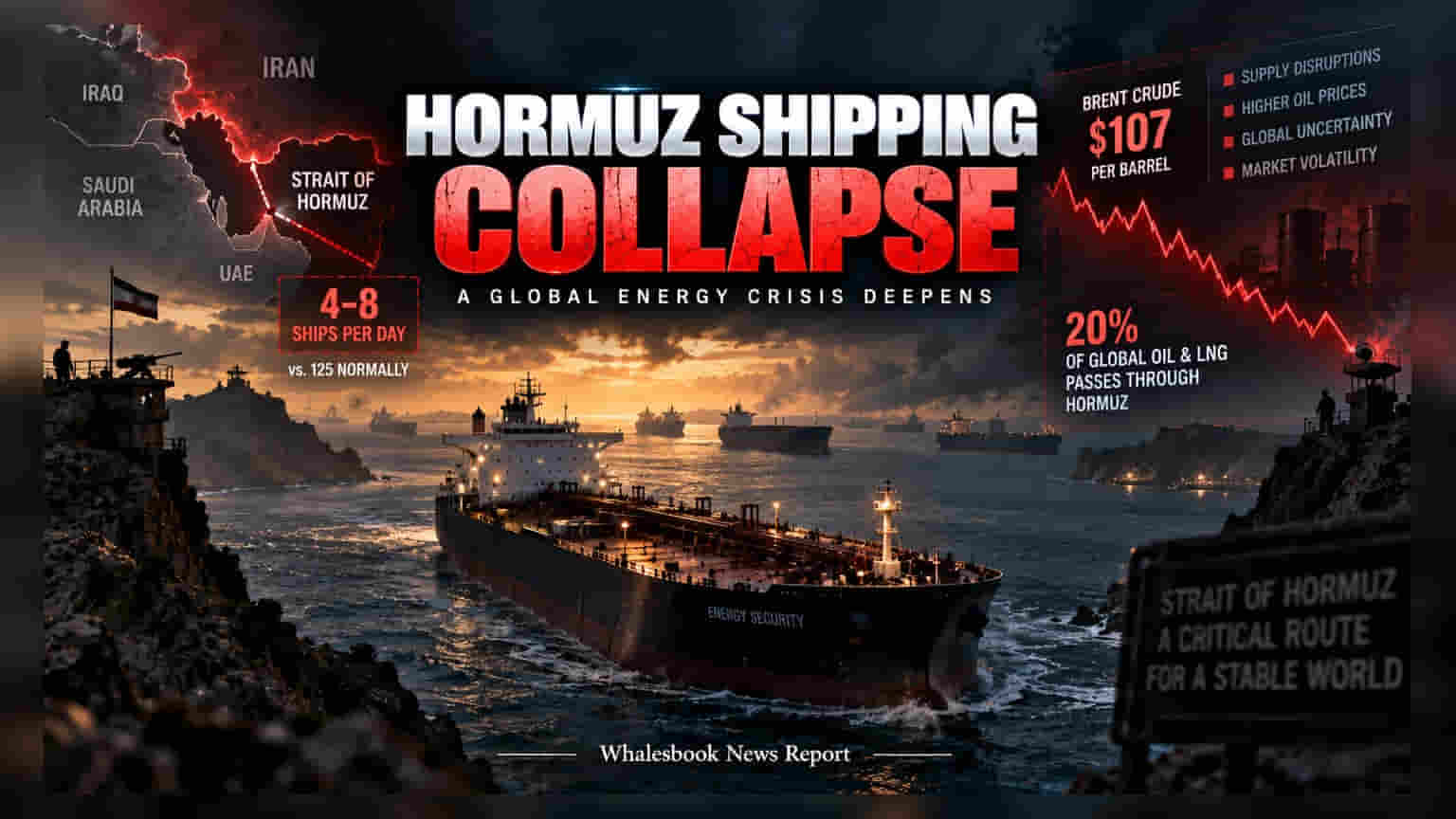
Maritime traffic through the Strait of Hormuz has plummeted to just 4-8 vessels daily, driving Brent crude prices up to $107 per barrel. As Indian markets reopen today, investors are bracing for potential volatility fueled by rising energy costs and supply chain disruptions.
Maritime activity through the Strait of Hormuz has reached a critical low, with vessel transit dropping to just 4 to 8 ships per day. This is a sharp decline from the normal daily flow of approximately 125 vessels. The disruption, driven by escalating regional conflict, is severely restricting a major global energy corridor that handles about 20% of the world's crude oil and liquefied natural gas.
The situation worsened significantly following reports that Saudi Arabia's East-West pipeline was temporarily shut down after drone and missile attacks. This pipeline was a crucial alternative route for oil exports, and its closure has removed a vital safety valve for energy markets. High-level diplomatic talks between Iran and Gulf Arab states, aimed at ensuring maritime security, have also been postponed, leaving the region without a clear path to resolution.
For Indian investors, the immediate concern is the impact on global energy prices and the domestic economy. Brent crude has surged to approximately $107 per barrel due to supply fears. Since India imports a vast majority of its oil requirements, higher crude prices often lead to a wider trade deficit, inflationary pressure, and currency volatility. These factors can place significant strain on the margins of companies that rely heavily on fuel, such as airlines, logistics firms, and manufacturing businesses.
As the Indian stock exchanges resume trading today after the Ganesh Chaturthi holiday, the market sentiment may feel the weight of these geopolitical pressures. Sectors with heavy energy consumption or those sensitive to global trade flows, like automobiles and heavy industry, are likely to face increased scrutiny. While the long-term economic impact will depend on how quickly shipping lanes can be secured or alternative logistics managed, the immediate reaction in the market will likely be driven by risk-averse sentiment.
Investors will need to monitor how the situation evolves, particularly regarding energy prices, the duration of the pipeline outage, and any new diplomatic updates. The key for the coming sessions will be to watch for trends in global crude benchmarks and how the Indian market digests the sudden increase in energy-related risks.