

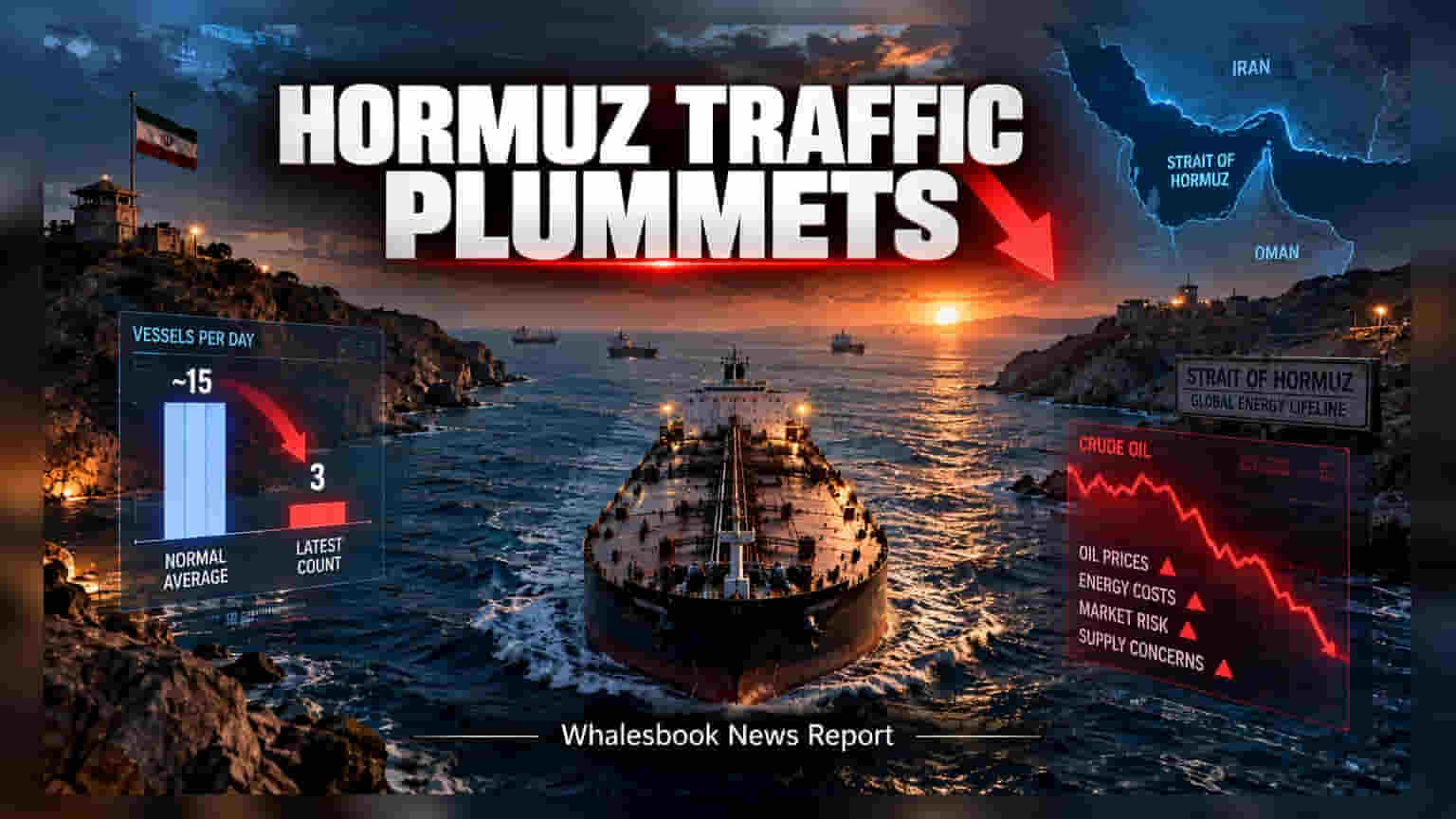
Vessel traffic through the Strait of Hormuz fell to three ships on Tuesday against a daily average of 15. This drop in activity at a critical energy chokepoint could increase volatility in global crude oil prices, which directly impacts the margins of Indian oil marketing companies and the broader economy.
Shipping data from Tuesday revealed a sharp decline in vessel traffic through the Strait of Hormuz, a vital maritime corridor for global oil and gas. Reports indicate that only three commodity vessels completed the passage, significantly lower than the standard daily average of about 15 ships. For India, which imports over 80% of its crude oil requirements, this chokepoint is essential for energy security. Any sustained disruption or security concern in this region is a critical factor that can affect the cost of energy imports.
Impact on Indian Energy Stocks
Investors typically view stability in the Middle East as a key factor for the profitability of Indian energy companies. For downstream firms, or Oil Marketing Companies (OMCs) such as IOC, BPCL, and HPCL, a spike in global crude oil prices often puts their profit margins under pressure if they cannot fully pass these costs on to consumers. Meanwhile, upstream producers like ONGC and Oil India may see revenue benefits from higher crude prices, although these are often moderated by government policies and taxes. Beyond individual stocks, a rise in oil prices can also pressure the Indian Rupee and contribute to inflationary concerns, affecting the wider market.
Understanding the Data Limitations
It is important to note that the current shipping data may not capture the full extent of maritime activity. It is a common practice for commercial vessels to disable their transponders during parts of their journey for security or operational reasons. Consequently, the actual number of ships passing through the strait could be revised higher as tracking data is reconciled over the coming days. Market analysts currently treat the initial figures with caution rather than as an confirmed sign of a supply chain blockade.
What Investors Should Monitor
The primary focus for market participants will be whether the traffic numbers normalize in the coming days. Investors should track global Brent crude oil prices and any updates regarding maritime security in the region. Should the reduction in traffic persist, it could signal genuine supply chain stress, which would be a key factor influencing the operational costs and financial performance of energy-dependent industries in India. Any official government or shipping authority commentary on the reason behind the vessel count decline will also be essential for understanding the long-term risk to supply chains.