 Whalesbook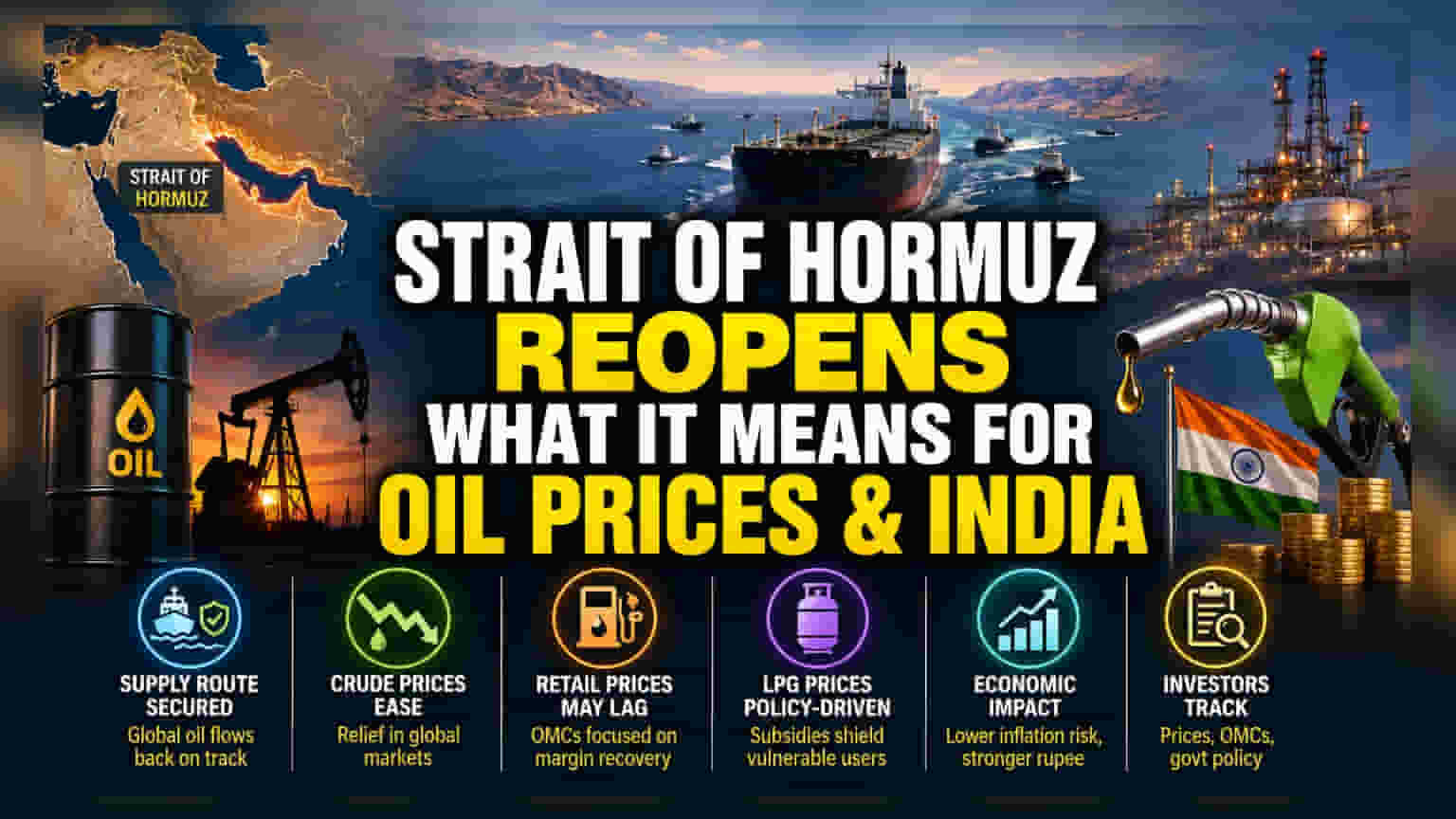


Global oil supplies are stabilizing as the critical Strait of Hormuz reopens, potentially softening crude costs. However, Indian consumers and investors should note that immediate, significant cuts to petrol and diesel prices remain unlikely. Oil Marketing Companies are prioritizing margin recovery over quick retail price adjustments, while the government continues to manage the subsidy burden for cooking gas.
What Happened
The Strait of Hormuz, globally recognized as a vital maritime chokepoint for oil transport, has officially reopened. This development has effectively removed the immediate risk of a major crude oil supply disruption. With the route now functional, global markets are seeing some ease in crude oil pricing, which is a positive development for an energy-importing nation like India. Given that India imports over 85% of its crude oil requirements, stability in this waterway is essential for protecting the economy from unpredictable cost spikes.
Why Fuel Prices May Not Fall Immediately
While the reopening is a relief for global supply chains, it does not automatically translate into a significant price drop at Indian petrol pumps. Market experts emphasize that for meaningful retail price reductions to take place, international crude oil prices need to remain consistently below the $80 per barrel mark.
Even if global prices drop, the pass-through mechanism in India is complex. Oil Marketing Companies (OMCs) such as Indian Oil Corporation, Bharat Petroleum, and Hindustan Petroleum often use periods of softening global prices to recover past under-recoveries. This means that instead of immediately lowering prices for the consumer, these companies may focus on strengthening their balance sheets and restoring profit margins that were pressured during periods of high volatility. Consequently, any retail price adjustments are expected to be modest and carefully managed rather than a sharp reversal.
The Role of Government Policy and Subsidies
For Liquefied Petroleum Gas (LPG) users, price movements are heavily influenced by government policy rather than just global market trends. The government has utilized direct subsidy mechanisms, such as the support provided under the Pradhan Mantri Ujjwala Yojana, to protect vulnerable households from high energy costs. Lower global energy prices provide the government with more fiscal breathing room, potentially reducing the total subsidy burden. However, future price benefits for consumers will depend on a combination of sustained global price declines and the government’s specific fiscal priorities, suggesting that targeted assistance will likely remain the preferred approach over broad price cuts.
Broader Economic and Market Context
Energy prices are a major variable for the Indian economy. High crude oil costs typically lead to a wider trade deficit, put pressure on the Indian Rupee, and increase inflationary risks. While the reopening of the Strait of Hormuz helps mitigate the threat of an energy supply crisis, the overall economic relief will be gradual.
A stable or declining oil price environment is generally viewed positively by foreign investors, as it supports the Rupee and improves the overall macroeconomic outlook. India’s substantial foreign exchange reserves and a resilient external sector provide a defense against short-term shocks, but sustained lower energy costs are necessary to attract long-term capital and maintain stability.
What Investors Should Track
Investors monitoring this space should look beyond daily news and focus on several key areas. The first is the sustainability of crude oil prices; a temporary dip is less impactful than a trend that stays below the $80 per barrel threshold. The second is the commentary from management at major OMCs regarding their margin recovery and under-recovery status. Finally, government communications regarding fuel pricing and subsidy outlays will remain a critical monitorable for understanding how much of the global price benefit will actually reach the retail consumer. Understanding these dynamics is key to gauging the financial health of the sector and the potential for broader inflationary relief.