

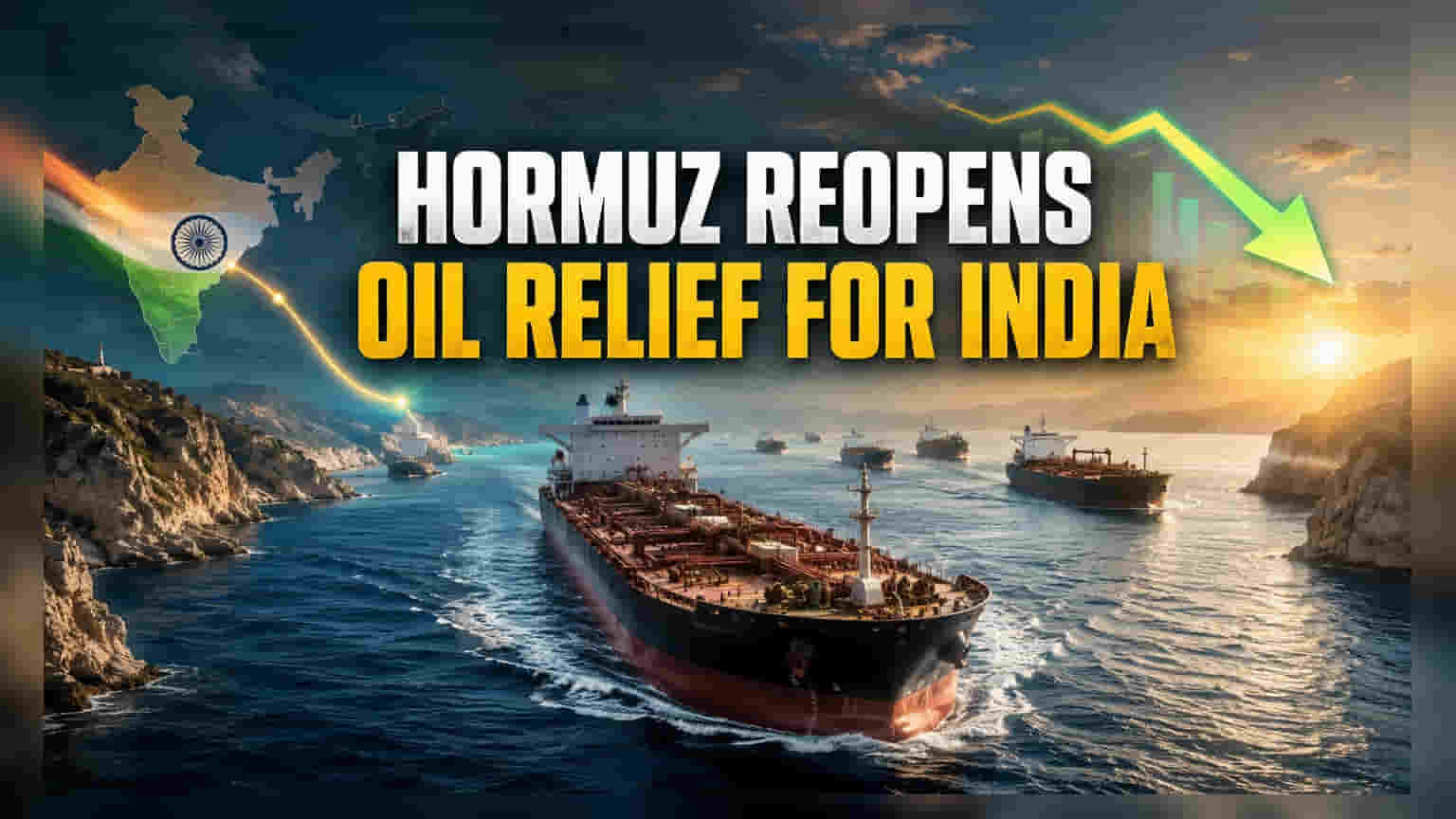
Nearly 80 million barrels of crude oil are moving through the Persian Gulf as US-Iran diplomatic tensions ease. This development is crucial for India, a major importer of Gulf energy, as it may help stabilize global crude prices. For investors, this shift influences the profitability of Indian oil marketing companies and the broader inflation outlook, though sustained supply remains the key monitorable.
What Happened
Nearly 80 million barrels of crude oil, carried by approximately 40 Very Large Crude Carriers, are currently moving through or standing by near the Strait of Hormuz. This follows a diplomatic shift between the United States and Iran, which has lowered tensions in the Persian Gulf. In a sign of normalcy returning, the Abu Dhabi National Oil Company (ADNOC) has directed its customers to resume loading crude from its export terminals. This development marks a potential return to regular shipping flows in one of the world's most critical energy chokepoints, through which a significant portion of global and Indian oil passes.
Why It Matters For India
India relies heavily on crude oil imports to meet its energy needs, with a vast portion of these imports sourced from Gulf nations. The Strait of Hormuz is essentially a gateway for this supply. When this route is disrupted or threatened by tension, global oil prices tend to spike due to fears of supply shortages. For the Indian economy, higher oil prices mean a larger import bill, which can pressure the rupee and increase inflation. Conversely, the resumption of smooth shipping flows helps in stabilizing global oil prices, providing some relief to the Indian economy's import bill.
Impact On Oil Marketing Companies
For investors in the Indian stock market, the performance of oil companies is often split between two categories: Upstream companies (like ONGC and Oil India) and Downstream Oil Marketing Companies (OMCs like IOC, BPCL, and HPCL). Generally, OMCs benefit when crude oil prices are stable or lower, as it allows them to manage their profit margins on petrol and diesel more effectively. If the reopening of the Strait leads to a more reliable and reasonably priced supply, these companies may see less pressure on their bottom lines. However, upstream companies often benefit from higher crude prices, so the impact is not uniform across the sector.
The Risk Of Fragile Diplomacy
While the current resumption of shipping is a positive sign, investors should be aware that the situation remains delicate. The energy market is highly sensitive to geopolitical updates. A shift in diplomatic relations or new tensions in the region could quickly reverse these gains, leading to renewed volatility in oil prices. The market will be watching to see if the increased tanker traffic remains consistent over the coming weeks, rather than being a temporary pause in tensions.
What Investors Should Track
Going forward, the most important factor for investors is the sustained flow of crude through the Persian Gulf. Investors should track global Brent crude oil price movements, as they reflect market sentiment regarding supply security. Additionally, management commentary from Indian OMCs regarding their gross marketing margins and inventory costs will provide clarity on how this global development impacts their profitability. Finally, any further official updates on the diplomatic situation between the US and Iran will serve as a key trigger for market stability.