

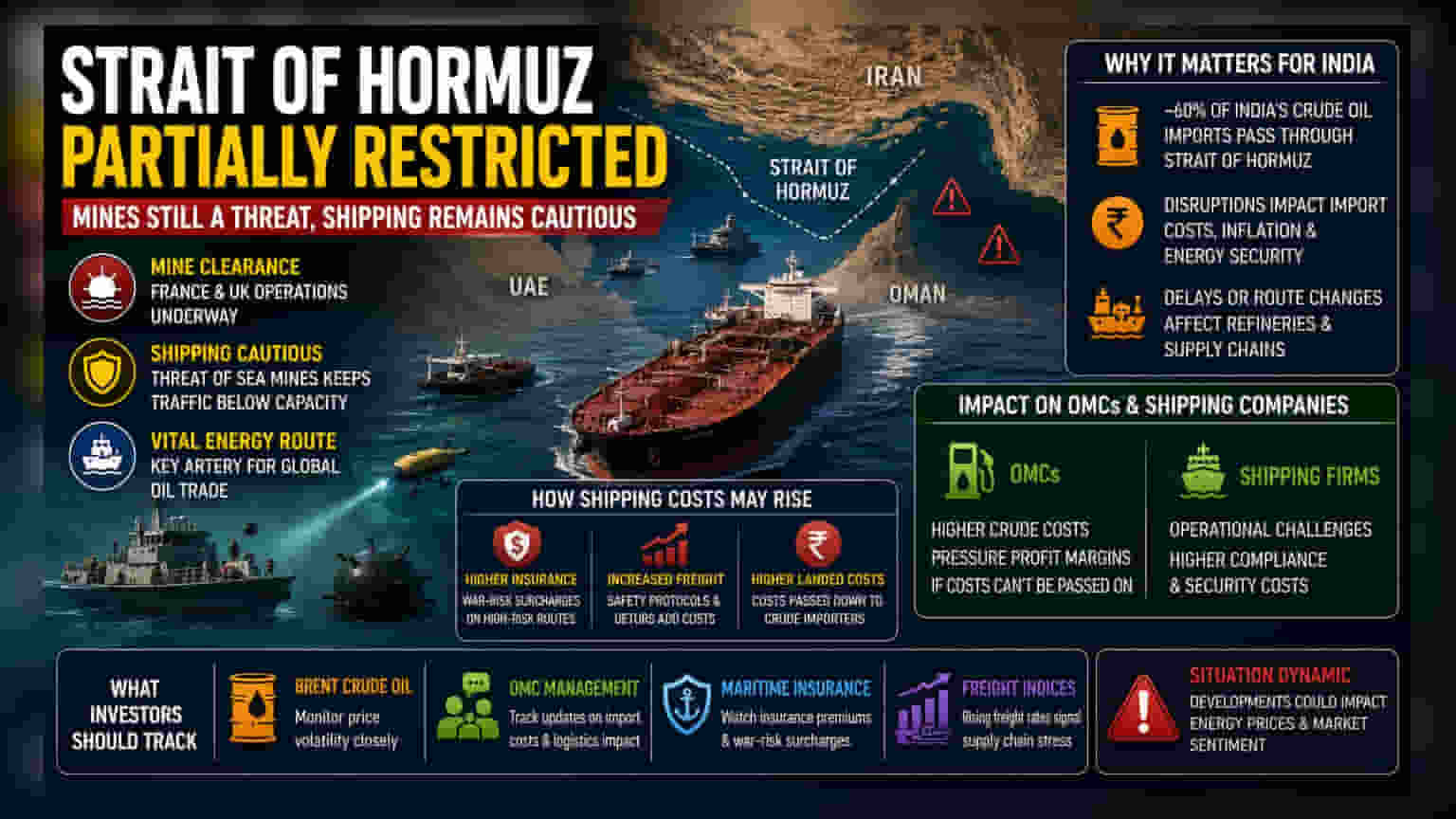
Ongoing delays in mine clearance at the Strait of Hormuz continue to impact global shipping routes. For Indian investors, this creates uncertainty regarding crude oil import costs and logistics. As a critical energy chokepoint, any persistent disruption may influence margins for oil-dependent sectors and shipping companies due to higher insurance premiums and freight rates.
What Happened
The Strait of Hormuz, a vital path for global energy trade, remains partially restricted despite a framework agreement aimed at reopening the waterway. While mine clearance efforts led by France and the United Kingdom are underway, shipping companies continue to operate with caution due to the lingering threat of sea mines. These underwater explosives, which can range from drift mines to those anchored to the seabed, have been a source of volatility in maritime traffic. Operators are currently using specialized drones and vessels to clear these hazards, but the process is slow and inherently dangerous, keeping shipping traffic below full capacity.
The Connection to Indian Energy Imports
For Indian markets, the Strait of Hormuz is not just a distant waterway; it is a critical artery for energy security. India imports a significant portion of its crude oil from countries in the Persian Gulf, many of which rely on this chokepoint to export oil to the world. When shipping through this region becomes dangerous or expensive, the impact flows directly to the cost of importing energy. If tankers are forced to delay transit, wait for clearance, or divert their routes, it creates a bottleneck that can affect the supply chain for India's refineries and energy infrastructure.
How Shipping Costs May Rise
The persistent risk of mines forces shipping companies to deal with two major issues: increased safety protocols and higher insurance premiums. When a route is deemed high-risk, insurers often raise premiums significantly, or in some cases, demand war-risk surcharges. These costs are typically passed down through the supply chain, leading to higher landed costs for crude oil. While these costs are managed by oil companies, sustained pressure on freight and insurance can impact the overall cost structure of energy imports.
Why OMCs And Logistics Matter
Oil Marketing Companies (OMCs) and shipping firms are the primary entities that monitor these developments. For OMCs, the cost of crude oil is a massive component of their balance sheets. Any prolonged disruption that keeps global oil prices volatile or raises freight costs can exert pressure on their profit margins, especially if they are unable to pass these costs fully to consumers. Similarly, shipping companies with exposure to Middle Eastern routes may face operational challenges, including vessel availability issues and increased security compliance requirements, which can affect their efficiency.
What Investors Should Track
Investors tracking energy-related stocks or broader market sentiment may want to focus on several key indicators. First, monitor global crude oil prices, particularly Brent Crude, as supply chain anxiety often reflects in price volatility. Second, keep an eye on management commentary from major Indian oil and gas companies, as they often provide insights into how logistics disruptions and import costs are affecting their operational performance. Finally, observe trends in maritime insurance costs and freight indices, as these are direct signals of the economic impact of the Strait of Hormuz situation.