

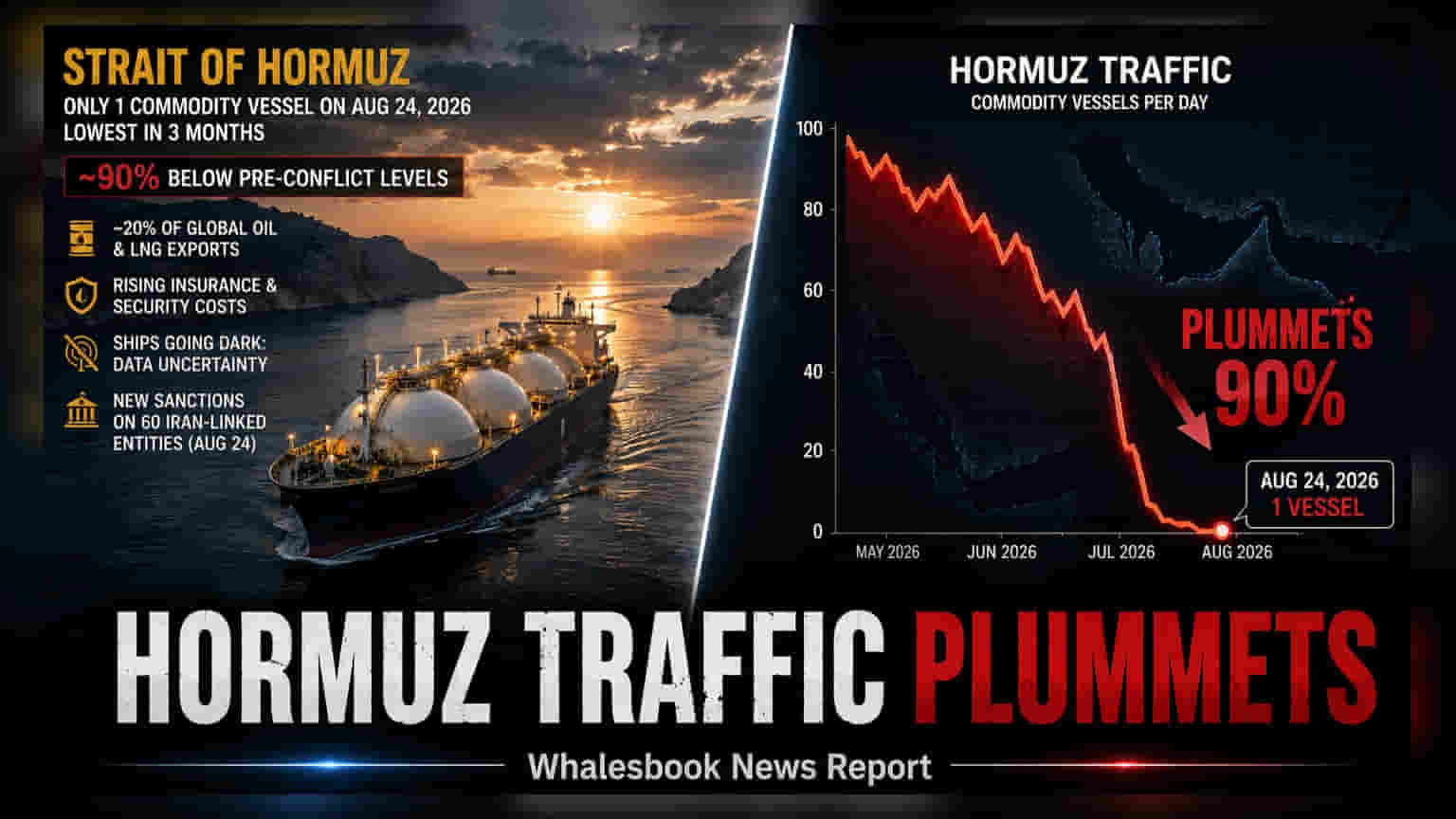
Commodity vessel transit through the Strait of Hormuz fell to a single recorded ship on August 24, as regional conflict continues to disrupt energy shipments. This decline, now 90% below historical averages, highlights growing uncertainty in global energy supply chains. Investors are monitoring the situation for potential impacts on energy prices and shipping costs following fresh sanctions.
The Strait of Hormuz, a critical waterway for global oil and gas transport, recorded its lowest commodity vessel traffic in three months on Monday, August 24, 2026. Data tracking systems logged only one vessel passing through the route, a significant drop from typical pre-conflict levels. This decline is part of a broader trend where traffic through the waterway is now estimated to be approximately 90% below pre-conflict baselines.
The reduction in maritime activity is directly linked to the ongoing Iran-US conflict, which intensified in February 2026. The Strait, which historically facilitated the movement of about 20% of global oil and liquefied natural gas (LNG) exports, has become a high-risk zone for international shipping. Adding to the market uncertainty, the United States announced new economic sanctions targeting 60 entities with links to Iran on August 24, further complicating diplomatic and commercial efforts to stabilize the region.
For investors and global energy markets, this disruption introduces several layers of risk. The primary concern is the increased cost of energy logistics. As shipping companies navigate these waters, the cost of insurance and specialized security measures—often called the 'Hormuz premium'—continues to rise. These additional expenses, combined with the risk of longer, alternative shipping routes, put pressure on energy firms' operating margins and can lead to increased volatility in global oil and gas prices.
Another challenge for market analysts is the reliability of data. As geopolitical risks mount, many vessels have begun turning off their transponders during transit to avoid detection in contested zones. This 'dark' shipping practice makes it difficult to track exact cargo volumes in real-time, creating an information gap that can lead to sudden market reactions. The formation of regional security authorities, such as the Persian Gulf Strait Authority, has not yet fully restored confidence in the safety of standard commercial lanes.
Investors tracking the energy sector should focus on several key indicators in the coming weeks. These include updates on oil and gas inventory levels, changes in shipping insurance premiums, and any diplomatic signals regarding the reopening of the waterway. Furthermore, the impact of the latest sanctions on energy supply chains will be a critical monitorable, as any sustained blockage or increase in transport costs could lead to further adjustments in energy pricing models.