 Whalesbook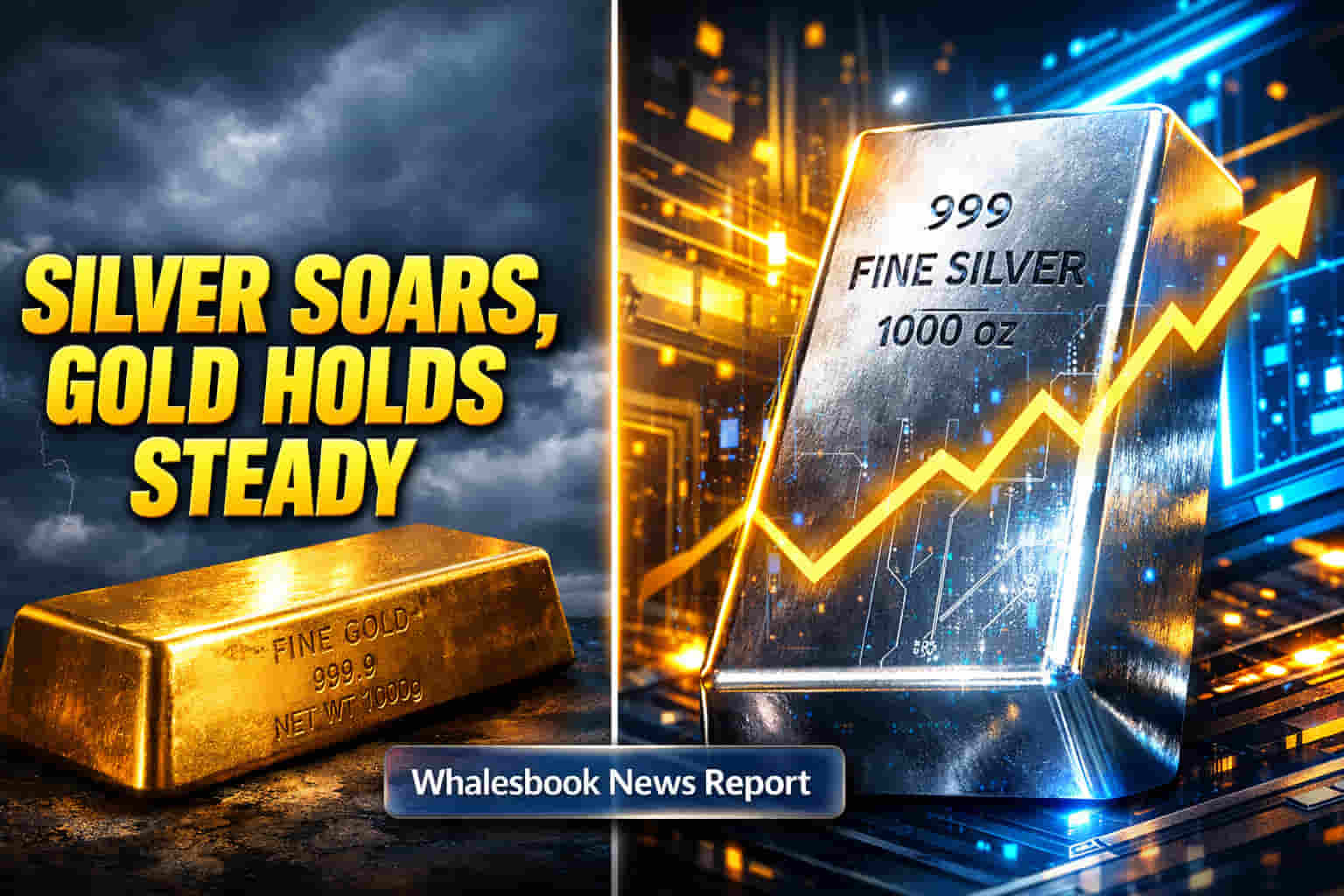


Silver's Dual Performance
Precious metals are showing a clear split in performance, influenced by geopolitical tensions, economic signals, and specific demand drivers. Gold remains a traditional safe-haven, but silver is acting as both a safe haven and a key industrial metal. This trend is unfolding against a backdrop of rising Middle East tensions and uncertainty over global monetary policy.
Silver's Surge Driven by Industrial Demand
Silver's notable 5.87% jump to $89.49 per ounce clearly shows its outperformance compared to gold's 1.40% gain to $5,175. This strength is largely due to structural industrial demand. Key sectors for the green energy transition, including solar panels, electric vehicles (EVs), and advanced technology, are increasing their use of silver for its excellent conductivity. Analysts predict solar panel demand alone could hit 120-125 million ounces (Moz) in 2026, with EVs and related infrastructure adding another 70-75 Moz. This industrial demand provides a stable foundation that sets silver apart from gold, which is mainly influenced by investment and monetary factors. Citigroup forecasts silver could reach $100/oz by March 2026 and $110/oz by Q2, citing tight physical supply and industrial demand growth.
Gold Holds Ground Amid Geopolitical Fears
Gold prices are supported by ongoing geopolitical uncertainty, especially regarding the Middle East. The conflict has raised fears of oil supply disruptions, pushing up prices and inflation concerns. This situation typically boosts demand for gold as a safe-haven asset. Central banks continue to diversify into gold reserves, supporting its value. However, gold's rise is tempered by a stronger US Dollar Index (DXY). A stronger dollar makes dollar-priced commodities more expensive for buyers using other currencies.
Market Dynamics and Analysis
Geopolitical Tensions Clash with Economic Factors
The Middle East conflict has caused significant market volatility, leading to fewer expected Federal Reserve rate cuts in 2026. Markets now anticipate possibly just one cut, perhaps in September. This change, driven by inflation fears from higher energy prices, supports a stronger dollar. The DXY is trading around 98.7741, boosted by safe-haven flows. While this economic picture supports the dollar and pressures precious metals, ongoing geopolitical tensions continue to drive demand for safe assets. Historically, geopolitical events often trigger short-term gold rallies, though the 'crisis premium' can fade quickly after the initial shock.
ETF Performance and Market Sensitivity
Precious metals ETFs have shown mixed performance. In February 2026, the Global X Silver Miners UCITS ETF and Market Access NYSE Arca Gold BUGS Index UCITS ETF were among the top performers. However, on March 9th, gold and silver ETFs fell up to 4%. This decline was driven by a stronger US dollar and rising energy prices, outweighing safe-haven demand. This shows how sensitive precious metal equities are to wider market forces, not just metal prices.
Potential Risks and Challenges
Silver: Volatility and Industrial Risks
While silver's industrial demand offers a solid base, its natural volatility, amplified by its dual industrial and monetary role, poses a significant risk. Silver tends to amplify gold's movements, meaning its drops can be sharper. This is especially true if fears of an economic slowdown return, affecting manufacturing and industrial use. The strong rally seen in early 2026, with silver reaching over $120/oz, has already seen sharp corrections, falling 37% in early February. This suggests that further consolidation or a deeper correction is possible.
Dollar Strength and Fed Policy
A strengthening US dollar directly counters dollar-priced assets like gold and silver. With the Federal Reserve possibly delaying rate cuts due to persistent inflation fears, the dollar could stay strong, putting more pressure on precious metals. If geopolitical tensions ease significantly, the safe-haven premium supporting prices could quickly disappear, leading to a sharp sell-off, especially in the more volatile silver market.
Analyst Views on Sustainability
While some analysts predict further price increases, especially for silver due to industrial demand, others warn of continued volatility and question the sustainability of current price levels. Heraeus analysts note that sharp price spikes are often followed by deeper corrections, a historical pattern that calls for caution. HSBC expects market volatility to define gold's performance throughout 2026.
Outlook for Gold and Silver
Analysts hold mixed views on the future path for gold and silver through the rest of 2026. ANZ projects gold could reach $5,800 per ounce in Q2. Others, like Heraeus, advise caution due to recent corrections and potential for further price drops. For silver, structural industrial demand is expected to provide a floor, but its volatility points to continued price swings. The Federal Reserve's next move on interest rates and the evolving Middle East situation will be key drivers. Markets widely expect rates to stay steady at the March FOMC meeting but are watching closely for signals about future cuts.