

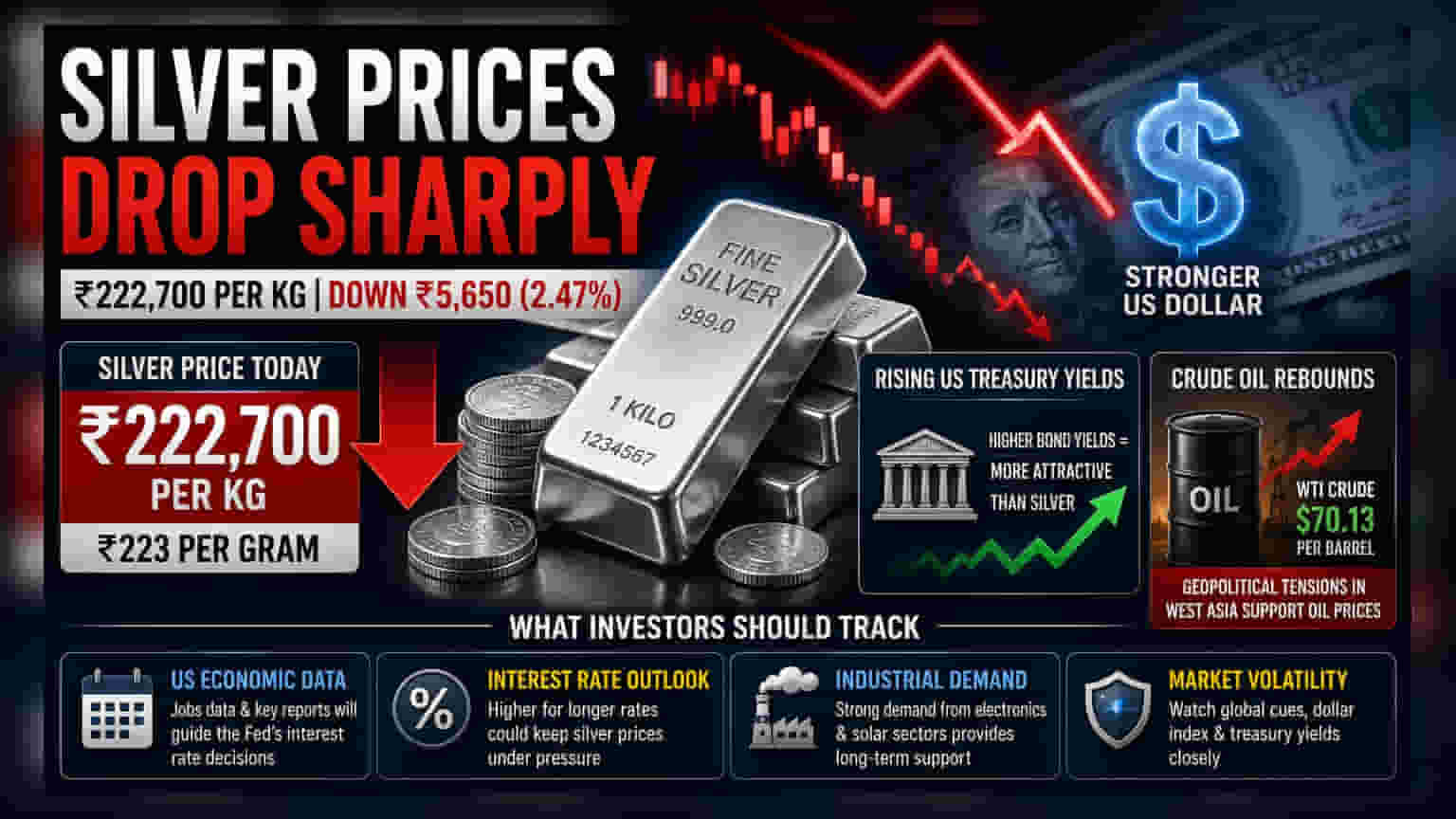
Silver prices in India dropped by 2.47% on July 1, 2026, closing at ₹222,700 per kilogram. A strengthening US dollar and rising Treasury yields are putting pressure on precious metals, making them less attractive. The market is currently watching US economic data to gauge future interest rate trends.
What Happened
Silver prices in India faced a sharp correction on July 1, 2026. A kilogram of silver now costs ₹222,700, representing a decline of ₹5,650 from the previous close. This brings the price of one gram to approximately ₹223. This 2.47% drop reflects significant volatility in the commodities market, impacting both retail buyers and those who hold silver as an investment asset.
Why The Price Is Falling
The primary reason for the decline is the strengthening US dollar. Silver is priced in dollars on the global market. When the US dollar becomes stronger, it becomes more expensive for investors using other currencies to purchase silver, which typically reduces global demand. Additionally, the broader sentiment in the financial markets has turned cautious as investors prepare for potential monetary tightening by the US Federal Reserve.
The Interest Rate Impact
Investors often look for the best place to park their money. They compare precious metals like silver, which do not pay regular interest, against assets that do, such as US government bonds. Recently, US Treasury yields—the interest rate paid by these bonds—have been rising. When bonds pay a higher return, they become a more attractive option for investors compared to silver. This shift in capital often leads to a drop in the price of metals like silver.
Geopolitical Factors And Oil
While silver is currently under pressure, other commodities are moving differently. Crude oil prices have seen a rebound, with WTI crude reaching $70.13 per barrel. This rise is largely linked to geopolitical concerns, particularly after Iran refused to engage in direct talks with US officials. Such tensions often spark fears about stability in the Middle East, which can push oil prices higher. However, these risks have not yet been enough to boost silver prices, as the strong dollar and high interest rate expectations are currently the dominant forces in the market.
What Investors Should Track
The short-term direction of silver prices will likely depend on upcoming economic reports from the United States, particularly employment data. This data will help the market understand how the US Federal Reserve might change interest rates. If the economy shows continued strength, the central bank may keep interest rates high for a longer period, which could continue to pressure silver prices. For those looking at the long term, industrial demand from sectors like electronics and solar energy remains a key factor, as it often provides support to silver even when investment demand is weak.